
Photos from current listings. Actual item, color, and included accessories may vary.
Barbell Piercing Jewelry Buying Guide
Barbell piercing jewelry is a straight or curved metal post with threaded or threadless ends, used for navel, eyebrow, tongue, industrial, and cartilage piercings. The primary trade-off is between implant-grade titanium (ASTM F136) for biocompatibility and weight, versus 316L surgical steel for affordability and scratch resistance, with gauge and thread standard determining fit and safety. The clear decision rule: choose ASTM F136 titanium for fresh or sensitive piercings, 316L steel only for healed piercings, and always match the gauge (14G for navel/eyebrow, 16G for cartilage) and barbell length to the tissue depth before buying.
Median $14.99
Key takeaways
- Implant-grade titanium (ASTM F136) is nickel-free, roughly 40% lighter than steel, and the only safe choice for fresh piercings; 316L surgical steel contains 8-12% nickel and is for healed piercings only.
- Gauge is the wire thickness: 14G (1.6 mm) is standard for navel and eyebrow, 16G (1.2 mm) for cartilage and tragus, and 12G (2 mm) for tongue; a mismatch causes migration or rejection.
- Barbell length must exceed tissue depth by 2-3 mm for swelling room; standard navel barbells are 10-12 mm, eyebrow 8-10 mm, and industrial 35-38 mm.
At a glance
- Category
- Body Jewelry
- Last updated
- Nov 24, 2026
Current offers
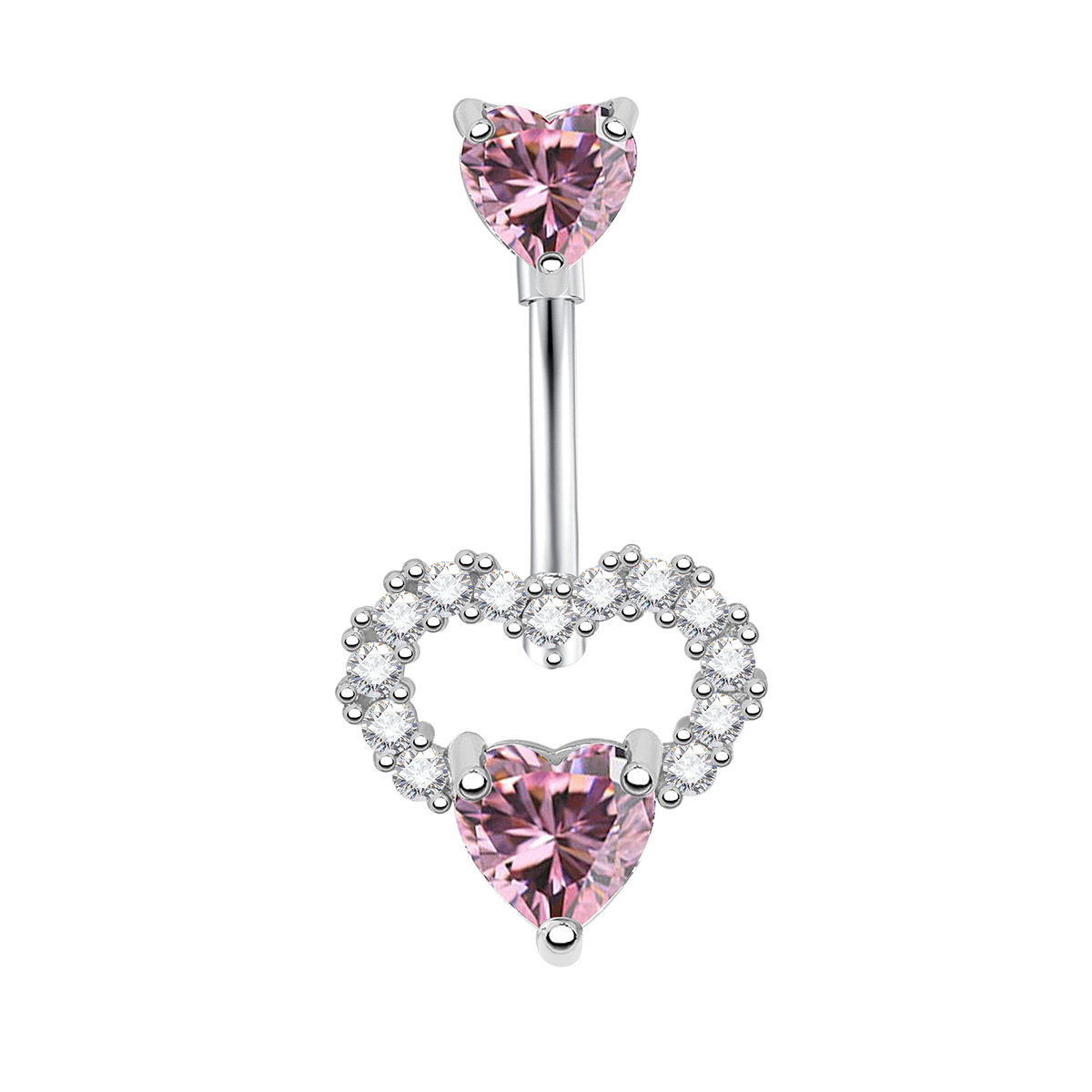 Surgical Steel Heart Navel Ring, Female Fashion Hanging Straight Pull Butterfly Piercing, Barbell$10.99View on Mallflare
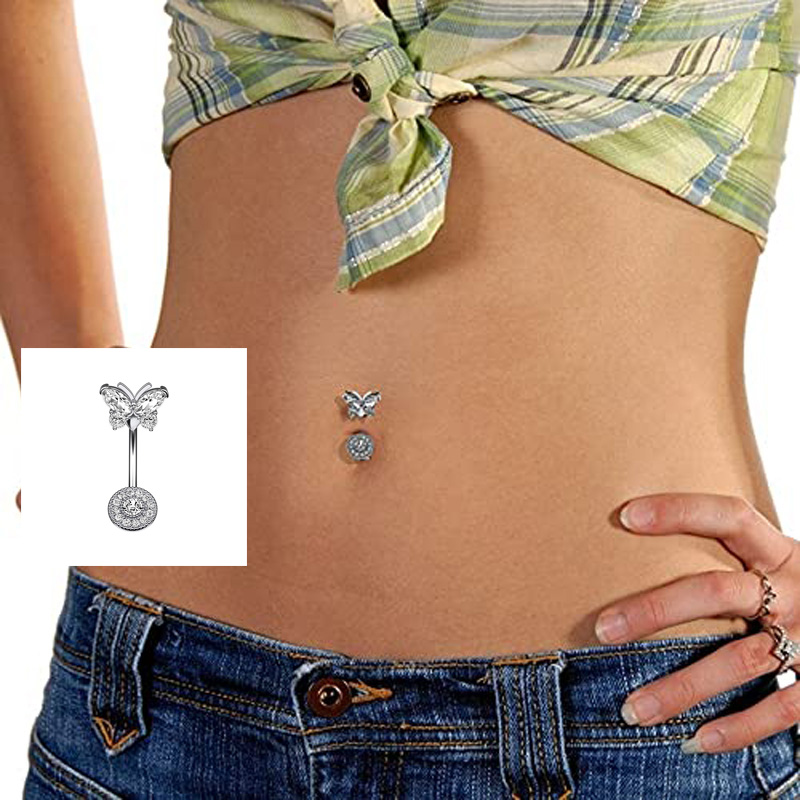 Novel Belly Button Ring Surgical Steel CZ Barbell Butterfly Piercing Jewelry Body Retainer 14G$14.99View on Mallflare
 14G Skeleton Claw Opal Belly Button Ring, Stainless Steel Banana Barbell Navel Piercing Jewelry For Women Halloween Party$14.99View on Mallflare
Highlights
- Implant-grade titanium (ASTM F136) is nickel-free, roughly 40% lighter than steel, and the only safe choice for fresh piercings; 316L surgical steel contains 8-12% nickel and is for healed piercings only.
- Gauge is the wire thickness: 14G (1.6 mm) is standard for navel and eyebrow, 16G (1.2 mm) for cartilage and tragus, and 12G (2 mm) for tongue; a mismatch causes migration or rejection.
- Barbell length must exceed tissue depth by 2-3 mm for swelling room; standard navel barbells are 10-12 mm, eyebrow 8-10 mm, and industrial 35-38 mm.
- Thread standards differ: 1.2 mm (16G) and 1.6 mm (14G) external threads are universal, while internally threaded or threadless (push-pin) ends reduce tissue trauma and are preferred for new piercings.
Best use cases
- Fresh navel or eyebrow piercing: pick an ASTM F136 titanium internally threaded barbell at 14G with 10-12 mm length; skip 316L steel and externally threaded ends until fully healed (6-12 months).
- Healed cartilage or tragus piercing: a 16G 316L surgical steel or titanium barbell at 6-8 mm is sufficient; skip 14G unless the piercing was originally stretched.
- Industrial or scaffold piercing: use a single 14G straight barbell 35-38 mm long in titanium to span the upper ear; skip curved barbells, which cause pressure necrosis.
- Tongue piercing: a 14G or 12G straight barbell 16-18 mm long in titanium is standard for initial swelling; skip 316L steel and acrylic balls, which harbor bacteria.
Buying tips
- Match the gauge to the piercing: 14G (1.6 mm) for navel/eyebrow, 16G (1.2 mm) for cartilage, 12G (2 mm) for tongue; buying the wrong gauge forces re-piercing or stretching.
- For fresh piercings, buy ASTM F136 titanium only; 316L steel is acceptable for healed piercings but leaches nickel in prolonged moisture.
- Measure tissue depth with the existing jewelry: add 2-3 mm for swelling; a navel barbell shorter than 10 mm will embed during healing.
- Prefer internally threaded or threadless ends over external threads; external threads scrape the piercing channel during insertion and increase infection risk.
Specs
| Material Grade | ASTM F136 Titanium vs 316L Steel |
|---|---|
| Gauge | 14G (1.6 mm) / 16G (1.2 mm) / 12G (2 mm) |
| Barbell Length | 6-38 mm by piercing site |
| Thread Type | External / Internal / Threadless |
Related searches
What to check before buying
- Confirm your piercing gauge with a caliper or piercer: 1.6 mm = 14G, 1.2 mm = 16G; buying the wrong gauge is the most common return reason.
- Measure the barbell length needed by adding 2-3 mm to the current jewelry length for swelling room, especially for navel and tongue.
- Check material certification: ASTM F136 titanium for fresh piercings, 316L steel for healed; avoid unbranded 'surgical steel' without a grade.
- Verify thread compatibility: 1.2 mm and 1.6 mm threads are not interchangeable; buy ends and bars from the same standard.
FAQ
Data sources: eBay / Amazon listings and product attribute feeds. Updated Nov 24, 2026.
Some links on this page are affiliate links. If you buy after clicking one, we may earn a commission at no extra cost to you. This does not change which products appear here or their order. Affiliate disclosure.