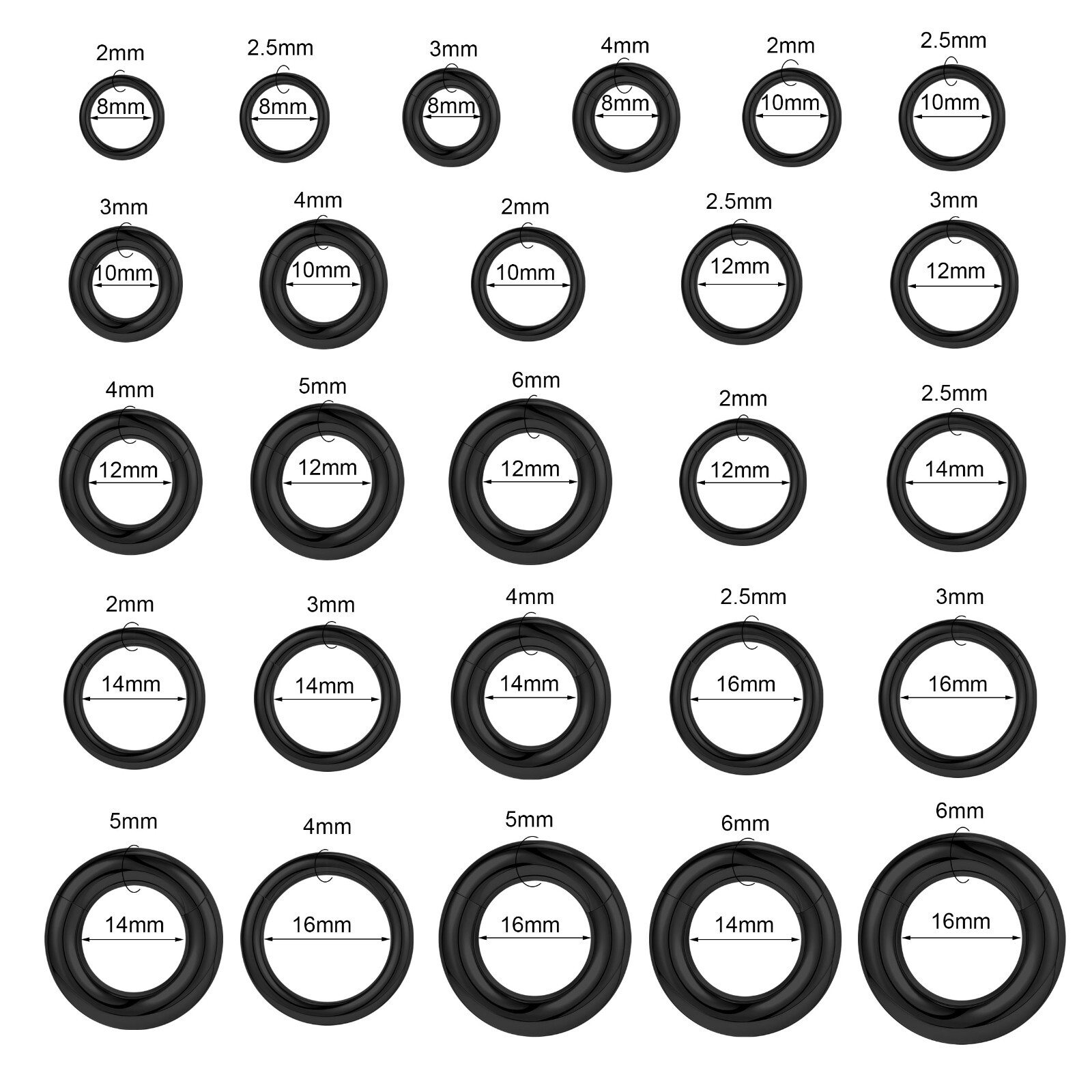

Photos from current listings. Actual item, color, and included accessories may vary.
Earring Buying Guide
Earrings for pierced ears span a huge durability range, from solid implant-grade titanium and niobium to plated brass and fashion alloys. The decisive trade-off is material purity versus decorative finish: body-safe metals resist tarnish and irritation, while plated base metals flake and discolor at the piercing. Buy solid titanium, niobium, or 14k+ gold for daily wear in sensitive piercings, and reserve plated or brass fashion earrings for short-wear lobes.
Median $19.34
Key takeaways
- Implant-grade titanium (ASTM F136, Ti-6Al-4V ELI) is nickel-free and the standard for fresh piercings and sensitive skin.
- Gauge sizing follows wire gauge: 20G (0.8mm) is standard lobe, 18G (1.0mm) common for helix, 16G (1.2mm) for cartilage and septum, 14G (1.6mm) for stretched lobes.
- Solid 14k gold and niobium are hypoallergenic; gold-plated brass and surgical steel with nickel release cause irritation over time.
At a glance
- Category
- Body Jewelry
- Last updated
- Nov 28, 2026
Current offers
Highlights
- Implant-grade titanium (ASTM F136, Ti-6Al-4V ELI) is nickel-free and the standard for fresh piercings and sensitive skin.
- Gauge sizing follows wire gauge: 20G (0.8mm) is standard lobe, 18G (1.0mm) common for helix, 16G (1.2mm) for cartilage and septum, 14G (1.6mm) for stretched lobes.
- Solid 14k gold and niobium are hypoallergenic; gold-plated brass and surgical steel with nickel release cause irritation over time.
- Threadless (press-fit) and internally threaded backs reduce micro-abrasions versus externally threaded posts that scrape the fistula.
Best use cases
- Daily wear in lobes or healed cartilage: choose solid titanium or 14k gold with threadless or internally threaded posts; skip plated brass.
- Fresh or sensitive piercings: pick ASTM F136 titanium or niobium only; avoid sterling silver in unhealed piercings due to tarnish and irritation.
- Stretched lobes or septum: select 14G–00G single-flare or hinged clicker in titanium; avoid acrylic or plated tunnels for long-term wear.
- Occasional fashion/statement looks: plated brass or alloy hoops are acceptable for short wear on fully healed lobes, but not for sleep or cartilage.
Buying tips
- Match gauge to piercing: 20G/18G for standard lobes, 16G for helix and septum, 14G for initial stretching; measure existing jewelry wire diameter with calipers.
- Check post length: 6mm is standard lobe, 8mm for cartilage swelling; too-short posts embed and too-long posts snag.
- Look for ASTM F136 or 'implant-grade' titanium stamping; 'surgical steel' is not a regulated grade and often contains nickel.
- Choose threadless or internally threaded posts over externally threaded; the smooth insertion reduces fistula damage.
Specs
| Metal Grade | ASTM F136 Ti / Niobium / 14k Gold |
|---|---|
| Gauge Range | 20G (0.8mm) to 00G (10mm) |
| Post Length | 6mm lobe / 8mm cartilage |
| Backing Type | Threadless / Internally threaded |
Related searches
What to check before buying
- Measure your piercing gauge with calipers or compare to a known 20G/18G/16G post before ordering.
- Confirm post length suits your lobe thickness plus expected swelling (6mm lobe, 8mm cartilage).
- Verify metal grade: ASTM F136 titanium, niobium, or 14k+ gold for sensitive skin.
- Check backing type (threadless, internally threaded, butterfly) fits your dexterity and piercing location.
FAQ
Data sources: eBay / Amazon listings and product attribute feeds. Updated Nov 28, 2026.
Some links on this page are affiliate links. If you buy after clicking one, we may earn a commission at no extra cost to you. This does not change which products appear here or their order. Affiliate disclosure.