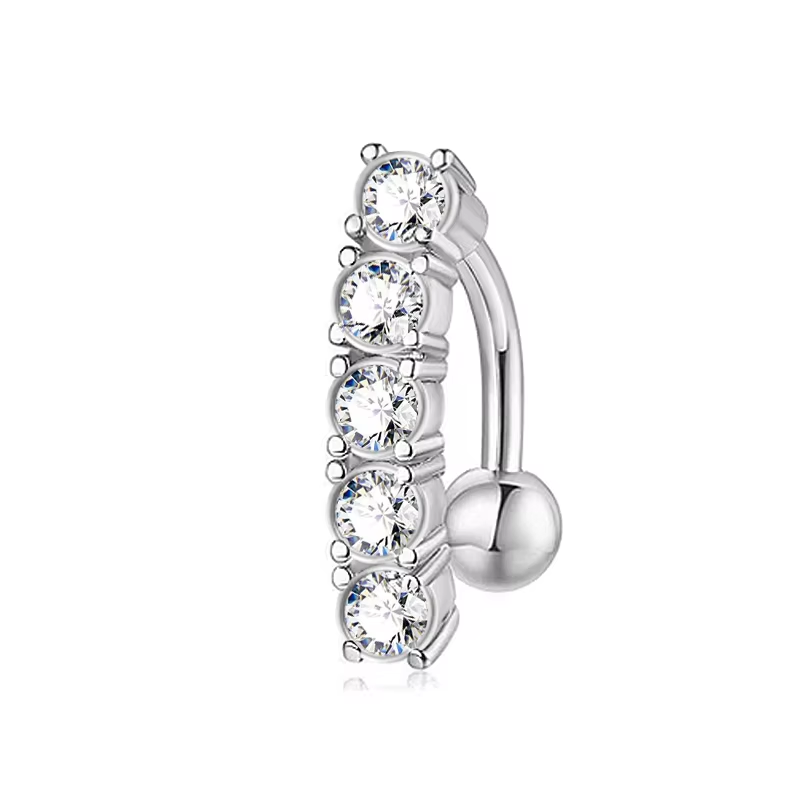

Photos from current listings. Actual item, color, and included accessories may vary.
Pearl Belly Button Ring Buying Guide
Pearl belly button rings pair a decorative pearl element with a navel barbell or curved barbell, so the real decision is whether the pearl is a durable, body-safe component or a glued-on plastic bead that will discolor or detach. Prioritize implant-grade titanium or 316L stainless steel for the shaft and a securely set or epoxy-sealed pearl; avoid unsealed fashion pearls on plated or mystery-metal posts.
Key takeaways
- Shaft metal grade determines safety: implant-grade titanium (ASTM F136) and 316L stainless steel resist corrosion; plated or mystery alloys flake and irritate.
- Pearl attachment method matters: prong-set or bezel-set pearls stay put; glued-on acrylic or faux pearls loosen with sweat and showering.
- Standard navel barbell sizing is 14G (1.6 mm) with 3/8–7/16 in (10–11 mm) wearable length; too-short bars cause embedding and migration.
At a glance
- Category
- Body Jewelry
- Last updated
- Nov 28, 2026
Current offers
Highlights
- Shaft metal grade determines safety: implant-grade titanium (ASTM F136) and 316L stainless steel resist corrosion; plated or mystery alloys flake and irritate.
- Pearl attachment method matters: prong-set or bezel-set pearls stay put; glued-on acrylic or faux pearls loosen with sweat and showering.
- Standard navel barbell sizing is 14G (1.6 mm) with 3/8–7/16 in (10–11 mm) wearable length; too-short bars cause embedding and migration.
- Curved barbell (banana bell) is the standard navel geometry; captive-bead or fixed-bead designs change how the pearl sits and how easy cleaning is.
Best use cases
- Healing or new navel piercings: choose implant-grade titanium with a plain bead or a small, securely set pearl; skip plated or glued fashion pieces until fully healed.
- Fully healed everyday wear: 316L stainless steel or titanium with a bezel-set freshwater or synthetic pearl balances durability and look; avoid oversized dangling pearls that snag on clothing.
- Occasion or statement styling: larger faux-pearl dangles on surgical-steel posts suit short wear; do not use them for 24/7 wear, swimming, or gym sessions.
- Swimming, sports, or high-sweat activity: skip pearl-set pieces entirely and use a solid metal or plain-bead barbell; moisture degrades adhesives and plated finishes.
Buying tips
- Confirm 14G (1.6 mm) gauge and 3/8–7/16 in wearable length; if your piercing is longer or shorter, size the bar before choosing the pearl style.
- Look for explicit metal callouts: ASTM F136 titanium or 316L stainless steel; treat 'surgical steel' without a grade as unverified.
- Check pearl setting: bezel or prong-set outlasts glued pearls; if glued, ensure the cup is metal and the adhesive is waterproof epoxy.
- Choose a smooth, internally threaded or threadless post; external threads can scratch the piercing channel during insertion.
Specs
| Shaft Metal | ASTM F136 titanium / 316L steel |
|---|---|
| Gauge & Length | 14G (1.6 mm); 3/8–7/16 in wearable |
| Pearl Setting | Bezel/prong-set > glued faux pearl |
| Barbell Geometry | Curved barbell (banana bell) |
Related searches
What to check before buying
- Measure your current jewelry's wearable length and gauge with calipers or compare against a known 14G/10 mm barbell before ordering.
- Confirm your piercing is fully healed (typically 6–12 months for navel) before switching to a pearl-topped piece.
- Check the pearl diameter and drop height against your navel depth and waistband rise so it does not catch on clothing.
- Verify the listing states metal grade and pearl material explicitly; if either is vague, choose a different listing.
FAQ
Data sources: eBay / Amazon listings and product attribute feeds. Updated Nov 28, 2026.
Some links on this page are affiliate links. If you buy after clicking one, we may earn a commission at no extra cost to you. This does not change which products appear here or their order. Affiliate disclosure.