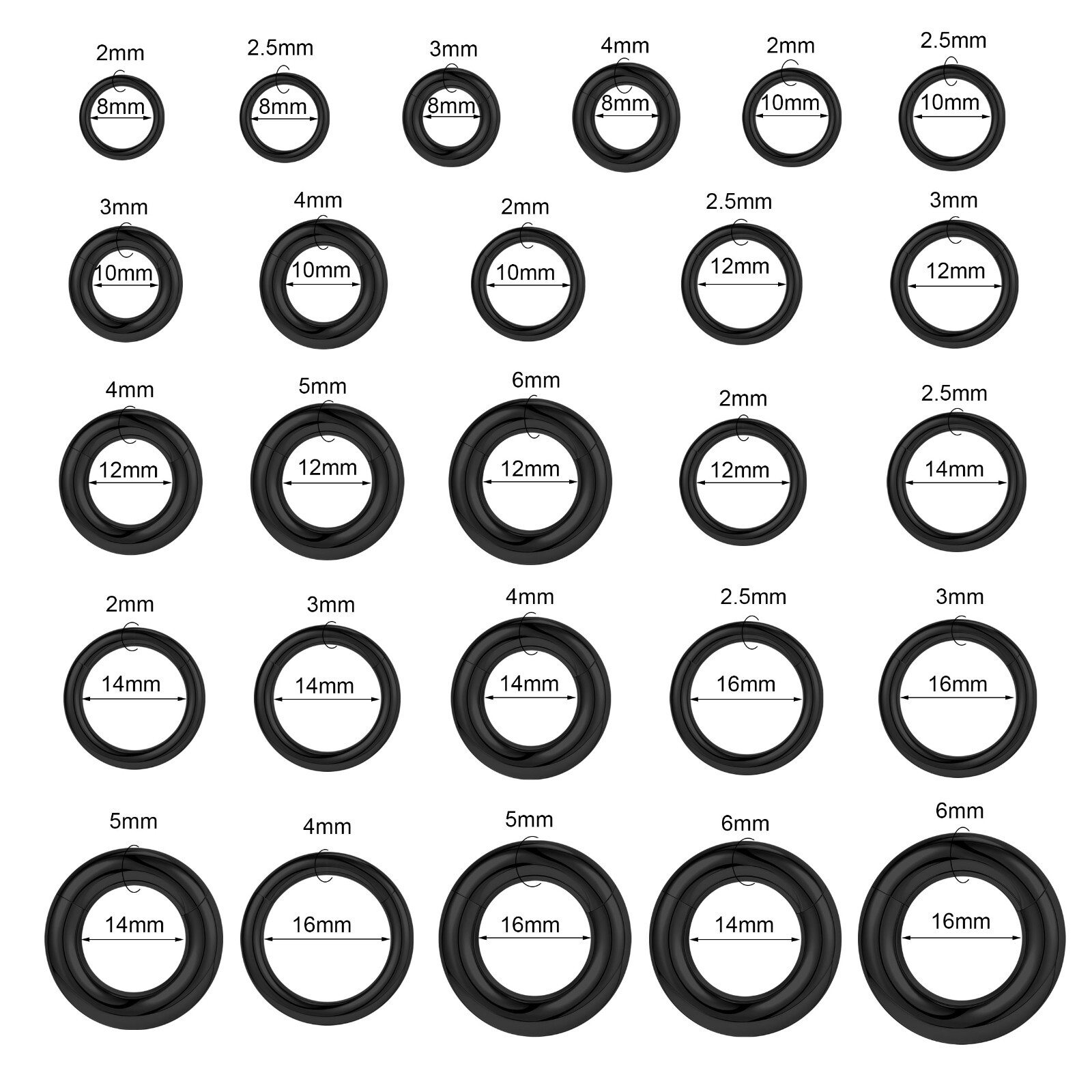

Photos from current listings. Actual item, color, and included accessories may vary.
Septum Jewelry Buying Guide
Septum jewelry is a body piercing category defined by gauge, diameter, and closure mechanism, where the primary trade-off is between implant-grade material safety and decorative cost. Durable options use ASTM F136 titanium or 316LVM steel with secure clicker or threadless mechanisms, while compromises rely on plated brass, acrylic, or friction-fit closures that corrode or loosen. The clear decision rule: for new or healing piercings, buy only implant-grade titanium with a smooth clicker or threadless pin; for fully healed, short-wear fashion pieces, lower-grade metals are acceptable but never for daily long-term wear.
Key takeaways
- Implant-grade titanium (ASTM F136) is the only reliable standard for healed and healing septum piercings; 316LVM steel is acceptable but heavier and contains nickel.
- Septum gauge sizes run 18G (1.0mm) through 00G (10mm); 14G (1.6mm) and 16G (1.2mm) are the most common initial piercing sizes, while 2G-12G are stretch sizes.
- Clicker mechanisms vary: hinged clickers use a spring-loaded bar for one-hand closure, while seam rings and captive bead rings require tools or manual bending.
At a glance
- Category
- Body Jewelry
- Last updated
- Nov 28, 2026
Current offers
Highlights
- Implant-grade titanium (ASTM F136) is the only reliable standard for healed and healing septum piercings; 316LVM steel is acceptable but heavier and contains nickel.
- Septum gauge sizes run 18G (1.0mm) through 00G (10mm); 14G (1.6mm) and 16G (1.2mm) are the most common initial piercing sizes, while 2G-12G are stretch sizes.
- Clicker mechanisms vary: hinged clickers use a spring-loaded bar for one-hand closure, while seam rings and captive bead rings require tools or manual bending.
- Internal thread or threadless (push-pin) ends are safer than external thread, which can scratch the fistula during insertion.
Best use cases
- Best fit: fresh septum piercing healing — choose 16G or 14G implant-grade titanium with a smooth clicker or threadless labret stud; skip plated brass, acrylic, and externally threaded jewelry.
- Best fit: stretched septum (2G-12G) — pick ASTM F136 titanium hinged clickers with a secure locking bar; skip seam rings that can pop open under pressure.
- Best fit: occasional fashion wear in a healed piercing — 316L steel or gold-plated brass is acceptable for short events; skip these for 24/7 wear or sensitive skin.
- Wrong fit: buying a 2G-12G large-gauge clicker for a new piercing — never stretch more than 2mm at a time and always use implant-grade titanium during stretching.
Buying tips
- Measure your current jewelry's inner diameter: septum rings typically range 6mm-12mm; a 8mm diameter fits most anatomy without pressing on the septum cartilage.
- For stretch sizes 2G-12G, confirm the clicker's hinge is laser-welded or mechanically secured — friction-fit large-gauge rings are prone to opening and losing jewelry.
- Match gauge to piercing age: 18G-16G for initial piercings, 14G after 6-8 weeks, and never skip sizes when stretching — use 1mm increments with titanium taper tools.
- Choose internal thread or threadless ends over external thread for any piercing less than 6 months old to avoid fistula damage.
Specs
| Material Grade | ASTM F136 Ti / 316LVM steel |
|---|---|
| Gauge Range | 18G-00G (1.0mm-10mm) |
| Closure Type | Hinged clicker / threadless / CBR |
| Inner Diameter | 6mm-12mm (standard 8mm) |
Related searches
What to check before buying
- Verify your piercing is fully healed (minimum 6-8 weeks for septum) before switching to decorative or lower-grade metals.
- Confirm the jewelry's inner diameter clears your septum anatomy without pinching — measure existing jewelry or visit a piercer for sizing.
- Check material certification: ASTM F136 titanium or 316LVM steel for long-term wear; avoid nickel-releasing alloys if you have metal sensitivities.
- Ensure the closure mechanism matches your dexterity: hinged clickers for easy daily changes, threadless for secure low-profile wear.
FAQ
Data sources: eBay / Amazon listings and product attribute feeds. Updated Nov 28, 2026.
Some links on this page are affiliate links. If you buy after clicking one, we may earn a commission at no extra cost to you. This does not change which products appear here or their order. Affiliate disclosure.