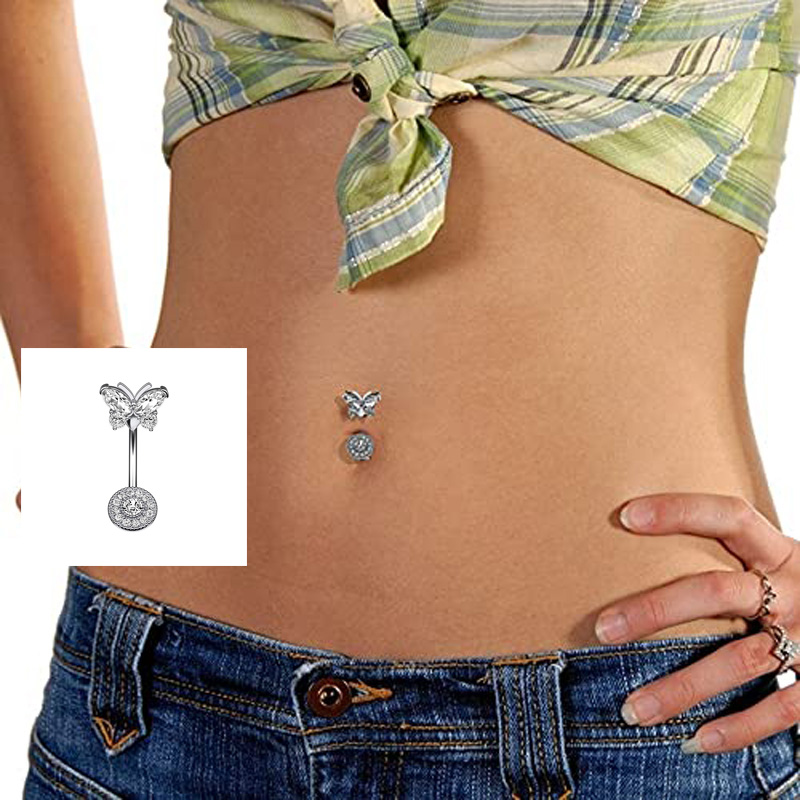

Photos from current listings. Actual item, color, and included accessories may vary.
Surgical Steel Body Jewelry Buying Guide
Surgical steel body jewelry is 316L (or 316LVM) implant-grade stainless steel used for piercings, valued for corrosion resistance and affordability over titanium or solid gold. The core trade-off is alloy grade and surface finish: 316L resists body fluids but is not nickel-free, while cheaper 304 or mystery steel causes irritation and pitting. Choose mill-certified 316L with a mirror-polished finish for fresh piercings, and accept only 316L for long-wear; anything labeled merely "surgical steel" without grade is a compromise.
Key takeaways
- 316L (ASTM F138) contains 2-3% molybdenum for chloride resistance; 304 lacks it and pits in sweat and saline.
- Implant-grade 316LVM is vacuum-melted for lower sulfur and higher fatigue strength, ideal for fresh piercings.
- Gauge is defined by wire diameter, not length: 14G = 1.6 mm, 16G = 1.2 mm, 18G = 1.0 mm for standard body piercings.
At a glance
- Category
- Body Jewelry
- Last updated
- Nov 28, 2026
Current offers
Highlights
- 316L (ASTM F138) contains 2-3% molybdenum for chloride resistance; 304 lacks it and pits in sweat and saline.
- Implant-grade 316LVM is vacuum-melted for lower sulfur and higher fatigue strength, ideal for fresh piercings.
- Gauge is defined by wire diameter, not length: 14G = 1.6 mm, 16G = 1.2 mm, 18G = 1.0 mm for standard body piercings.
- Mirror-polished or PVD-coated surfaces reduce bacterial adhesion; unpolished internal threads harbor biofilm.
Best use cases
- Best fit: fresh navel, lobe, or helix piercings in 316LVM with implant-grade certification and externally threaded or threadless ends for easy cleaning.
- Best fit: healed piercings needing durable daily wear in 14G or 16G 316L; skip acrylic or coated mystery-metal budget lots for anything but short-term costume use.
- Wrong fit: nipples, daith, or surface piercings where 316L nickel content triggers sensitivity — choose titanium ASTM F136 instead.
- Wrong fit: high-movement areas like eyebrow or industrial where 304 steel or low-polish finishes cause migration and irritation bumps.
Buying tips
- Match gauge to piercing: 14G (1.6 mm) for navel and tongue, 16G (1.2 mm) for helix and eyebrow, 18G (1.0 mm) for nostril and lobe.
- Choose 316LVM or ASTM F138-certified 316L for fresh piercings; standard 316L is acceptable for healed, low-sensitivity sites.
- For barbells, measure between hole centers plus 2-3 mm clearance; too-short jewelry embeds, too-long snags and migrates.
- Skip bulk mixed lots with acrylic or unmarked steel; verify the stamp "316L" or "Surgical Steel 316L" on the item or certificate.
Specs
| Steel Grade | 316L vs 304 vs 316LVM |
|---|---|
| Gauge Range | 14G / 16G / 18G standard |
| Threading Type | External / Internal / Threadless |
| Finish | Mirror polish / PVD coated |
Related searches
What to check before buying
- Confirm your piercing gauge and length in millimeters against the listing — 14G is 1.6 mm wire, not 14 mm length.
- Check for nickel sensitivity: 316L contains 10-14% nickel; switch to titanium ASTM F136 if you react to cheaper steel.
- Verify threading style: externally threaded ends have exposed threads that scratch; threadless or internally threaded is safer for fresh piercings.
- For navel jewelry, measure navel depth plus 2-4 mm for the curved barbell or ring diameter; standard 3/8" (10 mm) fits most.
FAQ
Data sources: eBay / Amazon listings and product attribute feeds. Updated Nov 28, 2026.
Some links on this page are affiliate links. If you buy after clicking one, we may earn a commission at no extra cost to you. This does not change which products appear here or their order. Affiliate disclosure.