
Photos from current listings. Actual item, color, and included accessories may vary.
Cuban Link Bracelet Buying Guide
A Cuban link bracelet is a curb-style chain defined by flattened, interlocking links that lie flat and rotate minimally, available in solid precious metals or plated base metals. The primary trade-off is material authenticity versus visual bulk: solid 14k/18k gold offers lifelong durability and value, while 18k gold-plated 316L stainless steel delivers the look at a fraction of the cost but with finite plating life. The decision rule is simple: buy solid gold for heirloom wear and resale, choose PVD-plated stainless steel for fashion rotation and water resistance, and avoid cheap brass-based plating for daily wear.
Median $26.46
Key takeaways
- Solid 14k or 18k gold Cuban links are homogeneous and polishable; plated versions use a 316L stainless steel or brass core with a 0.5–2.5 micron gold layer that wears through at high-friction points like the clasp.
- 316L stainless steel with PVD (physical vapor deposition) plating resists tarnish, sweat, and fading far better than electroplated brass; PVD bonds at a molecular level and typically outlasts standard gold flash by years.
- Link width drives visual weight and price: 6–7mm suits everyday wear, 8–10mm reads as substantial, and 11–14mm is statement/hip-hop territory; width also affects comfort—wider links are heavier and less flexible on the wrist.
At a glance
- Category
- Necklaces & Bracelets
- Last updated
- Nov 27, 2026
Current offers
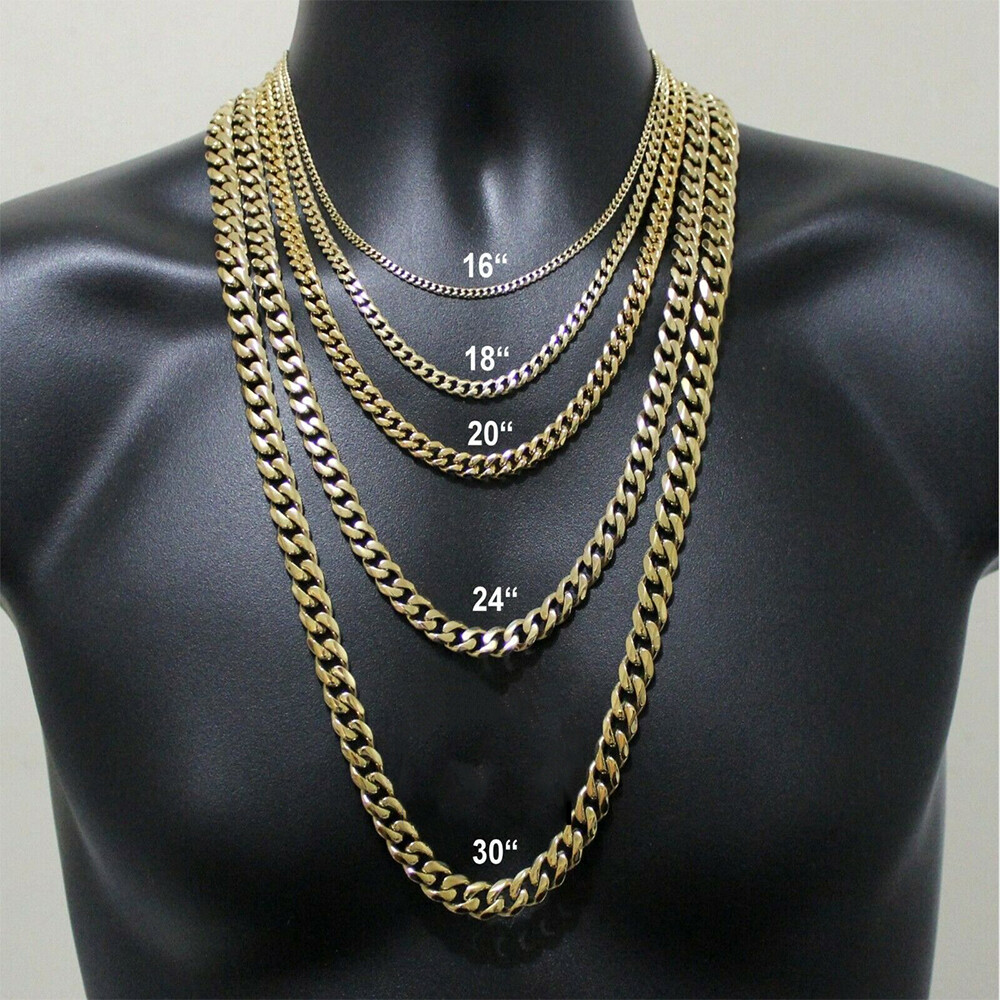 3/5/7/9/11mm Men Gold Plated Curb Cuban Link Chain Necklace Bracelet Xmas 16-30"$10.99Last checked Nov 25, 2026View on eBay
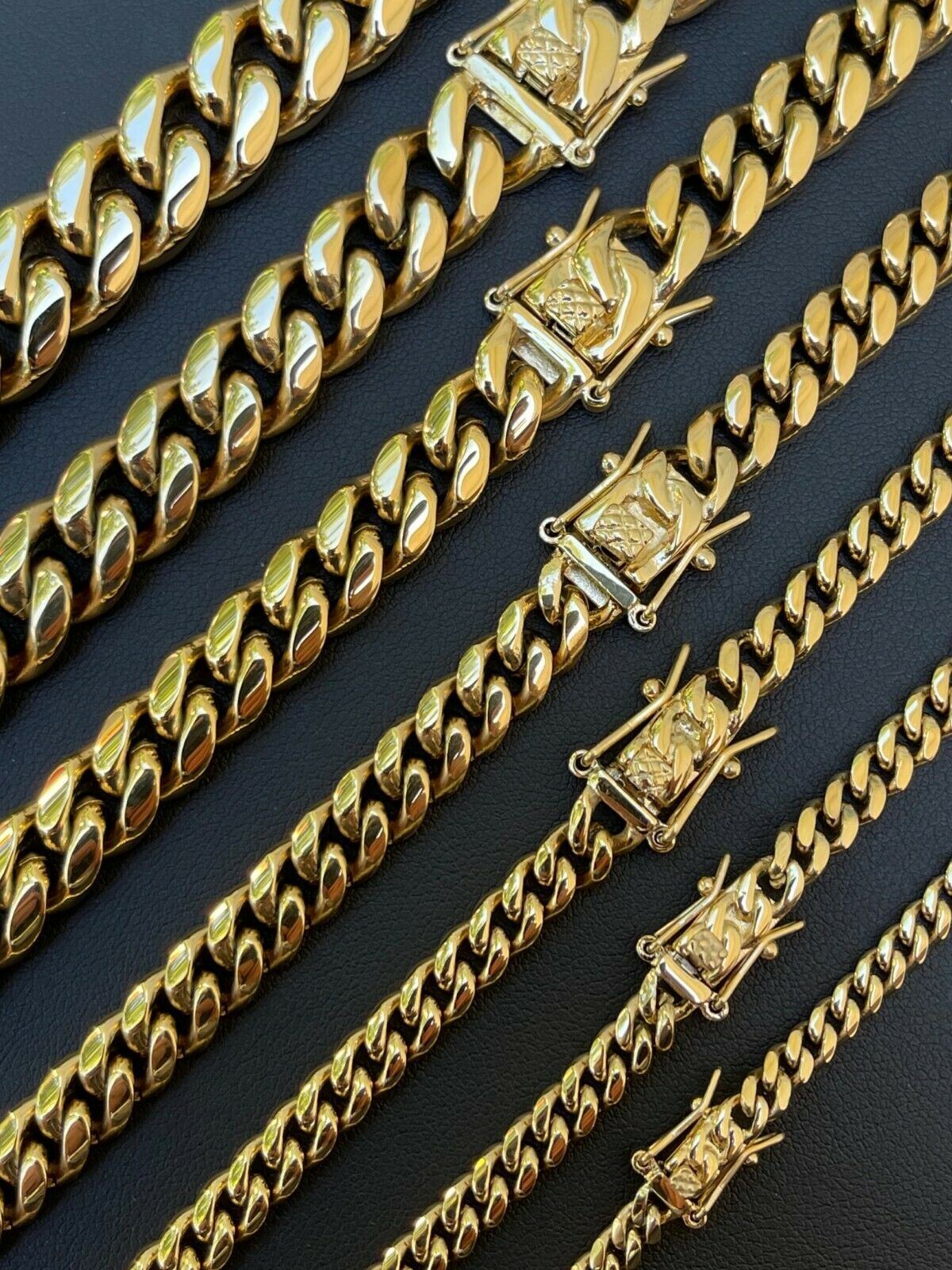 Miami Cuban Link Chain Necklace Bracelet 14k Gold Plated Stainless Steel 4-14mm$26.25Last checked Nov 18, 2026View on eBay
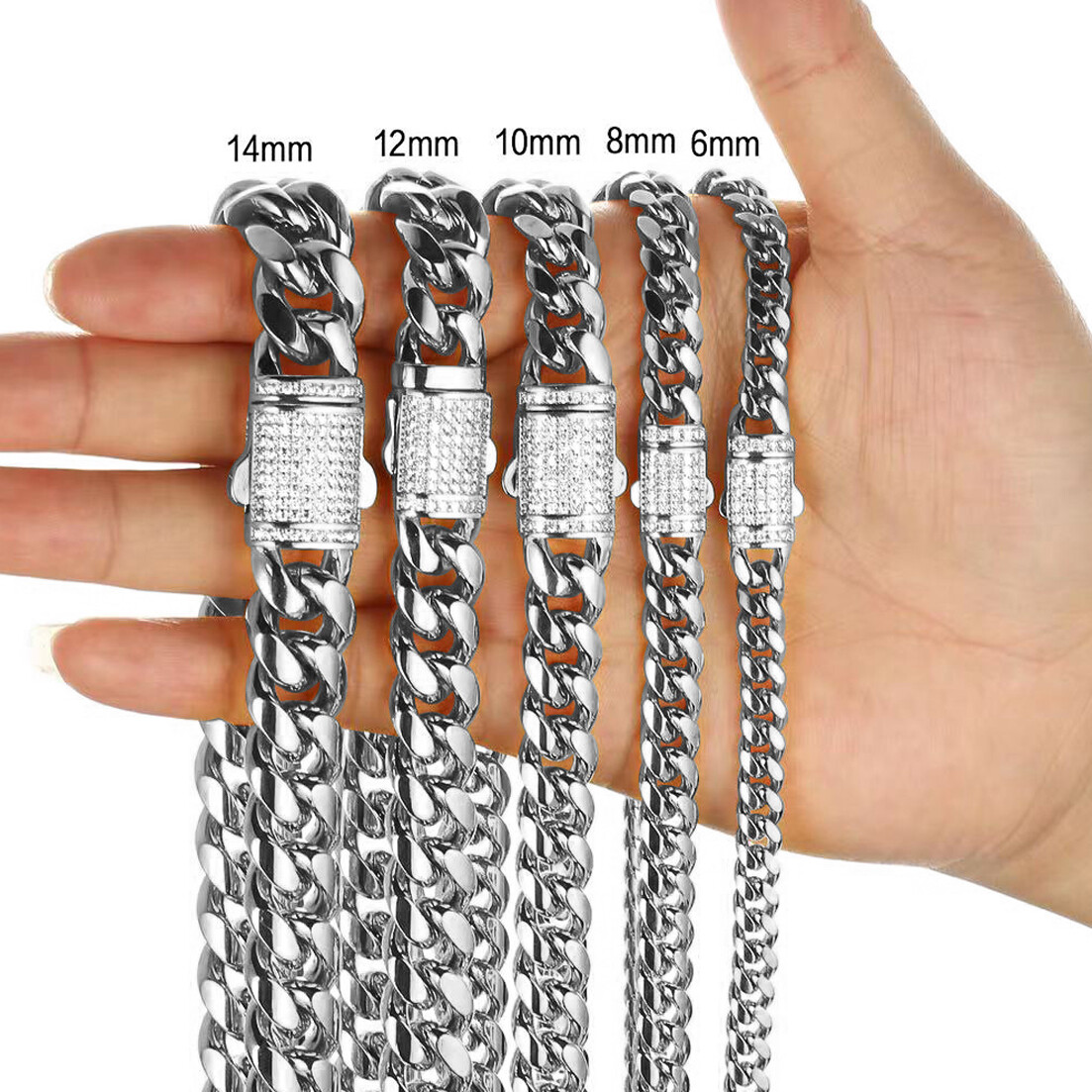 6mm-14mm Mens Miami Cuban Link Chain SOLID Stainless Steel Necklace or Bracelet$26.67Last checked Nov 24, 2026View on eBay
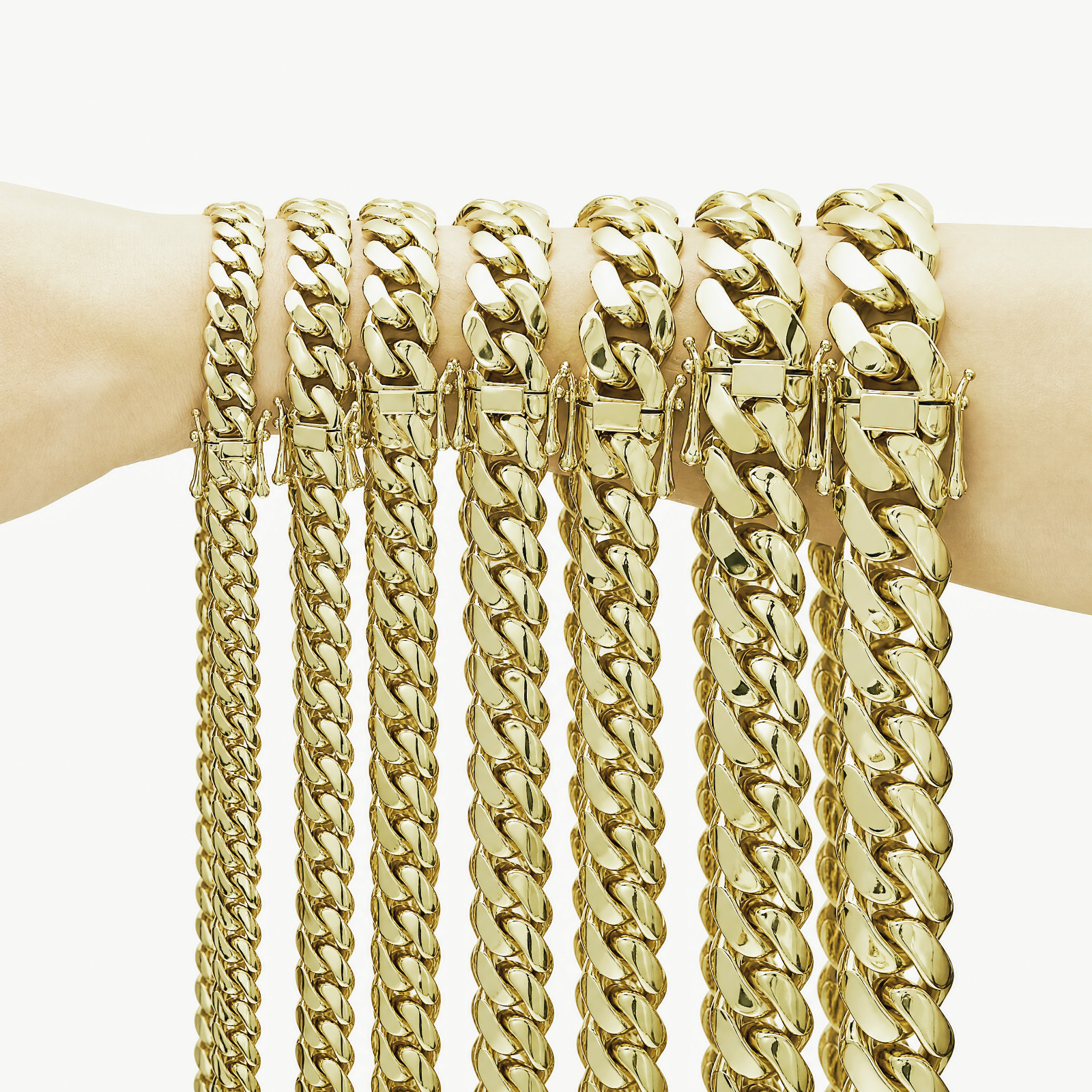 14k Gold Plated Stainless Steel Cuban Link Chain Necklaces and Bracelet for Men$47.99View on eBay
Highlights
- Solid 14k or 18k gold Cuban links are homogeneous and polishable; plated versions use a 316L stainless steel or brass core with a 0.5–2.5 micron gold layer that wears through at high-friction points like the clasp.
- 316L stainless steel with PVD (physical vapor deposition) plating resists tarnish, sweat, and fading far better than electroplated brass; PVD bonds at a molecular level and typically outlasts standard gold flash by years.
- Link width drives visual weight and price: 6–7mm suits everyday wear, 8–10mm reads as substantial, and 11–14mm is statement/hip-hop territory; width also affects comfort—wider links are heavier and less flexible on the wrist.
- Clasp type is the primary failure point: box clasps with double safety latches are standard on solid gold and quality steel bracelets, while lobster clasps appear on lighter plated chains; a sturdy box clasp with a figure-8 safety is the durability benchmark.
Best use cases
- Best fit: daily wear in water, sweat, and gym environments — choose 316L stainless steel with PVD plating in 6–8mm; skip brass-based gold plating, which discolors and flakes within months.
- Best fit: heirloom or investment wear with resale value — choose solid 14k or 18k gold in 8–10mm with a box clasp; skip hollow gold links, which dent and cannot be repaired cleanly.
- Best fit: occasional fashion or costume use on a budget — choose 18k gold-plated stainless steel in 10mm; skip solid gold if the bracelet will be worn infrequently and cost is the priority.
- Wrong fit: heavy 12–14mm links for slim wrists or all-day typing — the weight and rigidity cause discomfort; cap everyday width at 9mm unless the look is deliberately statement-driven.
Buying tips
- Measure your wrist snugly with a soft tape, then add 0.5–1 inch for comfort: a 7-inch wrist fits a 7.5–8-inch bracelet; Cuban links have little stretch, so sizing down causes clasp strain.
- Demand the base metal: 316L stainless steel outperforms brass and copper alloys for tarnish resistance; 'gold plated' alone does not specify the core, and brass cores corrode faster.
- Check plating thickness in microns (µm): 0.5µm is a flash that fades quickly, 1–2.5µm is standard fashion jewelry, and 2.5µm+ PVD over stainless is the durable plated tier.
- Match link style to the name: true Miami Cuban links are tightly interlocking with a flat, uniform profile; looser curb chains allow more rotation and read less crisp; solid (not hollow) links are denser and more durable.
Specs
| Material Core | Solid 14k/18k gold vs 316L steel vs brass |
|---|---|
| Plating Method | PVD (durable) vs electroplate (fashion) |
| Link Width | 4–14mm; everyday 6–8mm |
| Clasp Type | Box clasp w/ safety vs lobster clasp |
Related searches
What to check before buying
- Wrist measurement: use a flexible tape at the narrowest point; add 0.5–1 inch for fit, and confirm the bracelet length (commonly 7.5, 8.5, or 9.5 inches) matches your wrist plus allowance.
- Clasp inspection: confirm a box clasp with a double safety latch (figure-8 or push-button) for daily wear; lobster clasps are acceptable only on lightweight plated chains.
- Material verification: look for '316L stainless steel' or 'solid 14k/18k gold' stamping; plated items should specify the base metal and plating method (PVD preferred over electroplate).
- Skin sensitivity: nickel is the most common jewelry allergen; 316L stainless steel and solid gold are nickel-safe for most wearers, while brass alloys and some platings may trigger reactions.
FAQ
Data sources: eBay / Amazon listings and product attribute feeds. Updated Nov 27, 2026.
Some links on this page are affiliate links. If you buy after clicking one, we may earn a commission at no extra cost to you. This does not change which products appear here or their order. Affiliate disclosure.