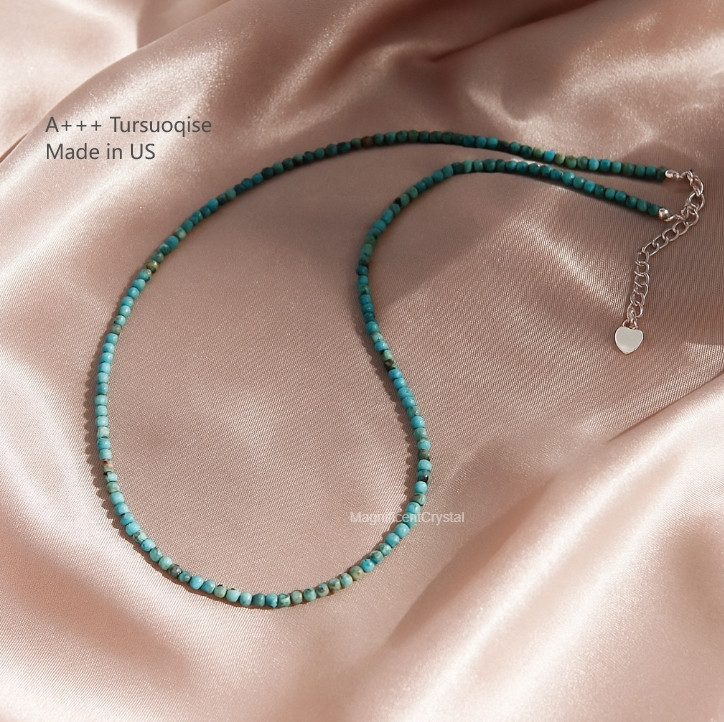

Photos from current listings. Actual item, color, and included accessories may vary.
Stone Necklace Buying Guide
Stone necklaces span gemstone beads, carved pendants, crystal-cage cords, and mixed-stone vintage links, so the core trade-off is natural gemstone grade and metal durability versus dyed, resin-filled, or plated impostors. The decision rule is simple: buy solid 925 sterling silver or stainless-steel findings with natural, untreated stones for daily wear; accept plated brass and reconstituted stone only for occasional, short-wear fashion use.
Key takeaways
- Natural gemstone grades run A to AAA+: translucent, inclusion-free AAA beads command premiums, while opaque dyed howlite and resin-filled turquoise are the common budget substitutes.
- Sterling silver (925) and 316L stainless steel resist tarnish and skin reactions; plated brass and zinc alloys flake within months on a necklace that rubs the neck.
- Bead sizing drives fit: 6 mm beads suit delicate layering, 8 mm is the unisex daily standard, and 10–12 mm strands read as statement pieces and add noticeable weight.
At a glance
- Category
- Necklaces & Bracelets
- Last updated
- Nov 28, 2026
Current offers
Highlights
- Natural gemstone grades run A to AAA+: translucent, inclusion-free AAA beads command premiums, while opaque dyed howlite and resin-filled turquoise are the common budget substitutes.
- Sterling silver (925) and 316L stainless steel resist tarnish and skin reactions; plated brass and zinc alloys flake within months on a necklace that rubs the neck.
- Bead sizing drives fit: 6 mm beads suit delicate layering, 8 mm is the unisex daily standard, and 10–12 mm strands read as statement pieces and add noticeable weight.
- Crystal-cage and empty-stone-holder designs are interchangeable cord systems sized for roughly 20–30 mm stones, letting one chain serve multiple rough or tumbled pendants.
Best use cases
- Daily wear with sensitive skin: pick 316L stainless steel or solid 925 silver findings with smooth 8 mm natural beads; skip plated brass and rough-edge pendants that catch clothing.
- Layering and gifting: choose 6 mm beads or a single 20–25 mm pendant on an adjustable 16–18 inch cord; skip 10 mm+ strands that overpower a thin chain stack.
- Collector or vintage look: buy multi-stone cross and link pendants with prong-set stones; skip glued or foil-backed settings that loosen with wear.
- Crystal healing and interchangeable pendants: use cage-style holders on braided cord for rough stones; skip fixed-bail pendants if you rotate stones often.
Buying tips
- Measure neck circumference and add 2 inches for a choker, 4 inches for a princess length, and 6–8 inches for a matinee; beaded strands should sit with one-finger slack.
- Check clasp and wire: lobster clasps in 925 silver or stainless steel outlast spring rings, and 49-strand nylon-coated steel wire beats monofilament for bead strands.
- For turquoise, demand natural stabilization disclosure—stabilized stone is durable and accepted, but dyed howlite and plastic-backed composites are not turquoise.
- Match bead weight to pendant: a 30 g beaded strand supports a 20–30 mm pendant, while a 50 g+ strand needs a wider 3 mm chain or doubled cord to avoid stretching.
Specs
| Stone Type | Natural gemstone vs dyed / synthetic |
|---|---|
| Metal Findings | 925 silver / 316L steel vs plated brass |
| Bead Size | 6 mm / 8 mm / 10–12 mm |
| Closure Type | Lobster clasp / adjustable cord |
Related searches
What to check before buying
- Neck size and desired drop: measure your base neck and confirm the strand or chain length plus extender covers your target layer position.
- Skin sensitivity: confirm nickel-free 316L steel or 925 silver if you react to costume jewelry; plated alloys are the usual culprit.
- Stone size and weight: verify bead diameter (6/8/10 mm) and total strand weight against the pendant or clasp rating.
- Cord and cage compatibility: for cage holders, confirm the opening fits your stone's largest dimension and the cord diameter matches the holder channel.
FAQ
Data sources: eBay / Amazon listings and product attribute feeds. Updated Nov 28, 2026.
Some links on this page are affiliate links. If you buy after clicking one, we may earn a commission at no extra cost to you. This does not change which products appear here or their order. Affiliate disclosure.