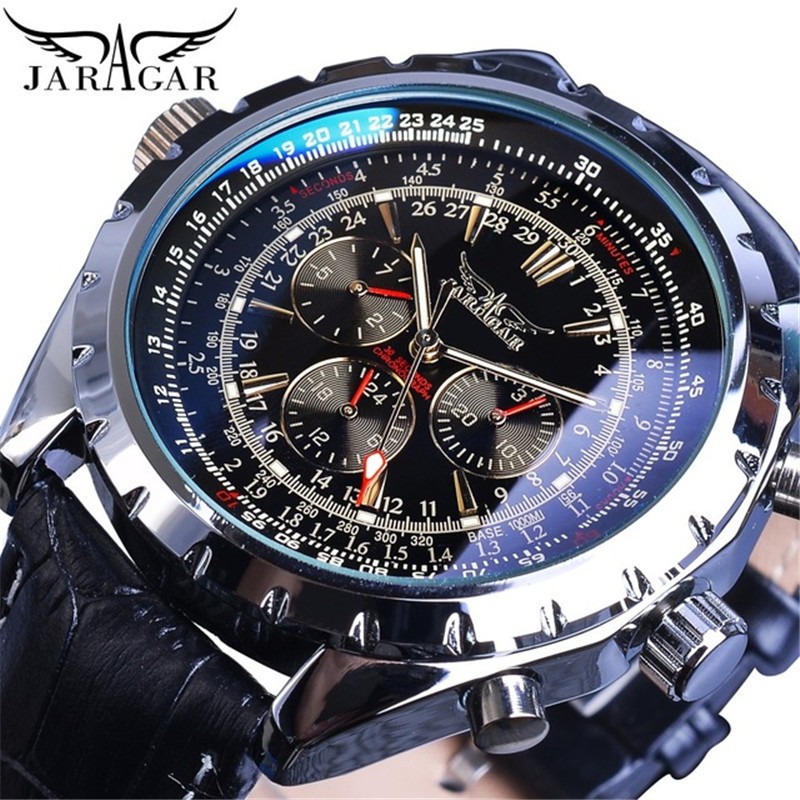

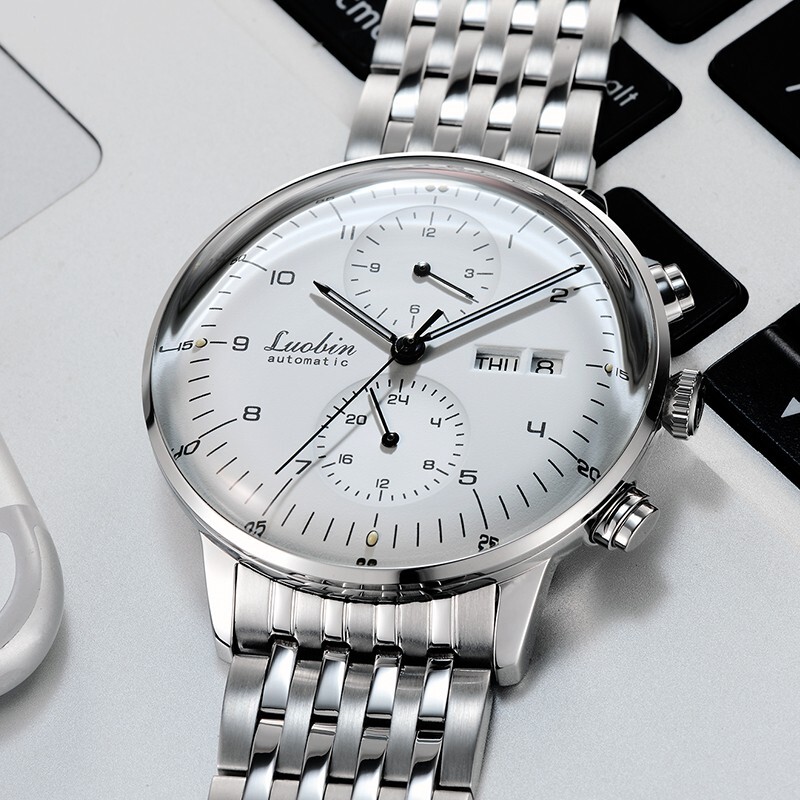
Photos from current listings. Actual item, color, and included accessories may vary.
Mechanical Watches Men Buying Guide
Mechanical men's watches are spring-powered timepieces with either hand-wound or self-winding (automatic) movements, where the core trade-off is between genuine horological construction (jeweled movements, sapphire crystal, solid stainless steel) and cost-cutting substitutes (base-metal cases, mineral glass, unjeweled or loosely regulated movements). The decision rule is simple: buy only watches that specify movement type, jewel count, case material, and crystal grade — anything that hides those four facts is a compromise.
Median $84.99
Key takeaways
- Automatic (self-winding) movements use an oscillating rotor to tension the mainspring; hand-wound movements require daily crown winding — automatics suit daily wear, hand-wounds suit collectors who wind ritually.
- Jewel count matters: 17-jewel movements are the practical minimum for durability, 21–25 jewels reduce pivot friction, and sub-17-jewel 'mechanical' watches wear faster at the arbor points.
- Sapphire crystal (Mohs 9) resists scratching far better than mineral glass (Mohs 5–6) or acrylic; on a daily-worn mechanical, crystal grade determines how long the dial stays legible.
At a glance
- Category
- Wristwatches
- Last updated
- Nov 28, 2026
Current offers
Highlights
- Automatic (self-winding) movements use an oscillating rotor to tension the mainspring; hand-wound movements require daily crown winding — automatics suit daily wear, hand-wounds suit collectors who wind ritually.
- Jewel count matters: 17-jewel movements are the practical minimum for durability, 21–25 jewels reduce pivot friction, and sub-17-jewel 'mechanical' watches wear faster at the arbor points.
- Sapphire crystal (Mohs 9) resists scratching far better than mineral glass (Mohs 5–6) or acrylic; on a daily-worn mechanical, crystal grade determines how long the dial stays legible.
- Case material tiers: 316L stainless steel is the corrosion-resistant baseline; gold-tone PVD plating over brass or zinc alloy will wear through at crown and lugs within a few years of daily use.
Best use cases
- Best fit for daily office wear: an automatic with 316L stainless steel case, sapphire or hardened mineral crystal, 50 m+ water resistance, and a screw-down or push-pull crown — skip open-heart skeleton dials if you need quick legibility under artificial light.
- Best fit for formal/evening wear: a slim hand-wound or automatic dress watch (under 10 mm case height, 38–40 mm diameter) on leather — skip 44 mm+ pilot or diver cases, which catch on shirt cuffs.
- Best fit for collectors and vintage enthusiasts: a hand-wound with visible movement (display caseback), documented jewel count, and signed dial — skip plated 'luxury' skeleton watches with no movement specification, as these are fashion pieces.
- Wrong fit: buying a 'waterproof' mechanical for swimming or diving — mechanical dive watches need at least 200 m rating, screw-down crown, and gasket service history; most sub-100 m mechanicals are splash-resistant only.
Buying tips
- Match case diameter to wrist circumference: 6.0–6.5 in wrists suit 36–39 mm cases, 6.5–7.25 in suit 39–42 mm, and 7.25 in+ can carry 42–46 mm — a case wider than your wrist's flat top will overhang and look oversized.
- For automatics, check power reserve (typically 38–42 hours): if you rotate watches, a 40-hour reserve means it stops overnight unless you use a winder or wear it daily.
- Water resistance ratings are static-pressure tests: 30 m = splash/rain only, 50 m = handwashing and brief immersion, 100 m = swimming, 200 m+ = diving — never operate the crown or pushers underwater regardless of rating.
- Leather straps are consumables: budget for replacement every 12–24 months on a daily-worn watch; stainless steel bracelets last decades but need sizing tools and occasional link tightening.
Specs
| Movement Type | Automatic self-winding / hand-wound |
|---|---|
| Jewel Count | 17–25 jewels (21–24 typical) |
| Case Material | 316L stainless steel / plated alloy |
| Crystal Grade | Sapphire / mineral / acrylic |
Related searches
What to check before buying
- Measure your wrist circumference with a tape and your wrist's flat top width — the case diameter should not exceed that flat width for a proper fit.
- Confirm the lug width (common: 18 mm, 20 mm, 22 mm) before buying replacement straps, as odd sizes limit aftermarket options.
- Verify movement specification explicitly: 'automatic' or 'hand-wound', jewel count, and whether it is a known caliber (e.g., Seiko NH35, Miyota 8215) versus an unbranded generic.
- Check crystal and case materials in the listing text: sapphire vs mineral vs acrylic, and 316L stainless steel vs 'alloy' or 'gold-tone plated' — plating thickness under 3 microns wears quickly.
FAQ
Data sources: eBay / Amazon listings and product attribute feeds. Updated Nov 28, 2026.
Some links on this page are affiliate links. If you buy after clicking one, we may earn a commission at no extra cost to you. This does not change which products appear here or their order. Affiliate disclosure.