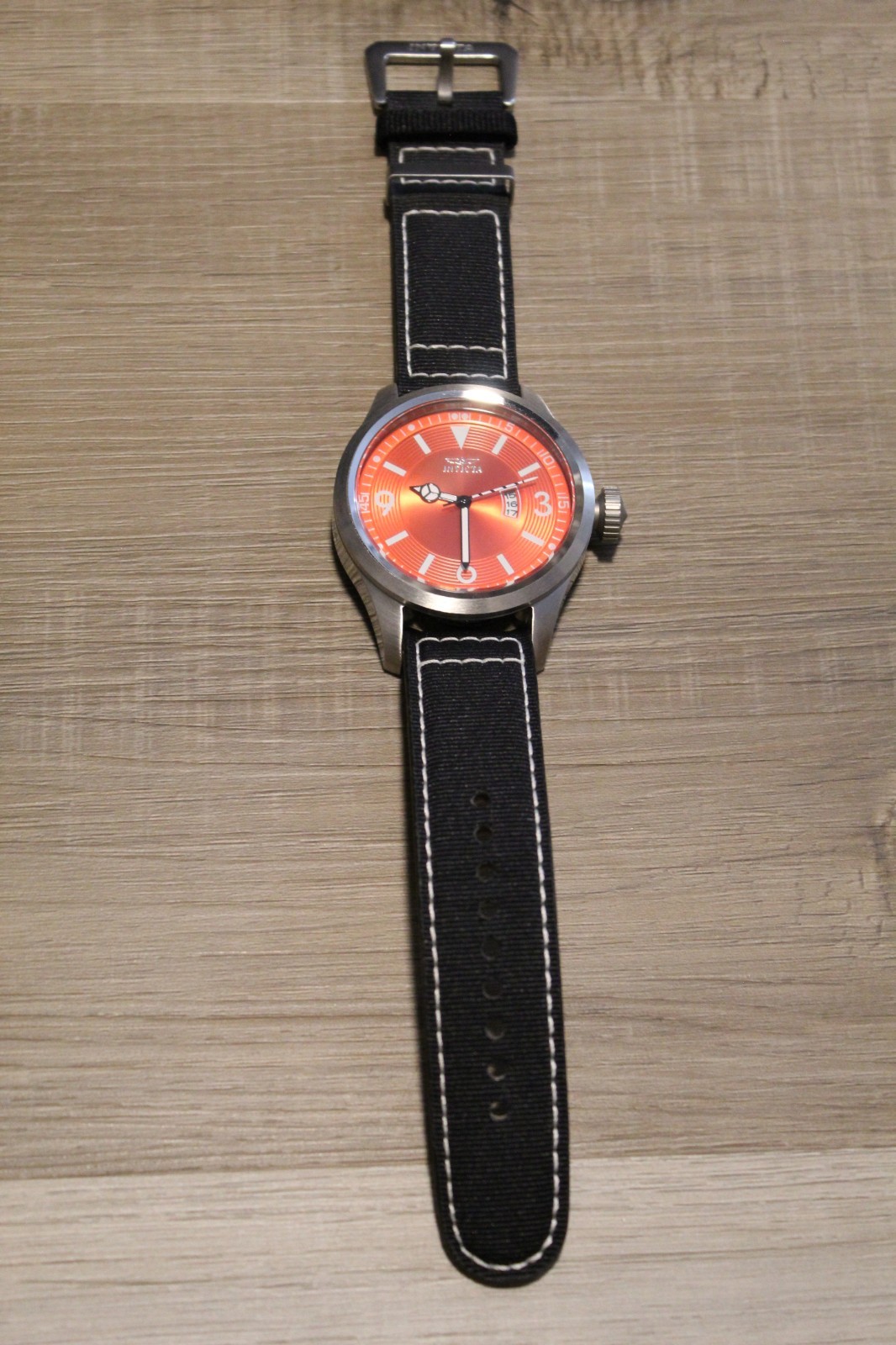

Photos from current listings. Actual item, color, and included accessories may vary.
Mens Dive Watches Buying Guide
Men's dive watches are purpose-built timepieces rated for underwater use, defined by ISO 6425 or 200m+ water resistance, a unidirectional rotating bezel, and luminous markings for low-light legibility. The core trade-off is movement type (quartz vs automatic) and crystal/steel grade—both determine long-term durability and service cost. The decision rule: buy any watch with at least 200m WR, a screw-down crown, and a rotating bezel; skip fashion 'dive-style' watches under 100m WR or with push-pull crowns.
Key takeaways
- ISO 6425 certification requires 200m water resistance, a unidirectional elapsed-time bezel, and legibility in darkness—not all 'dive-style' watches meet it.
- Quartz movements offer +/-15 sec/month accuracy with low maintenance; automatic mechanicals need service every 4-7 years and drift +/-10-30 sec/day.
- Sapphire crystal resists scratches to Mohs 9; mineral glass (including Flame Fusion) scratches at Mohs 5-6 and is the common cost-saving downgrade.
At a glance
- Category
- Wristwatches
- Last updated
- Nov 28, 2026
Current offers
Highlights
- ISO 6425 certification requires 200m water resistance, a unidirectional elapsed-time bezel, and legibility in darkness—not all 'dive-style' watches meet it.
- Quartz movements offer +/-15 sec/month accuracy with low maintenance; automatic mechanicals need service every 4-7 years and drift +/-10-30 sec/day.
- Sapphire crystal resists scratches to Mohs 9; mineral glass (including Flame Fusion) scratches at Mohs 5-6 and is the common cost-saving downgrade.
- 316L stainless steel is the standard case/bracelet grade; 904L or titanium upgrades corrosion resistance and weight but raises cost significantly.
Best use cases
- Best fit: recreational snorkeling or diving to 30m—pick a 200m WR watch with screw-down crown and ISO 6425 bezel; skip 100m 'dive-style' fashion watches.
- Best fit: daily wear with occasional pool/beach use—quartz with sapphire crystal gives accuracy and scratch resistance at lower service cost; skip automatics if you won't pay for servicing.
- Best fit: desk-diver style with business casual—choose a slim 38-42mm case and bracelet; skip oversized 45mm+ cases if you need to fit under a shirt cuff.
- Wrong fit: professional saturation diving—standard 200m watches are insufficient; you need a 300m+ rated diver with helium escape valve and ISO 6425 certification.
Buying tips
- Verify water resistance rating: 200m is the minimum for actual diving; 100m is splash/rain only despite 'dive' styling.
- Check bezel action: a unidirectional 60-click or 120-click bezel with clear detents is required; bidirectional or friction bezels are not dive-compliant.
- Confirm crystal material: sapphire is scratch-resistant and worth the upgrade; mineral glass (even branded 'Flame Fusion') will show wear.
- Match case size to wrist: 38-42mm fits most wrists 6.5-7.5 inches; 44mm+ suits wrists over 7.5 inches or oversized style preference.
Specs
| Water Resistance | 200m+ (ISO 6425) vs 100m |
|---|---|
| Movement Type | Quartz vs Automatic |
| Crystal Material | Sapphire vs Mineral Glass |
| Case Material | 316L Steel vs Titanium |
Related searches
What to check before buying
- Measure wrist circumference and flat width to ensure case diameter and lug-to-lug fit comfortably without overhang.
- Confirm water resistance rating is at least 200m and crown is screw-down before any water activity.
- Check lug width (commonly 20mm or 22mm) if planning to swap straps or bracelets.
- Verify movement type and service interval: quartz needs battery changes every 2-3 years; automatic needs professional service every 4-7 years.
FAQ
Data sources: eBay / Amazon listings and product attribute feeds. Updated Nov 28, 2026.
Some links on this page are affiliate links. If you buy after clicking one, we may earn a commission at no extra cost to you. This does not change which products appear here or their order. Affiliate disclosure.