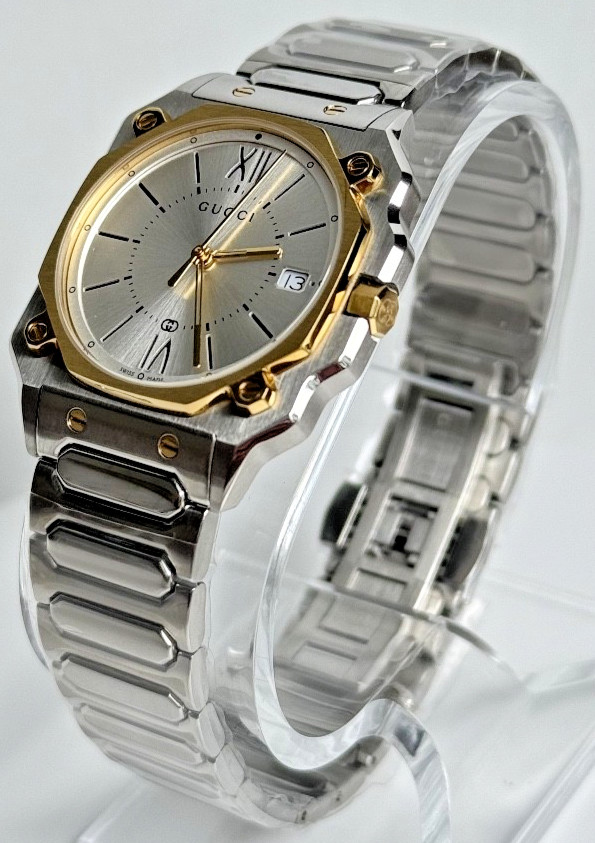

Photos from current listings. Actual item, color, and included accessories may vary.
Ladies Silver Watch Buying Guide
A silver women's watch is defined by its case and bracelet metal (stainless steel, silver-tone alloy, or precious platinum) and its movement type (quartz vs automatic). The core trade-off is quartz accuracy and low maintenance versus mechanical craftsmanship and higher service cost, plus steel vs plated-alloy durability. Choose solid stainless steel or platinum with a named quartz/automatic caliber for longevity; skip plated base-metal cases and unbranded movements if you want a daily-wear piece.
Key takeaways
- Case/bracelet material determines lifespan: 316L stainless steel resists corrosion and refinishing; silver-tone plating over brass wears through at contact points.
- Quartz movements (e.g., Seiko, Ronda, ETA) deliver ±15–20 sec/month with battery swaps every 2–3 years; automatic movements need servicing every 4–7 years.
- Sapphire crystal (9 on Mohs) resists scratches; mineral glass (5–6) scratches with daily wear—check crystal spec before buying.
At a glance
- Category
- Wristwatches
- Last updated
- Nov 29, 2026
Current offers
Highlights
- Case/bracelet material determines lifespan: 316L stainless steel resists corrosion and refinishing; silver-tone plating over brass wears through at contact points.
- Quartz movements (e.g., Seiko, Ronda, ETA) deliver ±15–20 sec/month with battery swaps every 2–3 years; automatic movements need servicing every 4–7 years.
- Sapphire crystal (9 on Mohs) resists scratches; mineral glass (5–6) scratches with daily wear—check crystal spec before buying.
- Water resistance ratings are literal: 30m/3ATM splash-only, 50m/5ATM handwashing, 100m/10ATM swimming; screw-down crowns and casebacks are required for true 100m+.
Best use cases
- Daily office/dress wear: pick a 28–34mm stainless steel quartz with sapphire crystal and 50m+ WR—skip plated alloy and 30m-rated fashion pieces.
- Swimming/shower use: require 100m/10ATM with screw-down crown and caseback; 30–50m rated watches are not suitable for submersion.
- Heirloom/collector intent: choose automatic or precious-metal (platinum/steel Rolex Yacht-Master) with documented service history; avoid quartz fashion brands for resale value.
- Small wrists (under 6 inches): select 26–30mm cases with tapered bracelets; oversized 38mm+ silver cases will overhang and rotate.
Buying tips
- Measure wrist circumference then add 6–10mm for comfort: 5.5–6.5in wrists suit 26–32mm cases; 6.5–7.5in wrists suit 32–38mm.
- Confirm case material explicitly: 'stainless steel' or '316L' for durability; 'silver-tone' or 'base metal' indicates plating that wears off.
- Match movement to maintenance tolerance: quartz for set-and-forget accuracy; automatic only if you accept 4–7 year service intervals.
- Verify water resistance for intended activity: 3ATM splash, 5ATM handwash, 10ATM swim; ensure screw-down crown for 10ATM+.
Specs
| Case Material | Stainless steel vs plated alloy |
|---|---|
| Movement Type | Quartz vs automatic |
| Water Resistance | 3ATM / 5ATM / 10ATM+ |
| Crystal Type | Sapphire vs mineral glass |
Related searches
What to check before buying
- Measure wrist circumference and confirm case diameter fits (26–32mm for small wrists, 32–38mm for medium/large).
- Check crystal type (sapphire preferred) and caseback material (solid steel vs plated) before committing.
- Confirm water resistance rating matches use (3ATM splash, 5ATM handwash, 10ATM swim) and crown type.
- Verify bracelet sizing: removable links or micro-adjust clasp to fit your wrist without extra tools.
FAQ
Data sources: eBay / Amazon listings and product attribute feeds. Updated Nov 29, 2026.
Some links on this page are affiliate links. If you buy after clicking one, we may earn a commission at no extra cost to you. This does not change which products appear here or their order. Affiliate disclosure.