
Photos from current listings. Actual item, color, and included accessories may vary.
Smart Watch Buying Guide
A smart watch is a wrist-worn computer that pairs with a phone to deliver notifications, fitness tracking, and health metrics, with the primary trade-off being battery life versus feature depth (always-on displays and app ecosystems drain power fast). The clear decision rule: buy a model with an advertised multi-day battery and a standard charging standard (magnetic pogo or USB-C) from a brand with a published spec sheet, and skip any listing that omits screen resolution, battery capacity in mAh, or water-resistance rating, as those are the exact specs that separate durable devices from disposable ones.
Median $142.99
Key takeaways
- Battery tier separates real smart watches from fitness bands: 200-300 mAh cells deliver 5-10 days of basic tracking, while 400-500 mAh cells with always-on AMOLED panels last 1-3 days under heavy use.
- Display quality is defined by panel type and resolution: AMOLED (typically 1.4-1.5 inch, 450x450 px) gives true blacks and always-on capability, while TFT LCD at 240x240 px looks washed out and cannot dim to a single watch face.
- Water-resistance is a hard rating, not a marketing word: IP68 survives dust and 1.5 m submersion for 30 minutes, 5 ATM (50 m) is swim-proof, and 10 ATM is required for diving; anything rated IPX4 or unrated should never be worn in a pool.
At a glance
- Category
- Wristwatches
- Last updated
- Nov 27, 2026
Current offers
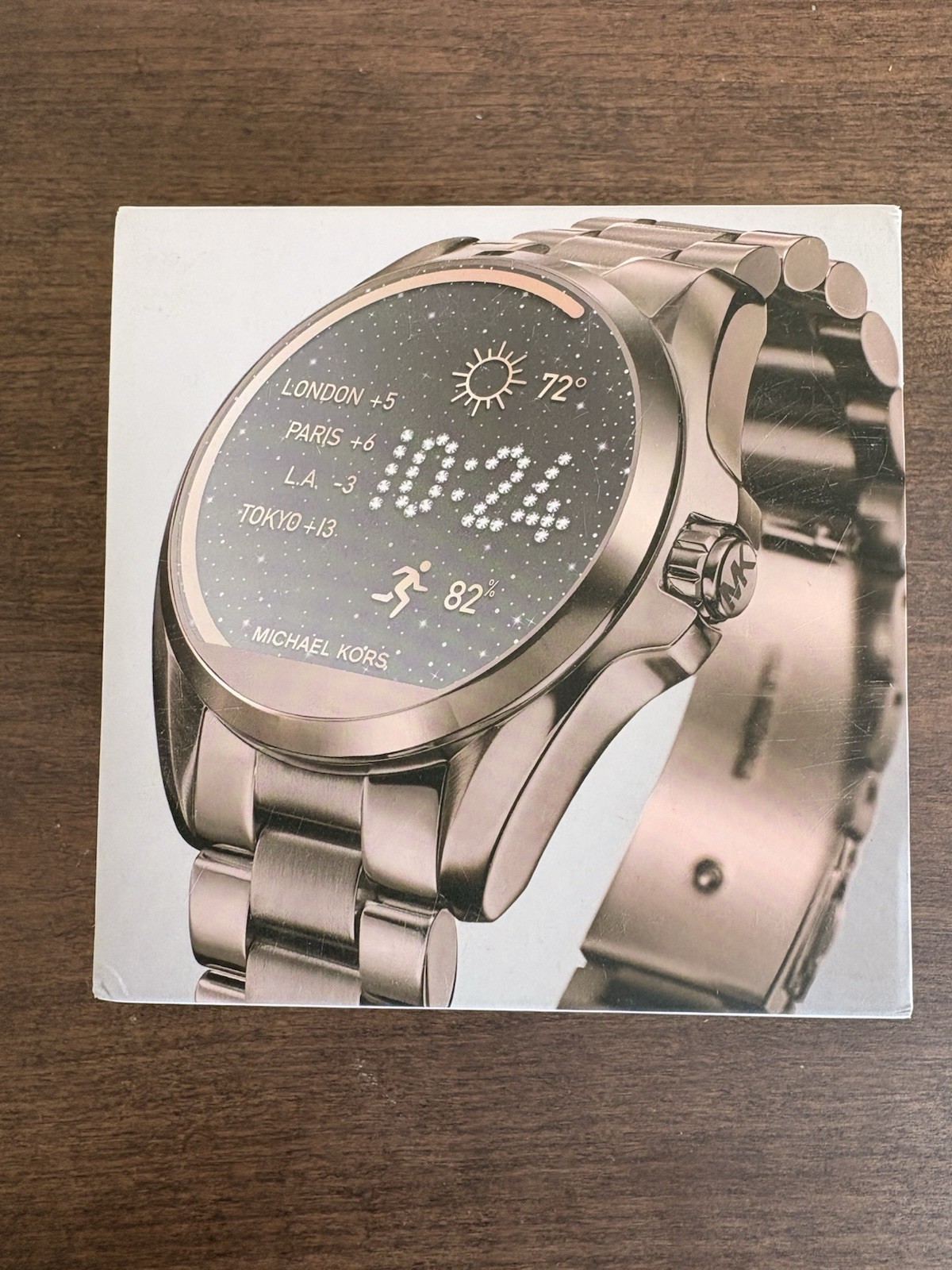 Michael Kors access smart Watch with Accessories$150.00View on eBay
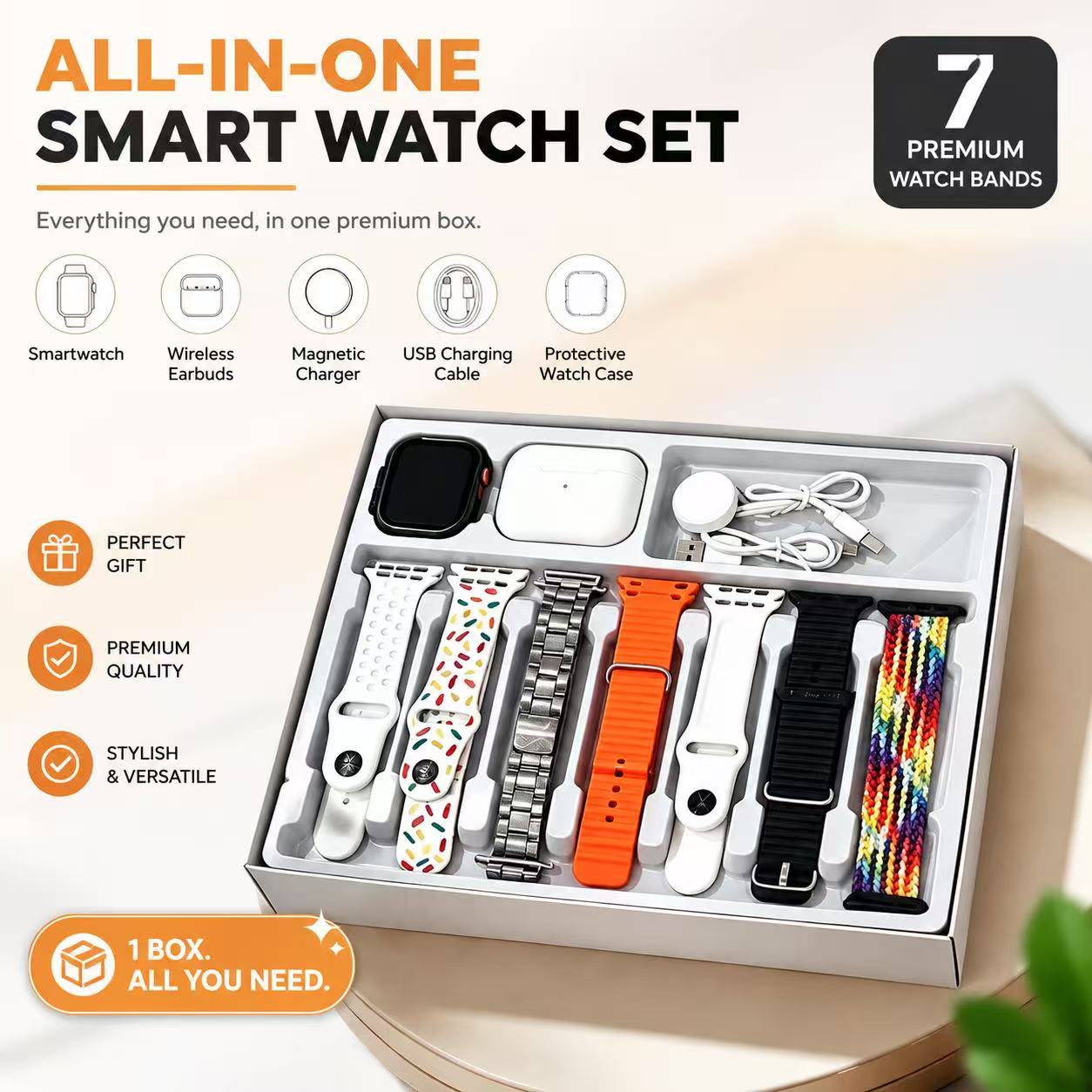 (Gold)Ten-in-One Smart Electronic Watch$30.99View on Mallflare
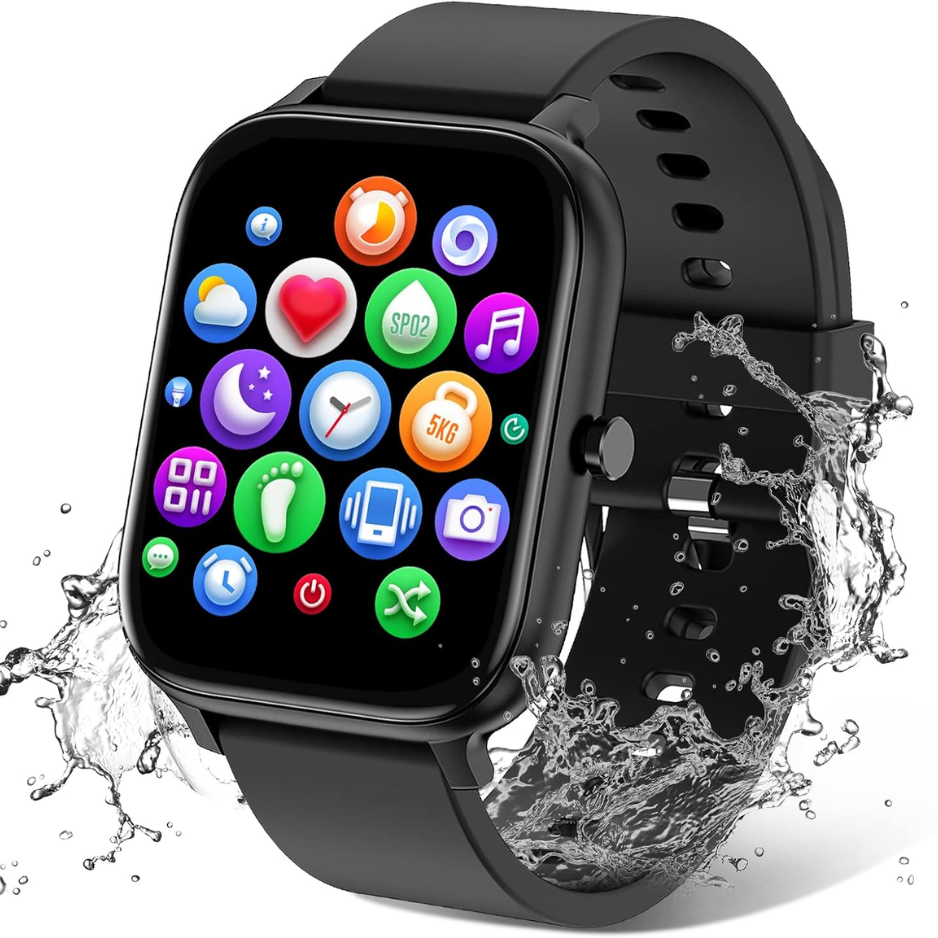 Smart Watch For Men & Women, 1.69 Touch Screen Fitness Tracker$98.99View on Mallflare
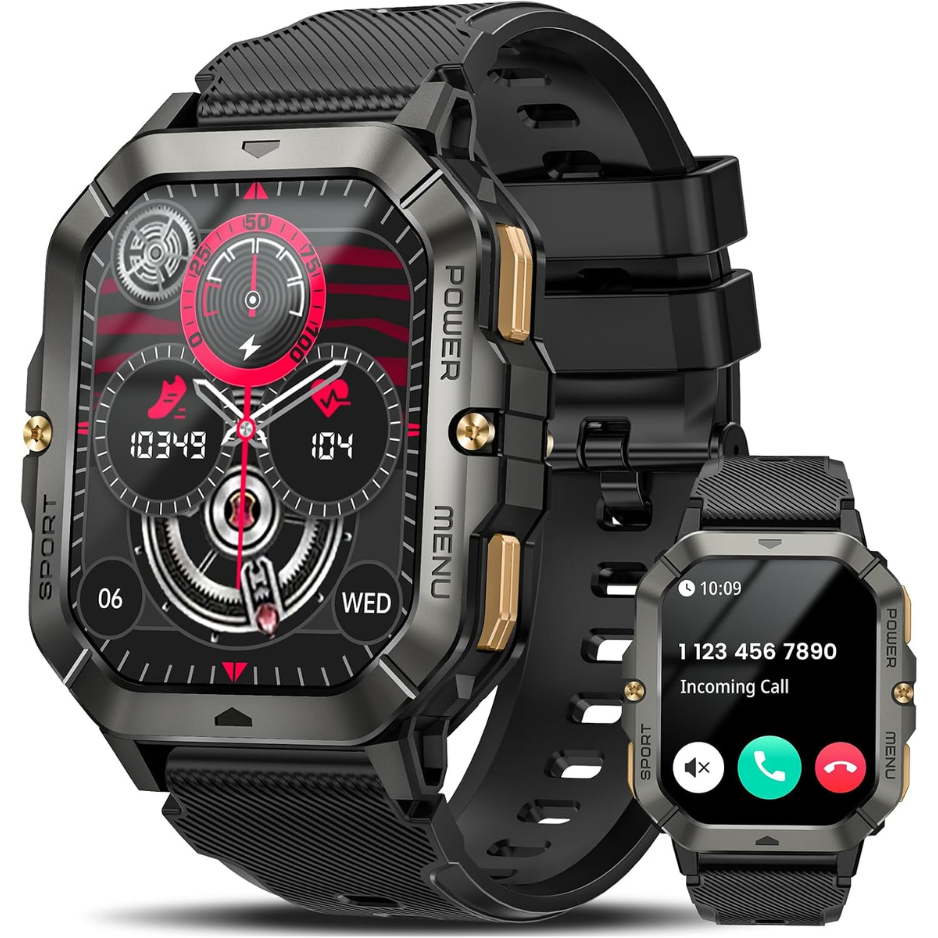 Military Smart Watch For Men, 2.02 Fitness Tracker With Calls & Sports$142.99View on Mallflare
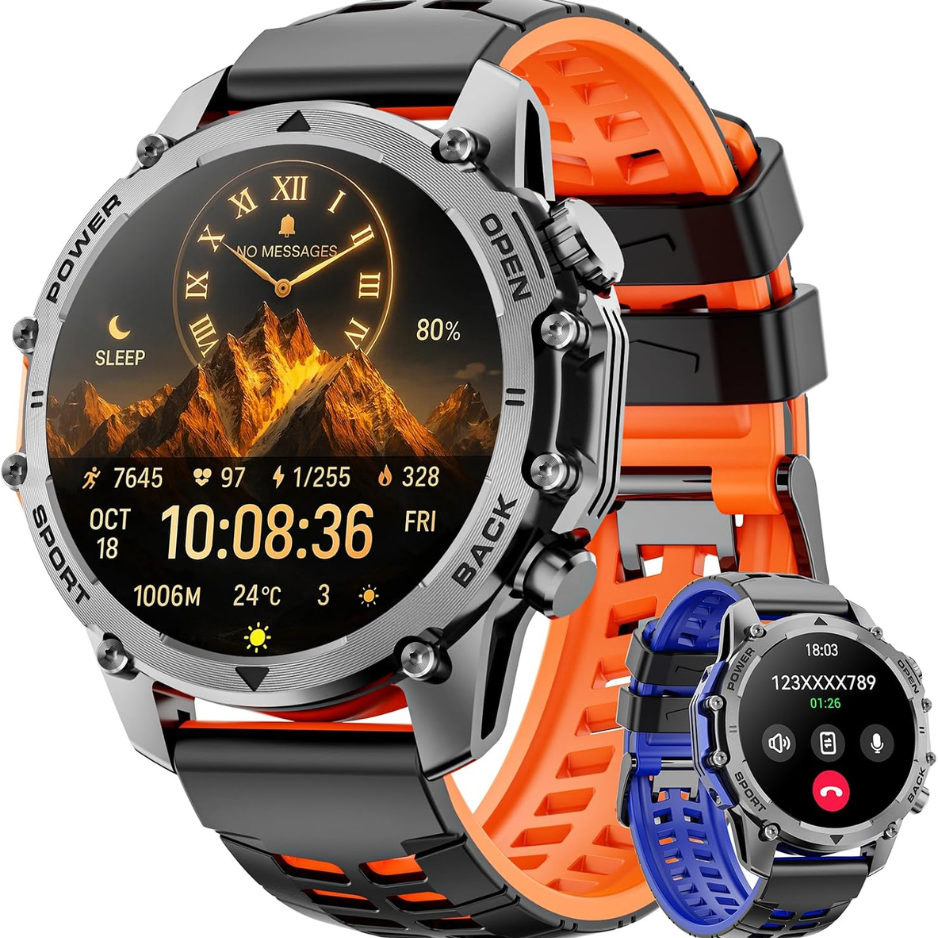 Smart Watch For Men, 1.52 HD Military Fitness Tracker$181.99View on Mallflare
Highlights
- Battery tier separates real smart watches from fitness bands: 200-300 mAh cells deliver 5-10 days of basic tracking, while 400-500 mAh cells with always-on AMOLED panels last 1-3 days under heavy use.
- Display quality is defined by panel type and resolution: AMOLED (typically 1.4-1.5 inch, 450x450 px) gives true blacks and always-on capability, while TFT LCD at 240x240 px looks washed out and cannot dim to a single watch face.
- Water-resistance is a hard rating, not a marketing word: IP68 survives dust and 1.5 m submersion for 30 minutes, 5 ATM (50 m) is swim-proof, and 10 ATM is required for diving; anything rated IPX4 or unrated should never be worn in a pool.
- Calling models need a speaker, microphone, and Bluetooth 5.0+ with a dedicated call chip; watches without these handle notifications only, and the presence of a side speaker grille plus a 'Bluetooth calling' spec is the definitive indicator.
Best use cases
- Best for fitness-first buyers: pick a 1.4-1.5 inch AMOLED model with GPS, heart-rate, and SpO2 sensors plus 5 ATM rating and 7+ day battery in 'fitness tracker' style; skip bulky 2.02 inch rugged models if you wear a dress watch to work.
- Best for phone-free calling and notifications: choose a model with an explicit Bluetooth calling spec, speaker/mic, and 1.85-2.02 inch display for readability; skip bare fitness bands with no speaker, as they cannot take calls.
- Best for rough outdoor and military-style use: pick a 2.02 inch rugged case with metal bezel, 10 ATM or IP69K rating, and 400+ mAh battery; skip slim fashion smart watches, whose glass and 200 mAh cells will not survive impact or multi-day trips.
- Wrong fit for anyone expecting true smartwatch apps: budget trackers run RTOS firmware with no app store — if you need third-party apps or contactless payment, buy a Wear OS or watchOS model instead.
Buying tips
- Match case size to wrist circumference: 38-40 mm cases suit wrists under 16 cm, 42-44 mm suits 16-18 cm, and 46-50 mm rugged cases need 18 cm+; a case wider than your wrist flat looks oversized and catches on sleeves.
- Check the charging connector before buying: magnetic pogo pins are proprietary and replacement cables are model-specific, while USB-C charging (or a standard Qi pad) means you can travel with one cable for phone and watch.
- Verify sensor count and firmware: a real health watch lists heart rate, SpO2, sleep, and optionally ECG or skin temperature; models listing only 'fitness tracker' with step counting lack the optical sensor array for anything more.
- Prefer Bluetooth 5.0 or newer and confirm companion-app OS support (Android 6.0+/iOS 12+ typical); older Bluetooth 4.2 drops connection beyond 10 m and drains phone battery faster.
Specs
| Display Panel | AMOLED vs TFT LCD touchscreen |
|---|---|
| Battery Life | 1-3 days heavy use / 5-10 days basic |
| Water Resistance | IP68 / 5 ATM / 10 ATM |
| Calling Support | Bluetooth calling w/ speaker+mic |
Related searches
What to check before buying
- Measure your wrist circumference with a tape before choosing case size: under 16 cm pick 38-42 mm, 16-18 cm pick 42-45 mm, over 18 cm can carry 46-50 mm rugged cases.
- Confirm your phone's OS version meets the watch's companion-app minimum (commonly Android 6.0+ or iOS 12+), and that the app is available in your region's app store.
- Check water-resistance against your actual exposure: 5 ATM for swimming, IP68 for showers and rain, and 10 ATM only if you dive; never trust an unrated or IPX4 model near water.
- Verify the charging cable type and whether a spare is included or sold separately, and confirm your region's plug type for any included wall adapter (US/AU/UK/EU).
FAQ
Data sources: eBay / Amazon listings and product attribute feeds. Updated Nov 27, 2026.
Some links on this page are affiliate links. If you buy after clicking one, we may earn a commission at no extra cost to you. This does not change which products appear here or their order. Affiliate disclosure.