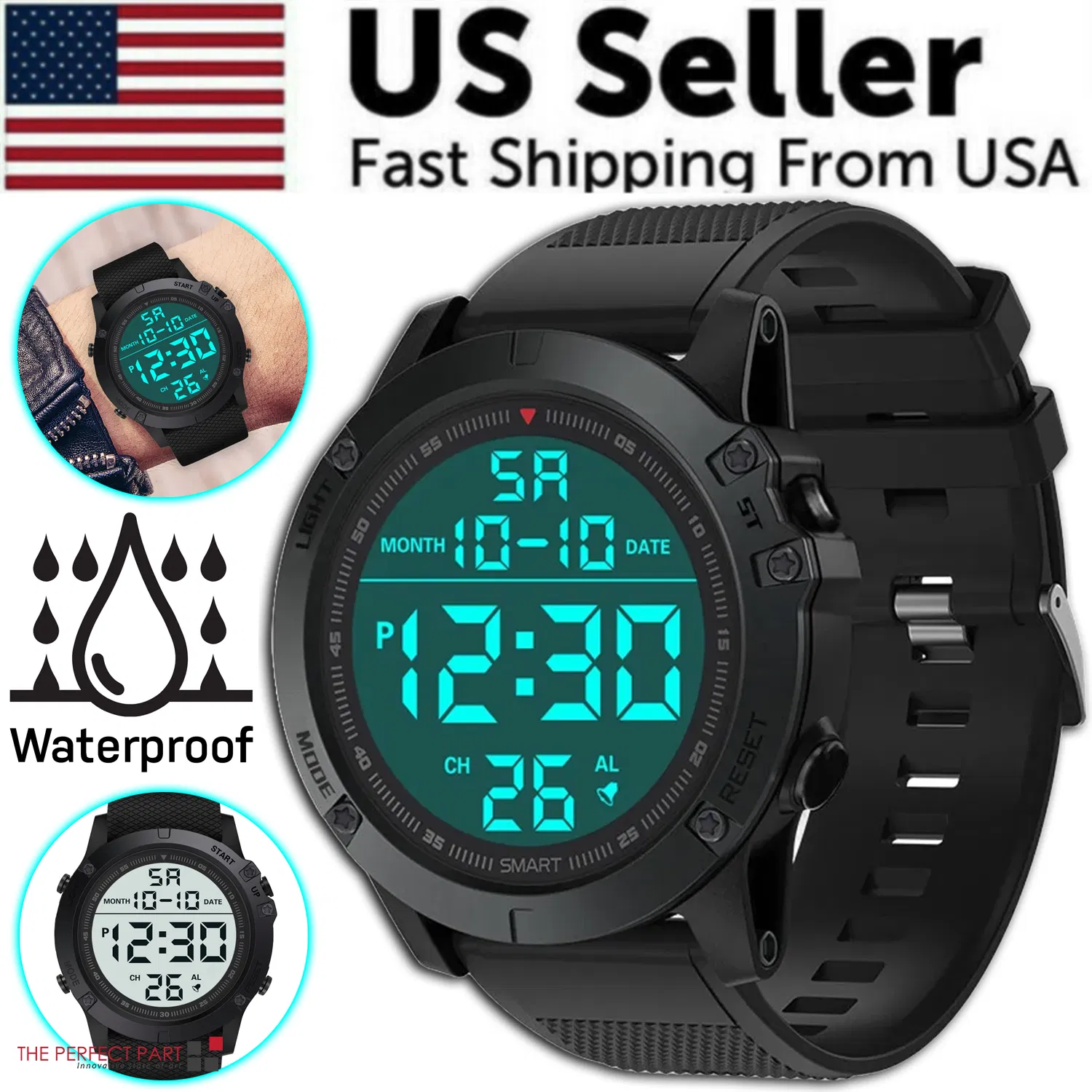

Photos from current listings. Actual item, color, and included accessories may vary.
Tactical Watches Buying Guide
Tactical watches are rugged timepieces built for field use, defined by shock resistance, legible displays, and reliable timekeeping in harsh conditions. The core trade-off is between analog mechanical durability (sapphire crystal, screw-down crowns) and digital multi-function capability (sensors, backlight, extended battery life). Buy analog if you need passive durability and no charging; buy digital if you need alarms, timers, and illumination without maintenance.
Median $23.44
Key takeaways
- Digital tactical watches typically use CR2032 or CR2016 coin cells rated 2–5 years, while analog quartz models run 2–3 years on silver-oxide cells; automatics require service every 4–7 years.
- Sapphire crystal (Mohs 9) resists scratching far better than mineral glass (Mohs 5–6) or acrylic; tactical analogs with sapphire and 200m water resistance are the durability benchmark.
- Digital multi-function models pack compass, barometer, altimeter, and backlight into resin cases weighing 50–80g, versus 120–200g for steel analog divers with comparable water resistance.
At a glance
- Category
- Wristwatches
- Last updated
- Nov 28, 2026
Current offers
Highlights
- Digital tactical watches typically use CR2032 or CR2016 coin cells rated 2–5 years, while analog quartz models run 2–3 years on silver-oxide cells; automatics require service every 4–7 years.
- Sapphire crystal (Mohs 9) resists scratching far better than mineral glass (Mohs 5–6) or acrylic; tactical analogs with sapphire and 200m water resistance are the durability benchmark.
- Digital multi-function models pack compass, barometer, altimeter, and backlight into resin cases weighing 50–80g, versus 120–200g for steel analog divers with comparable water resistance.
- ISO 22810 defines water resistance ratings: 50m for splashes, 100m for swimming, 200m for diving; tactical use in wet or dusty fields demands at least 100m and a screw-down caseback.
Best use cases
- Best fit: field work, hiking, or military use—pick a digital model with 100m+ water resistance, backlight, and 2+ year battery; skip dress-style analogs with push-pull crowns.
- Best fit: everyday rugged wear with analog legibility—choose a quartz analog with sapphire crystal, 200m rating, and screw-down crown; skip resin digital if you need formal versatility.
- Best fit: survival/prepper kits—select a multi-sensor digital (compass, altimeter, barometer) with solar charging to avoid battery swaps; skip basic LED digitals lacking sensors.
- Wrong fit: diving beyond 100m—tactical watches are not dive computers; use a dedicated dive watch rated 200m+ with ISO 6425 compliance instead.
Buying tips
- Verify water resistance rating: 50m is splash-only, 100m suits swimming, 200m handles diving; tactical use requires 100m minimum with screw-down crown or caseback.
- Choose sapphire crystal over mineral glass for scratch resistance; if budget limits you to mineral, accept periodic polishing or replacement.
- Digital battery life: CR2032 cells last 2–5 years; solar-assisted models extend to 10+ years but cost more—match to your maintenance tolerance.
- Case material: resin/polycarbonate saves weight (50–80g) but scratches; stainless steel (120–200g) resists impact better but is heavier—pick based on activity.
Specs
| Movement Type | Digital quartz vs analog quartz vs automatic |
|---|---|
| Water Resistance | 50m splash / 100m swim / 200m dive |
| Crystal Material | Sapphire vs mineral vs acrylic |
| Case Material | Resin/polycarbonate vs stainless steel |
Related searches
What to check before buying
- Measure wrist circumference: cases over 45mm diameter overwhelm wrists under 7 inches; 40–44mm suits most tactical buyers.
- Confirm lug width (commonly 20mm or 22mm) if swapping to NATO or Zulu straps for field durability.
- Check water resistance rating matches your environment: 100m for wet fields, 200m for water sports, 50m only for dry land.
- Verify battery type and replacement procedure: screw-back cases need tools; snap-back resin cases are easier but less watertight.
FAQ
Data sources: eBay / Amazon listings and product attribute feeds. Updated Nov 28, 2026.
Some links on this page are affiliate links. If you buy after clicking one, we may earn a commission at no extra cost to you. This does not change which products appear here or their order. Affiliate disclosure.