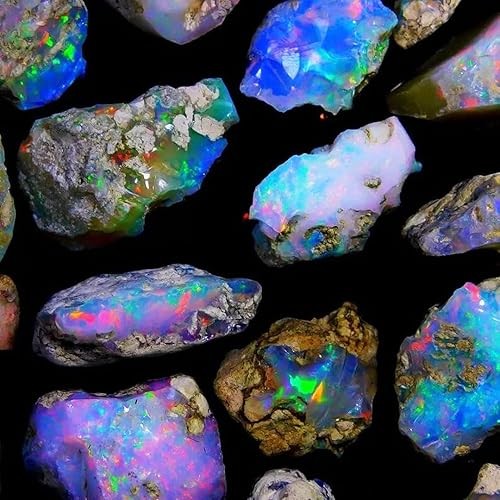

Photos from current listings. Actual item, color, and included accessories may vary.
Rough Red Opal Buying Guide
Rough red opal is natural opal in its unpolished state, valued for its play-of-color and potential to cut into gemstones. The core trade-off is between stable, durable Australian sedimentary opal and higher-yield but fracture-prone Ethiopian volcanic opal. Choose Australian rough for reliable cutting and jewelry use; choose Ethiopian only if you accept stabilization risk and want larger, brighter specimens.
Key takeaways
- Australian opal forms in sedimentary host rock and is generally non-porous and stable; Ethiopian opal is volcanic and can craze or crack when dried.
- Ethiopian rough often has high water content (up to 10%) and may require slow drying or treatment; Australian rough is typically lower and more stable.
- Play-of-color intensity is graded by brightness (1-5) and pattern; red flashes are rarest and command the highest per-carat value in both origins.
At a glance
- Category
- Loose Gemstones & Pearls
- Last updated
- Nov 28, 2026
Current offers
Highlights
- Australian opal forms in sedimentary host rock and is generally non-porous and stable; Ethiopian opal is volcanic and can craze or crack when dried.
- Ethiopian rough often has high water content (up to 10%) and may require slow drying or treatment; Australian rough is typically lower and more stable.
- Play-of-color intensity is graded by brightness (1-5) and pattern; red flashes are rarest and command the highest per-carat value in both origins.
- Rough is sold by weight in carats (1 gram = 5 carats); yield loss during cutting averages 50-70%, so a 150-ct rough may yield a 45-75 ct finished stone.
Best use cases
- Best for custom cutters: Australian sedimentary rough in 10-50 ct pieces for stable cabochons and faceted stones; skip Ethiopian if you need predictable yield.
- Best for specimen collectors: Ethiopian fire opal rough with vivid red play-of-color for display; skip Australian if you want maximum flash per dollar.
- Wrong for beginners: high-dome Ethiopian rough for rings or pendants without stabilization; choose low-dome Australian or pre-stabilized material instead.
Buying tips
- Buy Australian rough for jewelry; its non-porous structure resists crazing. Choose Ethiopian only if you will store it in sealed containers with controlled humidity.
- Calculate realistic yield: expect to lose 50-70% of rough weight during cutting. A 150-ct parcel may yield 45-75 ct of finished stones, so price per finished carat accordingly.
- Inspect for fractures: hold rough under light and rotate; visible cracks or cloudy zones will worsen during cutting. Reject pieces with more than 20% fracture area.
- Check color stability: Ethiopian opal can absorb water and lose play-of-color temporarily. Australian opal retains color permanently without treatment.
Specs
| Origin Type | Australian sedimentary vs Ethiopian volcanic |
|---|---|
| Stability | Non-porous (AU) vs porous/crazing (ET) |
| Play-of-Color | Red rarest; brightness graded 1-5 |
| Cutting Yield | 50-70% weight loss typical |
Related searches
What to check before buying
- Confirm origin and stability: Australian sedimentary opal for durable wear; Ethiopian volcanic opal for specimens only with humidity control.
- Measure rough dimensions: ensure pieces are at least 8-10 mm thick to allow for dome cutting and polishing loss.
- Verify carat weight and count: lots should specify total carats and number of pieces; a 200-ct lot of small pieces yields less than a single 50-ct piece.
- Check for treatment: ask if Ethiopian rough has been stabilized or treated; untreated material may craze within weeks in dry climates.
FAQ
Data sources: eBay / Amazon listings and product attribute feeds. Updated Nov 28, 2026.
Some links on this page are affiliate links. If you buy after clicking one, we may earn a commission at no extra cost to you. This does not change which products appear here or their order. Affiliate disclosure.