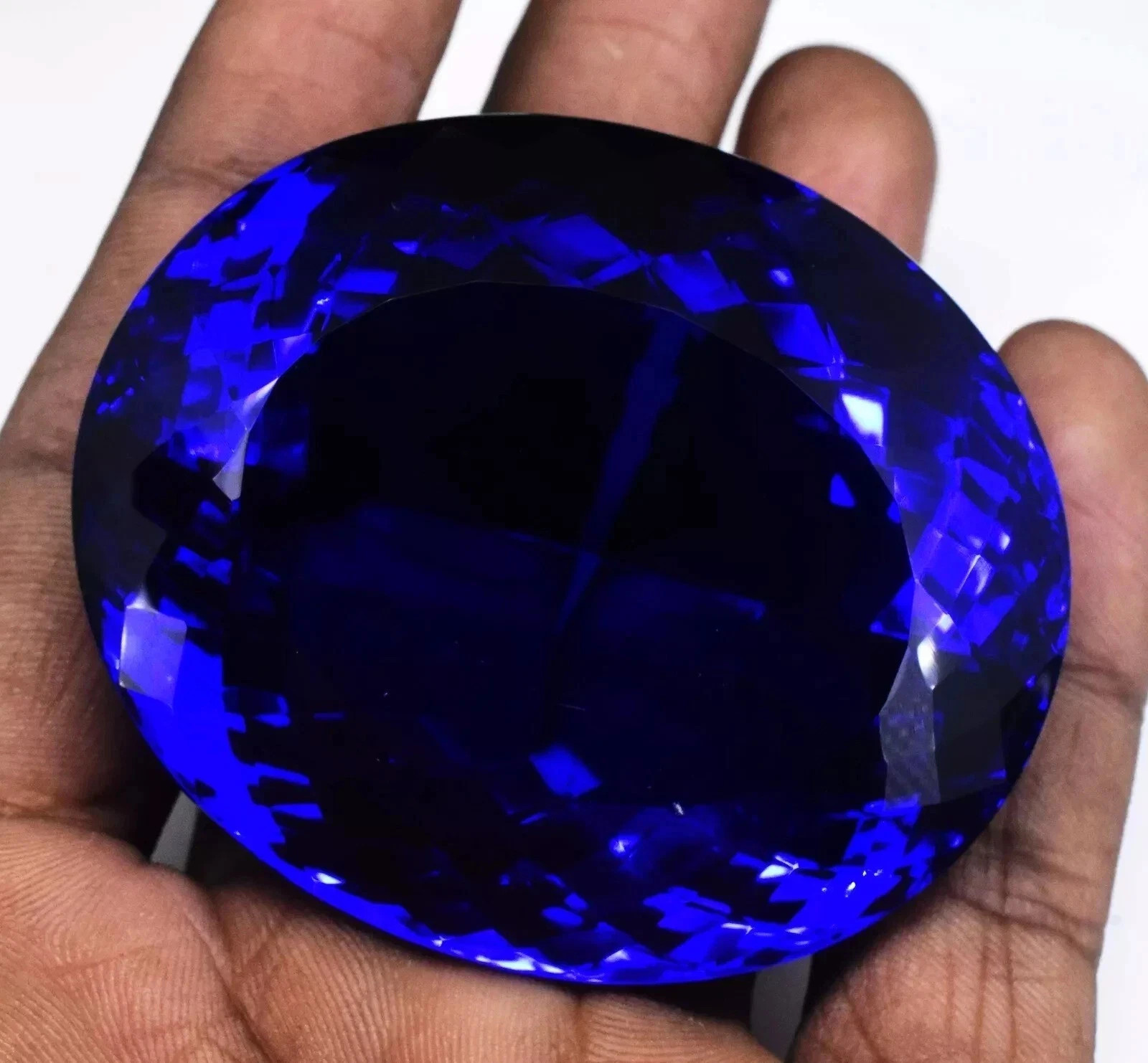

Photos from current listings. Actual item, color, and included accessories may vary.
Tanzanite Loose Gem Buying Guide
Tanzanite is a trichroic zoisite gemstone found only in Tanzania, prized for its violet-blue pleochroism and relatively soft Mohs hardness of 6.5–7. The core trade-off is color saturation versus clarity and carat weight—deep violet-blue stones command premiums while pale or heavily included pieces are common compromises. The decision rule: buy certified natural, unheated tanzanite with strong violet-blue saturation and eye-clean clarity, and skip stones with visible fractures or suspiciously low pricing that signals glass filling or synthetic material.
Key takeaways
- Tanzanite is 1000× rarer than diamond and found only in a 4 km² area near Mount Kilimanjaro; natural stones are not treated beyond standard heat (400–600°C) to enhance blue-violet color.
- Mohs hardness 6.5–7 with perfect cleavage means tanzanite is best suited to earrings, pendants, and occasional-wear rings—not daily-wear bracelets or men's rings.
- Color grading tiers: AAA/vivid violet-blue (top 5%), AA/medium violet-blue, A/light lilac; pleochroic rough shows blue, violet, and burgundy axes, so cut orientation determines face-up color.
At a glance
- Category
- Loose Gemstones & Pearls
- Last updated
- Nov 28, 2026
Current offers
Highlights
- Tanzanite is 1000× rarer than diamond and found only in a 4 km² area near Mount Kilimanjaro; natural stones are not treated beyond standard heat (400–600°C) to enhance blue-violet color.
- Mohs hardness 6.5–7 with perfect cleavage means tanzanite is best suited to earrings, pendants, and occasional-wear rings—not daily-wear bracelets or men's rings.
- Color grading tiers: AAA/vivid violet-blue (top 5%), AA/medium violet-blue, A/light lilac; pleochroic rough shows blue, violet, and burgundy axes, so cut orientation determines face-up color.
- Standard treatments: heat-only is industry-accepted and permanent; glass/resin filling, coating, and diffusion are undisclosed enhancements that destabilize the stone and void any credible certification.
Best use cases
- Best fit: pendant or stud earring settings in 14k/18k gold or platinum—protects the stone from impact and shows off face-up violet-blue color; pick 6×4 mm to 8×6 mm ovals or cushions.
- Best fit: collector or investment-grade single stone—choose certified (GIA, AGL, or GRS) unheated natural tanzanite above 2 ct with vivid saturation and VS clarity; skip parcels without origin/heat disclosure.
- Wrong fit: daily-wear engagement ring or bracelet—tanzanite's perfect cleavage and 6.5–7 hardness make it prone to chipping; choose sapphire or diamond for those roles.
- Wrong fit: bargain 'tanzanite' lots with no certification under 1 ct—likely pale, heavily included, or synthetic forsterite; instead buy calibrated single stones from a certified seller with a return window.
Buying tips
- Insist on a recognized lab report (GIA, AGL, GRS, or Gübelin) stating 'natural tanzanite' and 'heat' or 'no indication of heat'; any 'glass-filled' or 'coated' disclosure is a reject.
- Judge color face-up under daylight-equivalent (5500K) light: top-tier shows strong violet-blue with no gray or brown mask; brownish or pale lilac stones should be priced well below vivid grades.
- Match carat to setting: 6×4 mm oval ≈ 0.5–0.6 ct, 7×5 mm ≈ 0.9–1.0 ct, 8×6 mm ≈ 1.5–1.8 ct; calibrated sizes make replacement and setting sourcing straightforward.
- Check clarity at 10× loupe—VS or eye-clean is the practical ceiling; visible fractures or surface-reaching inclusions dramatically raise breakage risk in prong settings.
Specs
| Species | Zoisite (tanzanite variety) |
|---|---|
| Mohs Hardness | 6.5–7 (perfect cleavage) |
| Color Grade | Vivid violet-blue to pale lilac |
| Standard Treatment | Heat 400–600°C (accepted) |
Related searches
What to check before buying
- Confirm the setting's prong or bezel coverage protects the stone's girdle and pavilion; open-backed settings risk chipping on tanzanite's perfect cleavage.
- Verify the seller supplies a certificate number you can look up directly on the lab's website (GIA Report Check, AGL, GRS) before purchase.
- Measure your ring or pendant opening in millimeters to match calibrated stone dimensions; tanzanite is cut in standard 6×4, 7×5, 8×6, and 9×7 mm sizes.
- Check return policy allows at least 14 days for independent appraisal; a legitimate natural tanzanite should survive loupe and UV/spectroscopy verification.
FAQ
Data sources: eBay / Amazon listings and product attribute feeds. Updated Nov 28, 2026.
Some links on this page are affiliate links. If you buy after clicking one, we may earn a commission at no extra cost to you. This does not change which products appear here or their order. Affiliate disclosure.