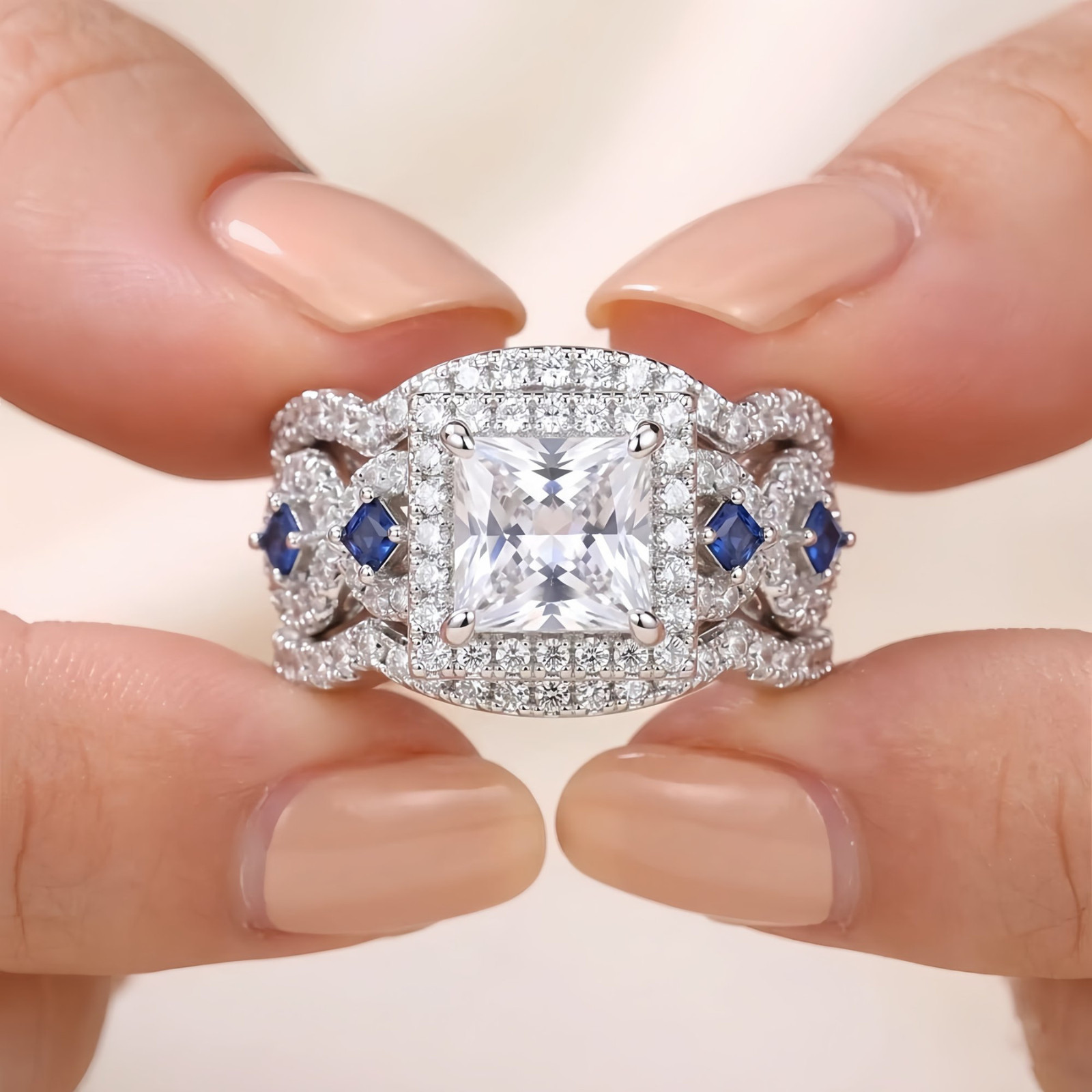

Photos from current listings. Actual item, color, and included accessories may vary.
Blue Sapphire Engagement Ring Buying Guide
A blue sapphire engagement ring centers on a corundum gemstone (9 on the Mohs scale) that is durable enough for daily wear, but the buying decision hinges on treatment status, color saturation, and setting architecture. Untreated, eye-clean stones with vivid saturation and a protective bezel or low-profile prong setting separate heirloom-grade rings from compromise pieces that may fade, chip, or require replacement.
Key takeaways
- Sapphire hardness is 9 Mohs — second only to diamond (10) — making it suitable for everyday engagement wear without the chipping risk of softer stones like opal or emerald.
- Unheated (untreated) sapphires command a premium over heat-treated stones; heat treatment is standard and stable, while fracture-filling and diffusion are lower-grade treatments to avoid.
- Bezel settings enclose the girdle and protect against edge chipping; prong settings expose more stone but require 4-6 sturdy prongs (minimum 1.5 mm tip diameter) for security.
At a glance
- Category
- Rings & Earrings
- Last updated
- Nov 28, 2026
Current offers
Highlights
- Sapphire hardness is 9 Mohs — second only to diamond (10) — making it suitable for everyday engagement wear without the chipping risk of softer stones like opal or emerald.
- Unheated (untreated) sapphires command a premium over heat-treated stones; heat treatment is standard and stable, while fracture-filling and diffusion are lower-grade treatments to avoid.
- Bezel settings enclose the girdle and protect against edge chipping; prong settings expose more stone but require 4-6 sturdy prongs (minimum 1.5 mm tip diameter) for security.
- Color grade drives value more than carat: vivid, medium-dark royal blue with strong saturation and even tone outperforms pale or overly dark stones at the same weight.
Best use cases
- Best fit: Active hands-on lifestyle — choose a bezel-set or low-profile prong sapphire in 14k/18k gold; skip high-profile solitaires that snag and expose the girdle to impact.
- Best fit: Heirloom or investment intent — select an untreated (no-heat) sapphire with a reputable lab report (GIA, AGL, or Gübelin); skip diffusion-treated or fracture-filled stones marketed as 'natural'.
- Best fit: Budget-conscious but durable — pick a heat-treated sapphire with eye-clean clarity in a 10k/14k gold or platinum setting; skip opaque or heavily included stones that sacrifice brilliance for size.
Buying tips
- Prioritize color over carat: a 1-ct vivid royal blue sapphire outshines a 2-ct pale or greyish stone; look for medium-dark tone and strong saturation with no visible color zoning.
- Demand treatment disclosure: 'heat only' is acceptable and stable; avoid fracture-filled (clarity-enhanced) or lattice-diffused stones, which are fragile and not heirloom-grade.
- Match setting metal to wear: platinum (950) and 18k gold are denser and hold prongs longer; 14k gold is harder and more scratch-resistant — both are durable, but platinum resists prong wear best.
- Verify girdle thickness: choose a medium to slightly thick girdle (not knife-edge or extremely thin) to prevent chipping; avoid stones with large surface-reaching inclusions near the girdle.
Specs
| Gem Hardness | 9 Mohs (corundum) |
|---|---|
| Treatment Grade | Unheated > Heat-only > Filled |
| Setting Protection | Bezel > Low prong > High prong |
| Metal Durability | Platinum 950 / 14k-18k gold |
Related searches
What to check before buying
- Confirm finger size with a professional sizer — ring resizing on sapphire rings with full-eternity or channel-set bands may be impossible or costly, so size accurately upfront.
- Request the gemstone lab report and verify treatment status (unheated vs heat-treated) matches the seller's claim before purchase.
- Check setting height: measure from finger to top of stone — low-profile (under 6 mm) suits gloves and active wear; high-profile (7 mm+) suits formal wear but snags.
- Verify metal hallmark (PT950, 18K, 14K) and confirm the band width is at least 2 mm for structural durability; thinner shanks risk bending.
FAQ
Data sources: eBay / Amazon listings and product attribute feeds. Updated Nov 28, 2026.
Some links on this page are affiliate links. If you buy after clicking one, we may earn a commission at no extra cost to you. This does not change which products appear here or their order. Affiliate disclosure.