
Photos from current listings. Actual item, color, and included accessories may vary.
Diamond Stud Earring Buying Guide
Diamond stud earrings are a foundational jewelry purchase where the primary trade-off is between natural vs. lab-grown stones and solid gold vs. plated/base metal settings. The decision rule is simple: prioritize certified natural or lab-grown diamonds in 14K+ solid gold for heirloom durability; treat plated sterling, simulated stones, and fashion multi-packs as temporary accessories, not investments.
Median $400.45
Key takeaways
- Natural diamonds carry GIA/AGS certification with graded color (D–Z) and clarity (FL–I2); lab-grown stones are chemically identical but trade at a steep discount and require IGI or GCAL reports for verification.
- Setting metal determines lifespan: 14K/18K solid gold (585/750 stamp) resists tarnish for decades, while gold-plated brass or 925 sterling with rhodium flash wears through in months of daily use.
- Stone size math: 1.00 ct total weight (0.50 ct per ear) reads as a classic everyday stud; 2.00 ct total (1.00 ct each) is a statement look; spreads vary by cut, so a 6.5 mm round brilliant is the benchmark for 1.00 ct per ear.
At a glance
- Category
- Rings & Earrings
- Last updated
- Nov 29, 2026
Current offers
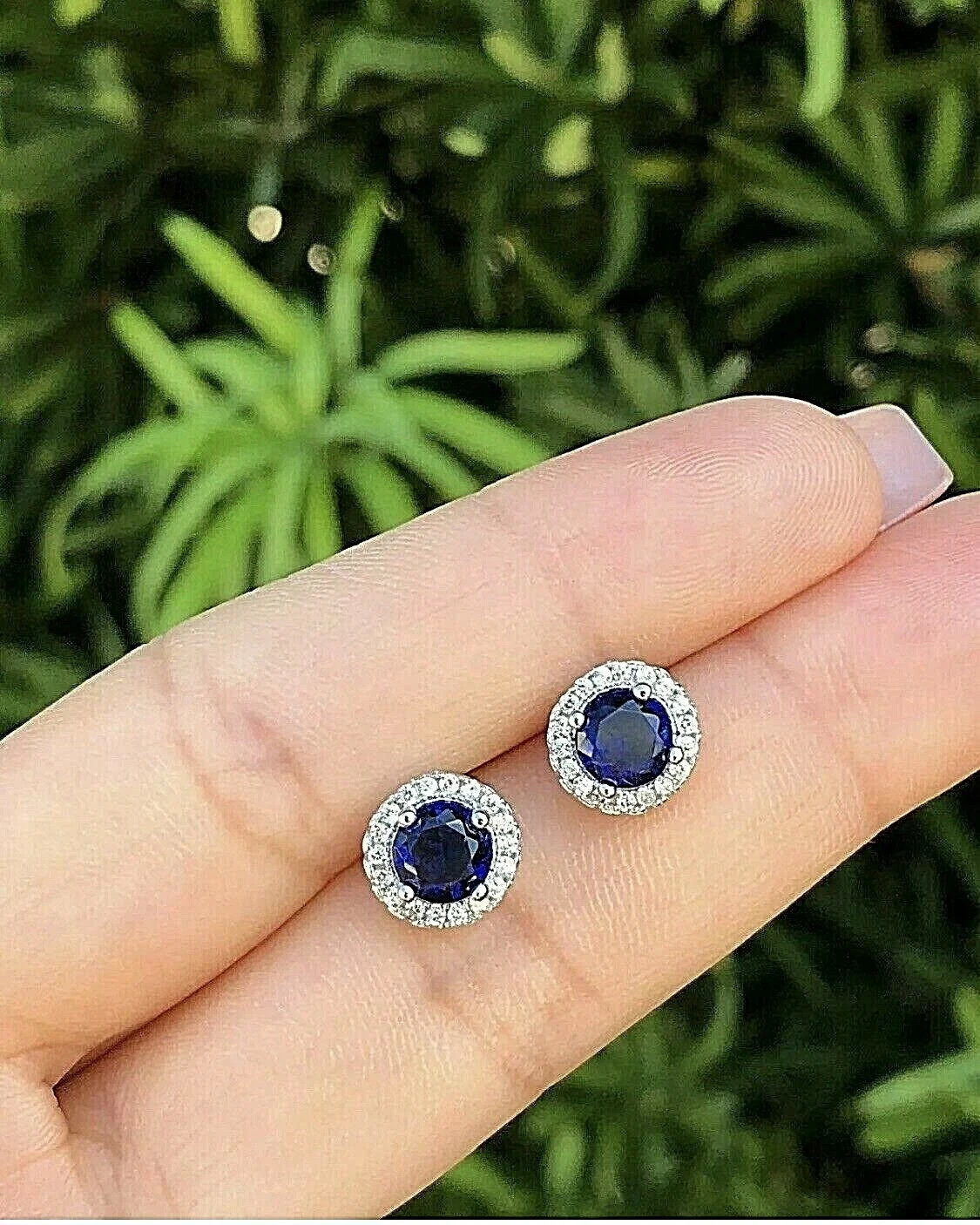 Round Lab Created Sapphire & Diamond Halo Stud Earrings in 14K White Gold Plated$45.09Last checked Nov 28, 2026View on eBay
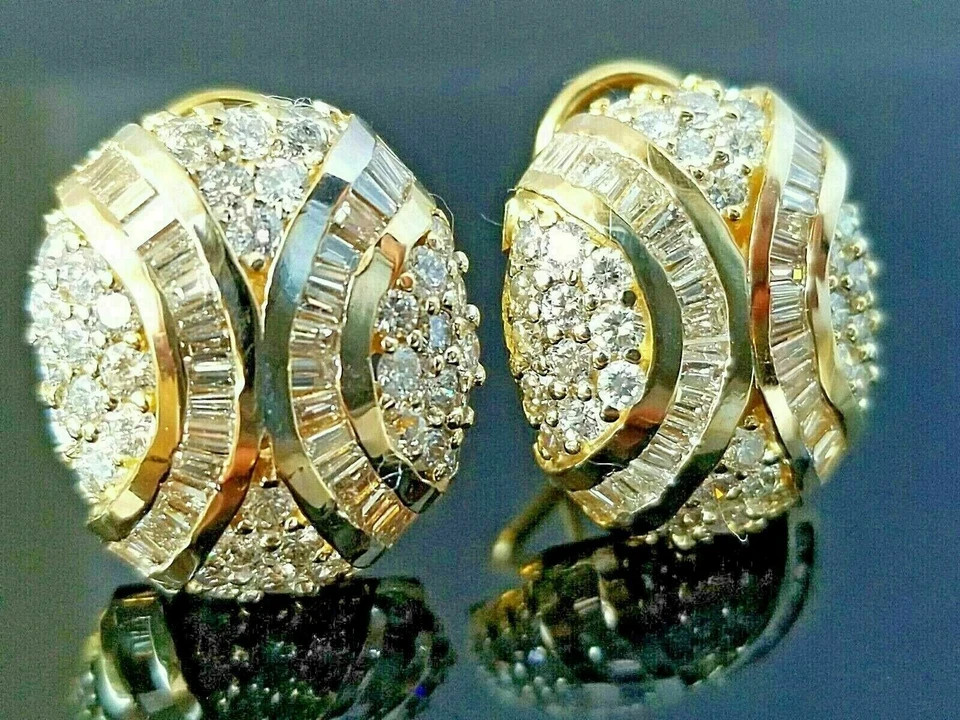 2 Ctw Round Lab Created Diamond Omega Back Stud Earrings 14k Yellow Gold Plated$83.99View on eBay
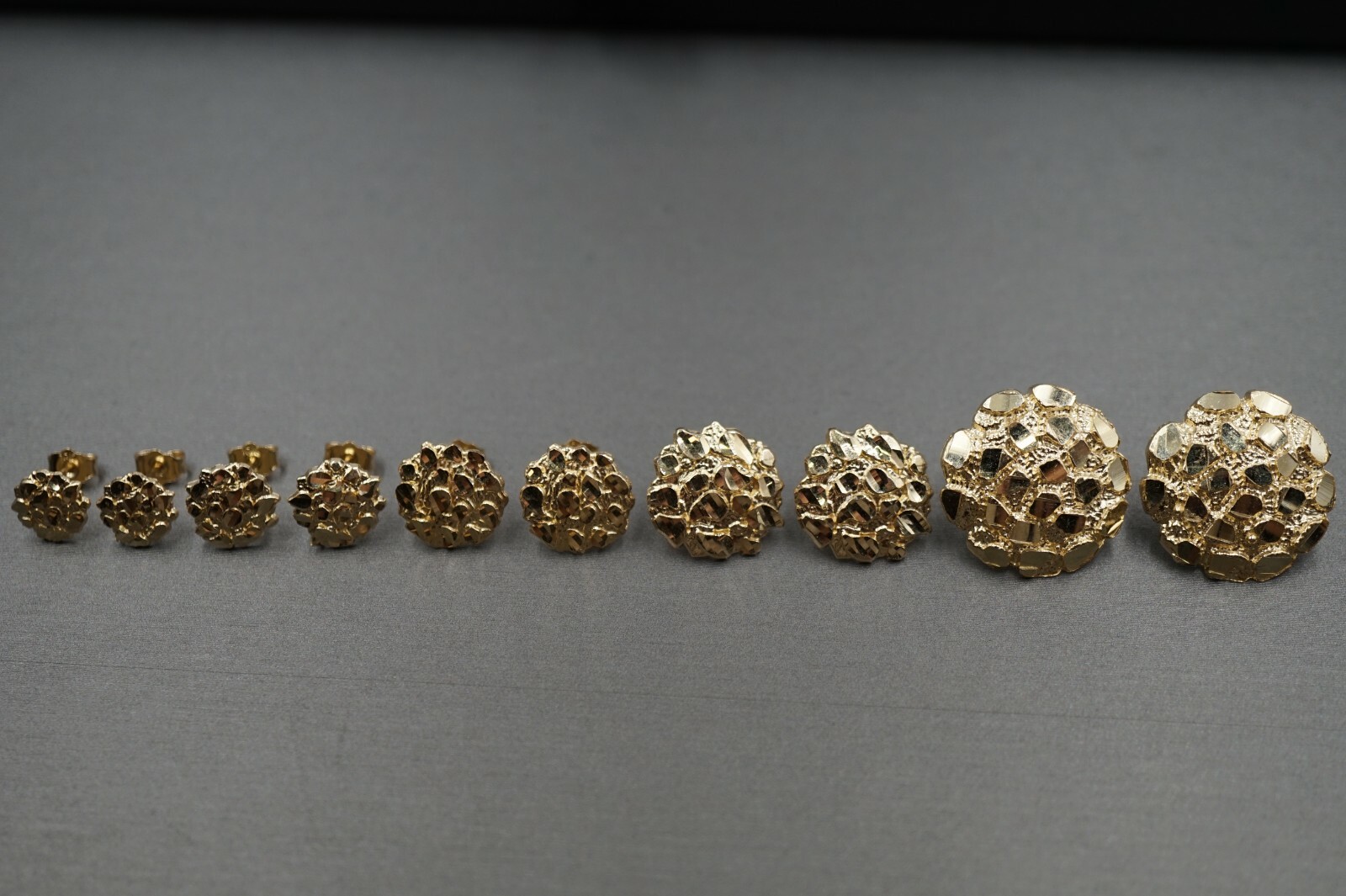 10K Solid Yellow Gold Diamond Cut Round Nugget Men Women Children Stud Earrings.$350.90Last checked Nov 16, 2026View on eBay
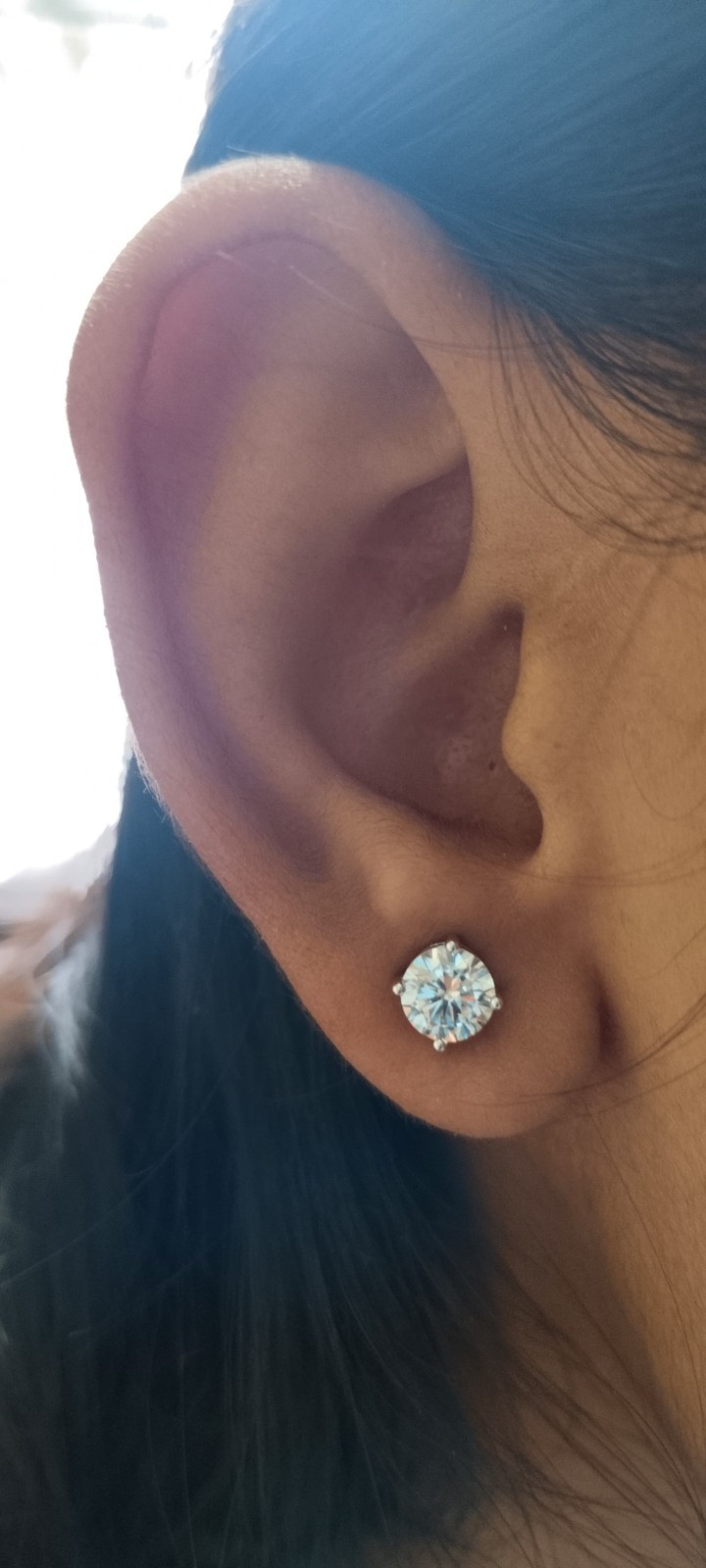 GIA 2.00Ct Round Cut Natural Diamond Stud Earrings In 14K White Gold Pair$450.00Last checked Nov 14, 2026View on eBay
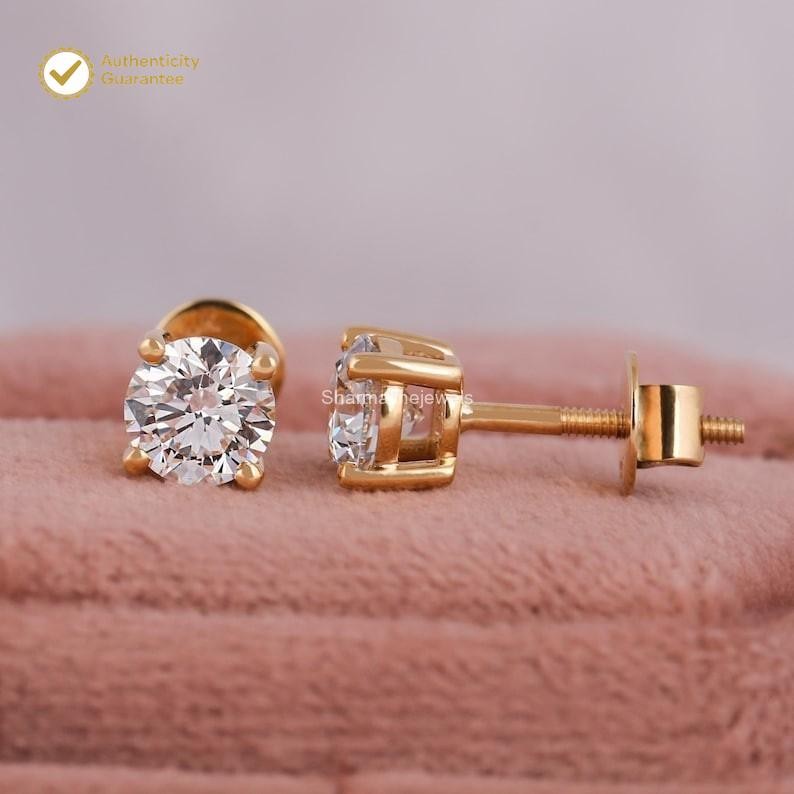 2ct Round Cut Certified Natural Diamond Studs Earrings 14K Solid Yellow Gold$1,523.53Last checked Nov 14, 2026View on eBay
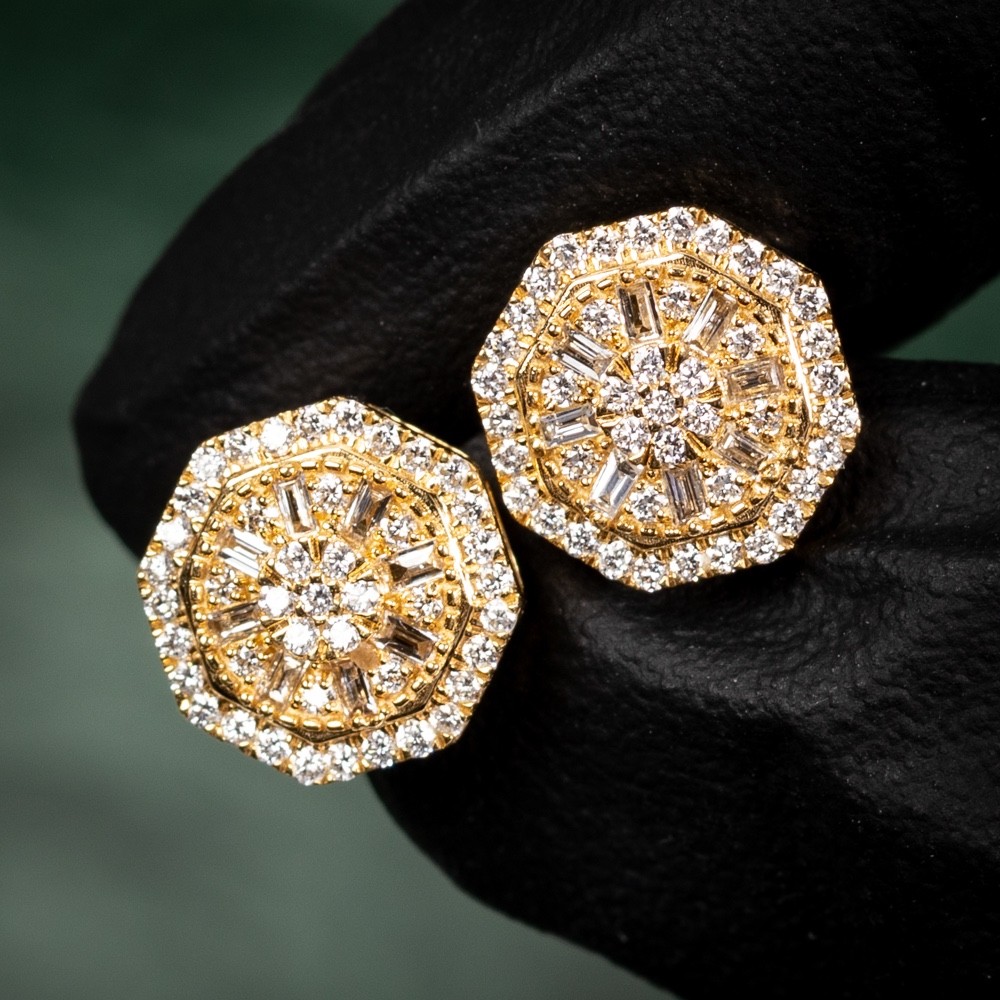 Octagon VVS Lab Grown Diamond 10K Yellow Gold 0.60Ct Baguette Stud Earrings$2,501.99Last checked Nov 14, 2026View on eBay
Highlights
- Natural diamonds carry GIA/AGS certification with graded color (D–Z) and clarity (FL–I2); lab-grown stones are chemically identical but trade at a steep discount and require IGI or GCAL reports for verification.
- Setting metal determines lifespan: 14K/18K solid gold (585/750 stamp) resists tarnish for decades, while gold-plated brass or 925 sterling with rhodium flash wears through in months of daily use.
- Stone size math: 1.00 ct total weight (0.50 ct per ear) reads as a classic everyday stud; 2.00 ct total (1.00 ct each) is a statement look; spreads vary by cut, so a 6.5 mm round brilliant is the benchmark for 1.00 ct per ear.
- Backing type controls security and comfort: screw-back or guardian backs lock threaded posts for active wear; friction (butterfly) backs suit occasional use; flat-back labret styles minimize ear-lobe pressure for sleeping.
Best use cases
- Best fit: daily wear for women or men — choose 0.50–1.00 ct total weight per ear in 14K solid gold with screw-backs; wrong fit: plated or sterling silver studs for 24/7 wear, which tarnish and bend.
- Best fit: gift or milestone purchase — buy GIA-certified natural diamonds or IGI-certified lab-grown in 14K white or yellow gold; wrong fit: uncertified 'simulated' diamond studs marketed as investments.
- Best fit: fashion or travel rotation — a multi-pair pack of cubic zirconia or simulated stones in sterling silver is acceptable for short-term styling; wrong fit: expecting colorfastness or resale value from these.
- Best fit: men's ear styling — 2.00–2.30 ct total round or cluster studs in 14K white gold with flat or screw backs; wrong fit: oversized halo or heart-cut designs that read as women's fashion rather than classic men's studs.
Buying tips
- Demand a certificate: GIA for natural diamonds, IGI or GCAL for lab-grown; a certificate number should match the laser inscription on the girdle — no certificate means no verified grade.
- Check the metal stamp: '14K' or '585' indicates solid gold; '14K gold plated' or 'gold finish' means a thin layer over brass or silver that will wear off — avoid for daily wear.
- Match backing to lifestyle: screw-back or guardian backs for sports and sleeping; friction backs for occasional wear; flat-back labret posts for sensitive or recently pierced lobes.
- Size by total carat weight (ct TW): 0.50 ct TW = subtle; 1.00–1.50 ct TW = classic; 2.00 ct TW+ = statement; confirm per-ear weight and millimeter spread, since cut and depth change face-up size.
Specs
| Stone Type | Natural / Lab-grown / Simulated CZ |
|---|---|
| Metal Purity | 14K/18K solid gold vs plated brass/silver |
| Certification | GIA (natural) / IGI or GCAL (lab-grown) |
| Backing Style | Screw-back / Friction / Flat-back labret |
Related searches
What to check before buying
- Measure lobe thickness and piercing angle: threaded posts need at least 1.0 mm of lobe tissue for secure screw-back engagement; flat-back labrets require correct post length (typically 6–8 mm) to avoid embedding.
- Confirm metal allergy profile: nickel-sensitive buyers should choose 14K/18K yellow gold, platinum, or nickel-free white gold (palladium-based) rather than rhodium-plated white gold over nickel alloys.
- Verify stone certification and inscription: request the certificate number and confirm the girdle laser inscription matches; for lab-grown, confirm it is disclosed as 'lab-grown' on the invoice and certificate.
- Check backing and post gauge: standard posts are 0.8–0.9 mm (20–18 gauge); thicker 16-gauge posts suit stretched piercings, while thin 22-gauge posts risk bending with screw-backs.
FAQ
Data sources: eBay / Amazon listings and product attribute feeds. Updated Nov 29, 2026.
Some links on this page are affiliate links. If you buy after clicking one, we may earn a commission at no extra cost to you. This does not change which products appear here or their order. Affiliate disclosure.