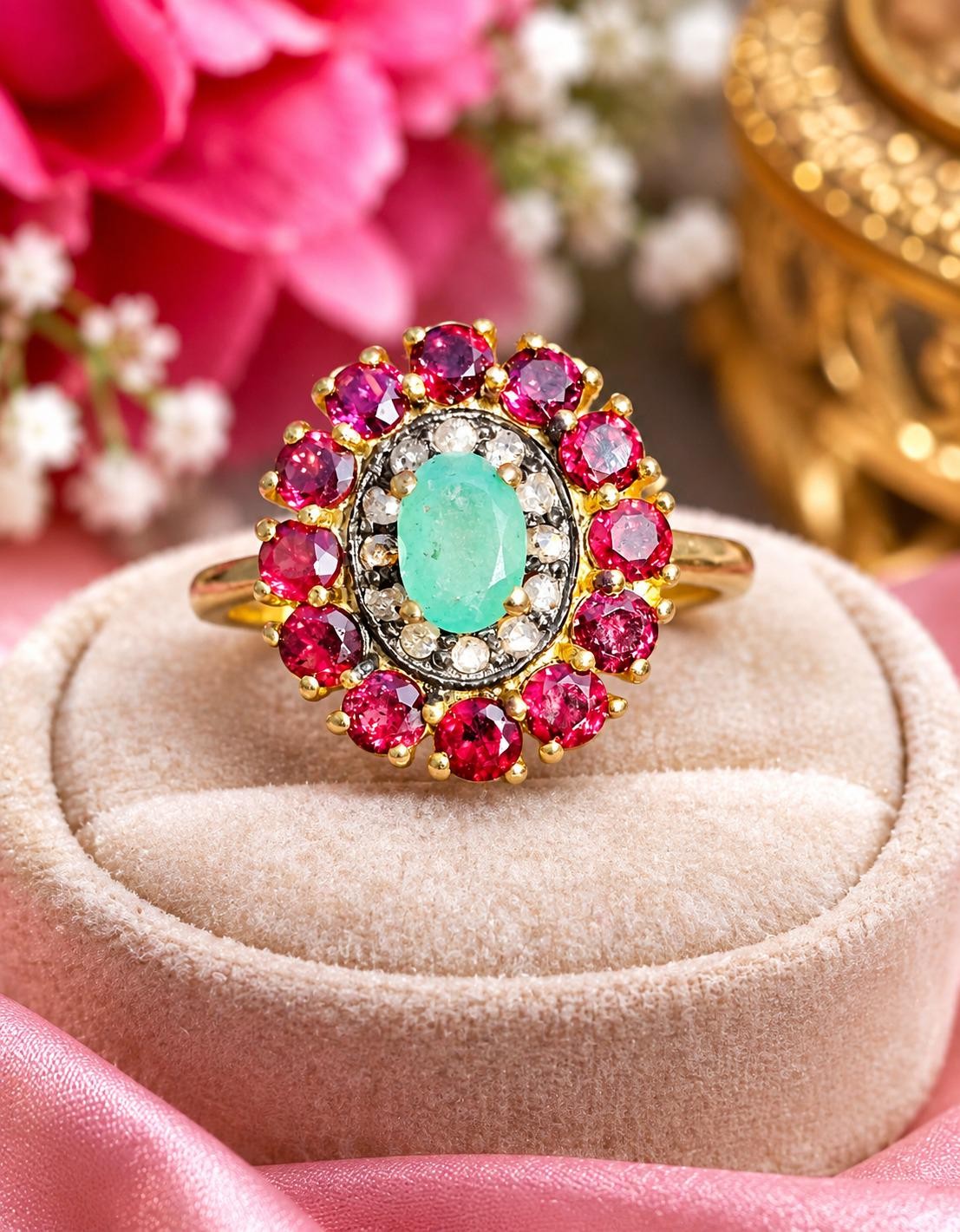

Photos from current listings. Actual item, color, and included accessories may vary.
Emerald Wedding Ring Buying Guide
Emerald wedding rings pair a beryl gemstone—typically 7.5–8 on the Mohs scale—with a metal band, and the core trade-off is between natural emerald's inclusions and price versus lab-grown emerald's clarity and ethical sourcing. The decisive rule: buy a ring with a stated treatment grade (untreated, minor oil, or major oil) and a minimum 14K gold or platinum band for a durable everyday wedding ring; skip anything with undisclosed fracture filling or a plated base metal.
Median $129.25
Key takeaways
- Emerald hardness of 7.5–8 Mohs makes it softer than diamond (10) and sapphire (9), so a bezel or halo setting protects the stone far better than a high-prong solitaire.
- Natural emeralds are almost always oiled or resin-filled to mask surface-reaching inclusions; untreated stones command a premium and require lab certification.
- Lab-grown emeralds have identical optical and physical properties to natural stones but near-flawless clarity at a fraction of the cost, with no treatment disclosure risk.
At a glance
- Category
- Rings & Earrings
- Last updated
- Nov 28, 2026
Current offers
Highlights
- Emerald hardness of 7.5–8 Mohs makes it softer than diamond (10) and sapphire (9), so a bezel or halo setting protects the stone far better than a high-prong solitaire.
- Natural emeralds are almost always oiled or resin-filled to mask surface-reaching inclusions; untreated stones command a premium and require lab certification.
- Lab-grown emeralds have identical optical and physical properties to natural stones but near-flawless clarity at a fraction of the cost, with no treatment disclosure risk.
- Band metal grade drives longevity: 14K or 18K gold and platinum resist daily wear, while gold plating over brass or sterling silver wears through within months.
Best use cases
- Best fit for everyday wear: choose a bezel-set or halo-set emerald in 14K gold or platinum; skip high-prong solitaires that expose the stone's girdle to impact.
- Best fit for budget-conscious brides: pick a lab-grown emerald with VS clarity in 14K white gold; skip 'natural' emeralds advertised without treatment disclosure at suspiciously low tiers.
- Best fit for vintage or art-deco styling: select an emerald-cut stone in a milgrain bezel; skip modern tension settings, which stress a brittle gemstone.
- Wrong fit for active hands-on jobs: emerald's cleavage and inclusions make it prone to chipping; choose diamond or sapphire instead if the ring will face daily abrasion.
Buying tips
- Demand a stated treatment grade: 'minor oil' or 'untreated' is durable for daily wear; 'major oil' or 'fracture-filled' stones are fragile and should be avoided in wedding rings.
- Select band metal at 14K or higher: 14K gold (58.5% purity) balances durability and cost, while 18K (75%) is softer but richer in color; platinum (950) is the most scratch-resistant.
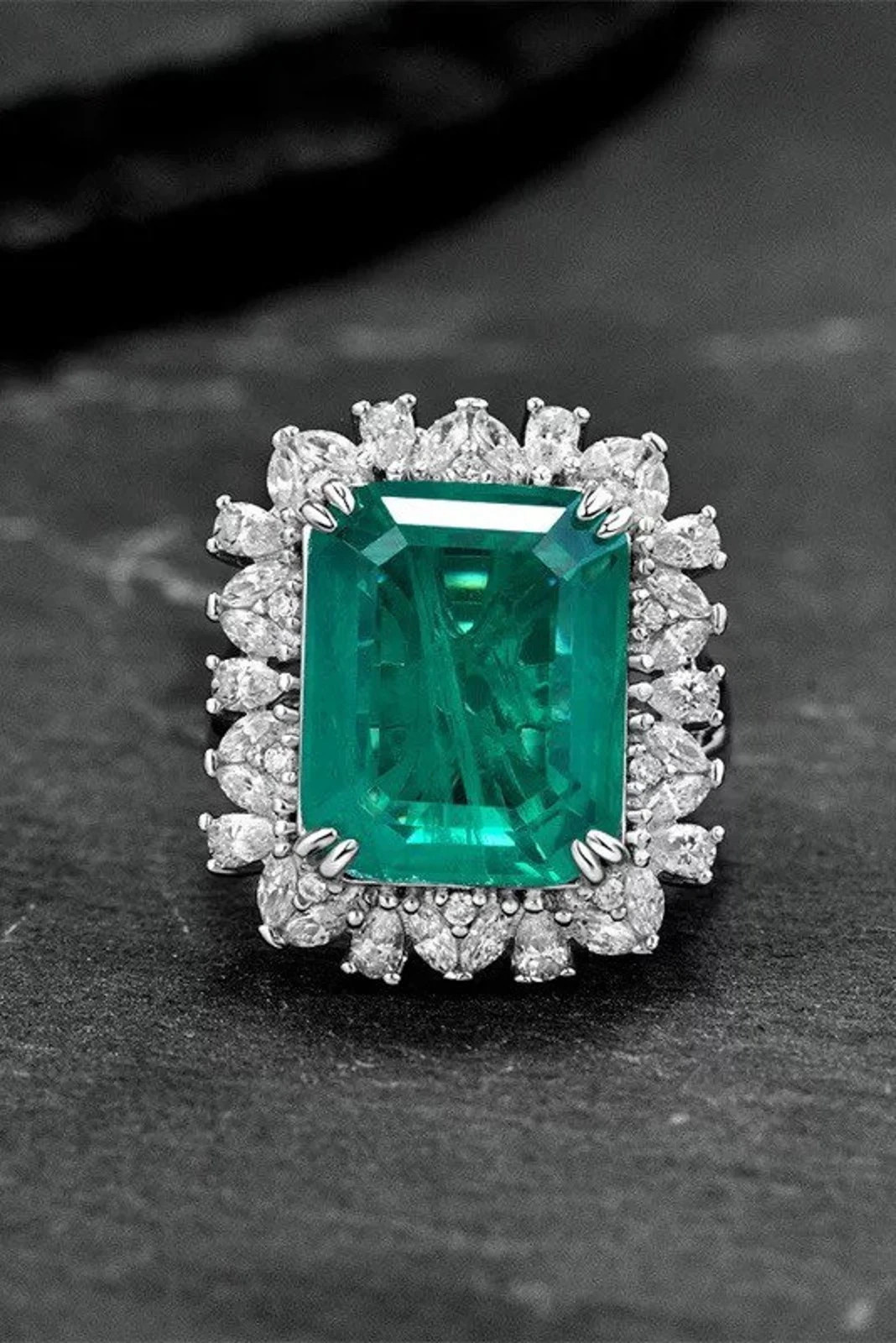
- Match setting to stone shape: emerald-cut stones need corner prongs or a bezel to protect sharp corners; oval and round cuts suit halo settings that spread the finger-coverage.
- Verify certification: a GIA, AGL, or IGI report for natural emeralds confirms origin and treatment; lab-grown stones should include a grower's certificate specifying CVD or hydrothermal method.
Specs
| Stone Type | Natural vs Lab-Grown Beryl |
|---|---|
| Mohs Hardness | 7.5–8 (Softer than Diamond) |
| Treatment Grade | Untreated / Minor Oil / Major Oil |
| Band Metal | 14K–18K Gold or PT950 Platinum |
Related searches
What to check before buying
- Measure ring finger size at room temperature with a jeweler's mandrel or sizing tool; wide bands (6mm+) require a half-size up for comfort.
- Confirm the band's metal stamp (14K, 18K, PT950) and check that the setting's prongs or bezel fully cover the emerald's girdle.
- Ask for the stone's carat weight, dimensions in millimeters, and treatment grade in writing before purchase.
- For natural emeralds, request a lab report number and verify it against the GIA or AGL database; for lab-grown, confirm the growth method.
FAQ
Data sources: eBay / Amazon listings and product attribute feeds. Updated Nov 28, 2026.
Some links on this page are affiliate links. If you buy after clicking one, we may earn a commission at no extra cost to you. This does not change which products appear here or their order. Affiliate disclosure.