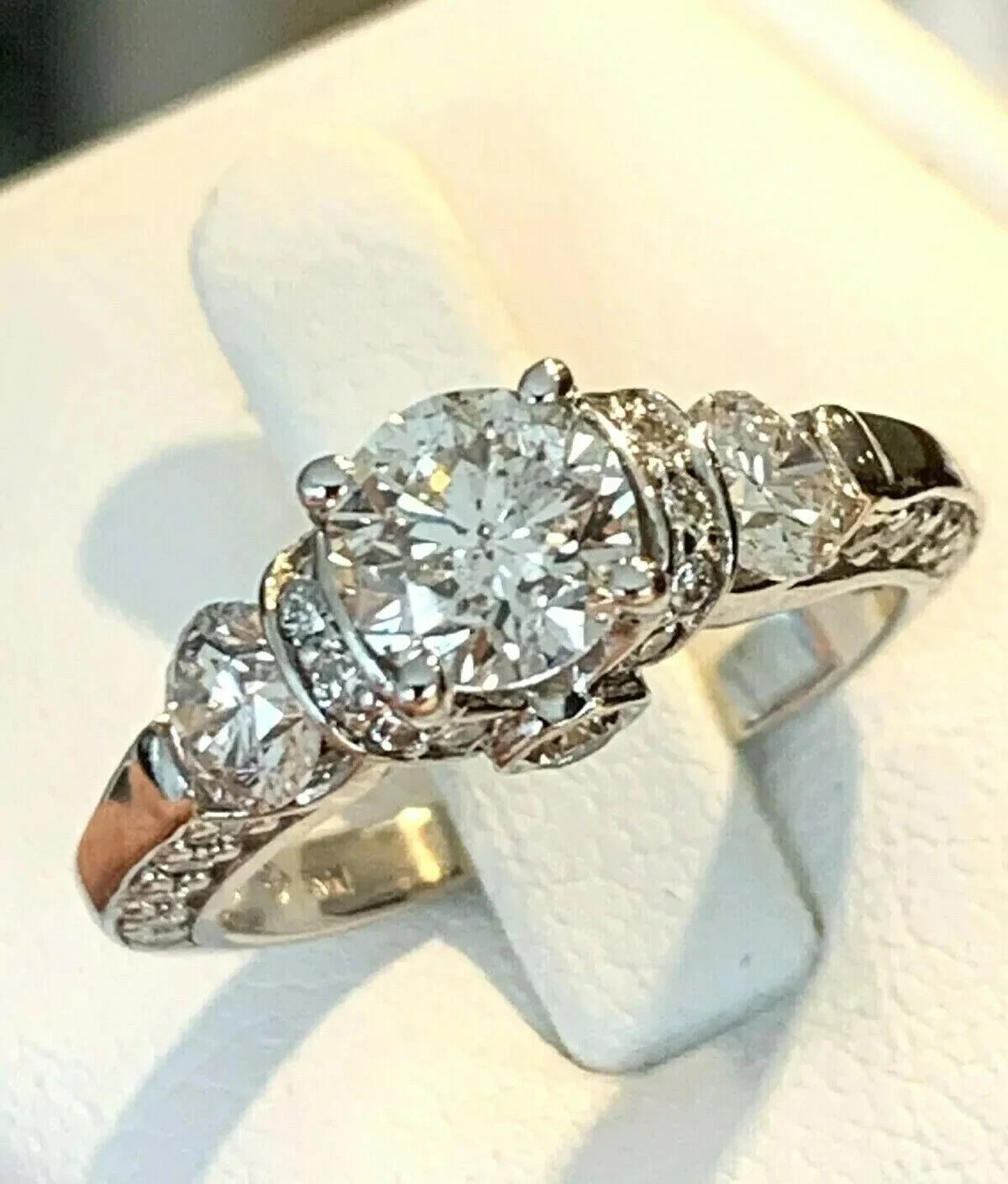

Photos from current listings. Actual item, color, and included accessories may vary.
Lab Created Diamond Engagement Ring Buying Guide
Lab created diamond engagement rings use stones grown in a lab with identical optical and physical properties to mined diamonds, letting buyers prioritize cut quality and metal purity over scarcity premiums. The core trade-off is between genuine solid precious metal (14K/18K gold or platinum) and plated or gold-filled bases that wear through within months, and between IGI/GIA-certified stones and uncertified imports. The decision rule: if the band is not stamped 14K, 18K, or PT950 and the center stone lacks an independent lab report, treat it as costume jewelry rather than an engagement ring.
Key takeaways
- Lab grown diamonds are chemically, optically, and physically identical to mined diamonds; the FTC classifies them as real diamonds, and only advanced instruments detect growth origin.
- Solid 14K gold (58.5% purity) or 18K (75%) and PT950 platinum are durable ring metals; '14K gold plated' over brass or copper is a thin electroplating (typically 0.5–2.5 microns) that wears off with daily wear.
- IGI and GIA are the dominant independent grading labs for lab grown stones; an IGI or GIA report with a certificate number verifies carat, color, clarity, and cut, while uncertified '2Ct' claims cannot be verified.
At a glance
- Category
- Rings & Earrings
- Last updated
- Nov 28, 2026
Current offers
Highlights
- Lab grown diamonds are chemically, optically, and physically identical to mined diamonds; the FTC classifies them as real diamonds, and only advanced instruments detect growth origin.
- Solid 14K gold (58.5% purity) or 18K (75%) and PT950 platinum are durable ring metals; '14K gold plated' over brass or copper is a thin electroplating (typically 0.5–2.5 microns) that wears off with daily wear.
- IGI and GIA are the dominant independent grading labs for lab grown stones; an IGI or GIA report with a certificate number verifies carat, color, clarity, and cut, while uncertified '2Ct' claims cannot be verified.
- Ring architecture matters as much as the stone: 1.5–2.0 mm band thickness and six-prong or bezel settings protect the center stone, while thin 1.0–1.2 mm shanks and four-prong peg heads are prone to bending and stone loss.
Best use cases
- Best fit: daily-wear engagement ring — choose a solid 14K/18K gold or PT950 platinum band, 1.8–2.0 mm shank, six-prong or bezel set, with an IGI or GIA graded center stone.
- Best fit: budget-conscious but durability-focused buyer — pick 14K solid gold over 18K (harder, less scratch-prone) and a slightly lower color grade (G–H) to redirect spend into cut quality.
- Wrong fit: plated or gold-filled rings sold as '14K white gold plated' — skip these for engagement because plating wears through in 6–18 months of daily wear and re-plating is not a permanent fix.
- Wrong fit: oversized stones on ultra-thin bands — a 2Ct center on a 1.0–1.2 mm shank risks bending and prong failure; size the band to the stone or choose a bezel/halo for support.
Buying tips
- Verify the metal stamp inside the band: '14K' or '585' means solid 14K gold, '18K' or '750' means solid 18K, 'PT950' means platinum; '925' is sterling silver, and 'gold plated' or 'gold filled' are not solid gold.
- Insist on a certificate number from IGI or GIA that matches the stone; a report lists carat weight, color (D–Z scale), clarity (FL–I3), and cut grade — without it, carat and quality claims are unverifiable.
- Target a 1.8–2.0 mm minimum band width and 1.5–2.0 mm thickness for daily wear; a 1.0–1.2 mm shank is a fashion-ring dimension that warps under normal hand pressure.
- Prioritize cut grade over color and clarity: an Excellent/Ideal cut in G–H color and VS2–SI1 clarity (eye-clean) outperforms a poorly cut D/IF stone at the same carat weight.
Specs
| Metal Type | Solid 14K/18K gold, PT950 vs plated |
|---|---|
| Center Stone Certification | IGI or GIA report vs uncertified |
| Band Width (Daily Wear) | 1.8–2.0 mm min; 1.0–1.2 mm fashion |
| Setting Style | Six-prong, bezel, halo vs four-prong peg |
Related searches
What to check before buying
- Measure the wearer's ring size on the actual intended finger with a sizing set; wide bands (6 mm+) require a half size up, and knuckle size may differ from base-of-finger size.
- Confirm the metal stamp and cert number before purchase: 14K/585, 18K/750, or PT950 in the band, plus an IGI or GIA report number for the center stone.
- Check the setting height and prong count against the wearer's lifestyle: low-profile bezel for active hands, six-prong for maximum stone security, and avoid tall peg heads that catch on clothing.
FAQ
Data sources: eBay / Amazon listings and product attribute feeds. Updated Nov 28, 2026.
Some links on this page are affiliate links. If you buy after clicking one, we may earn a commission at no extra cost to you. This does not change which products appear here or their order. Affiliate disclosure.