
Photos from current listings. Actual item, color, and included accessories may vary.
Lab Grown Diamond Earring Buying Guide
Lab grown diamond earrings use stones with identical optical, physical, and chemical properties to mined diamonds, but their value hinges on two decisions: real solid gold vs. gold plating, and certified stone quality vs. uncertified grading claims. The clear rule is to buy solid 10K–18K gold with a documented IGI or GIA certificate; plated brass or silver with vague 'VVS' claims is a short-lived compromise.
Median $312.48
Key takeaways
- Solid 14K gold (58.5% purity) resists tarnish and daily wear; 10K (41.7%) is harder and more scratch-resistant but less yellow, while '14K gold plated' is a microns-thin layer over brass that wears through.
- IGI and GIA are the dominant lab-grown grading labs; a certificate states carat, color (D–Z), clarity (FL–I3), and cut grade, while ungraded 'VVS' claims on budget listings are marketing, not verified grading.
- Screw-back and friction-post studs are the two standard earring backs; screw-backs resist loss during sleep and sport, while push-backs are faster but loosen over time.
At a glance
- Category
- Rings & Earrings
- Last updated
- Nov 27, 2026
Current offers
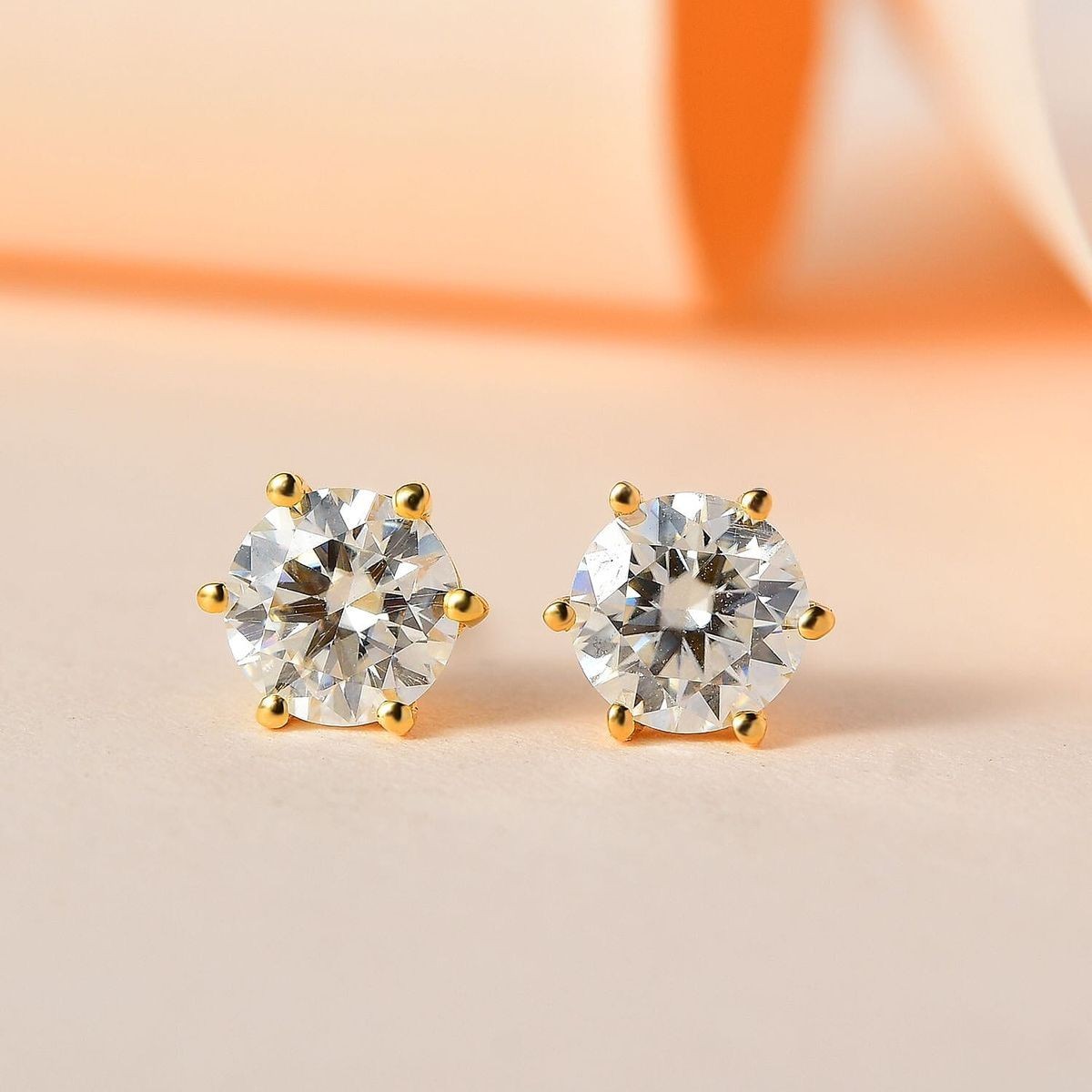 2.30Ct Round Cut Lab Grown Diamond 6 Prong Stud Earrings 14K Yellow Gold Plated$34.99Last checked Nov 25, 2026View on eBay
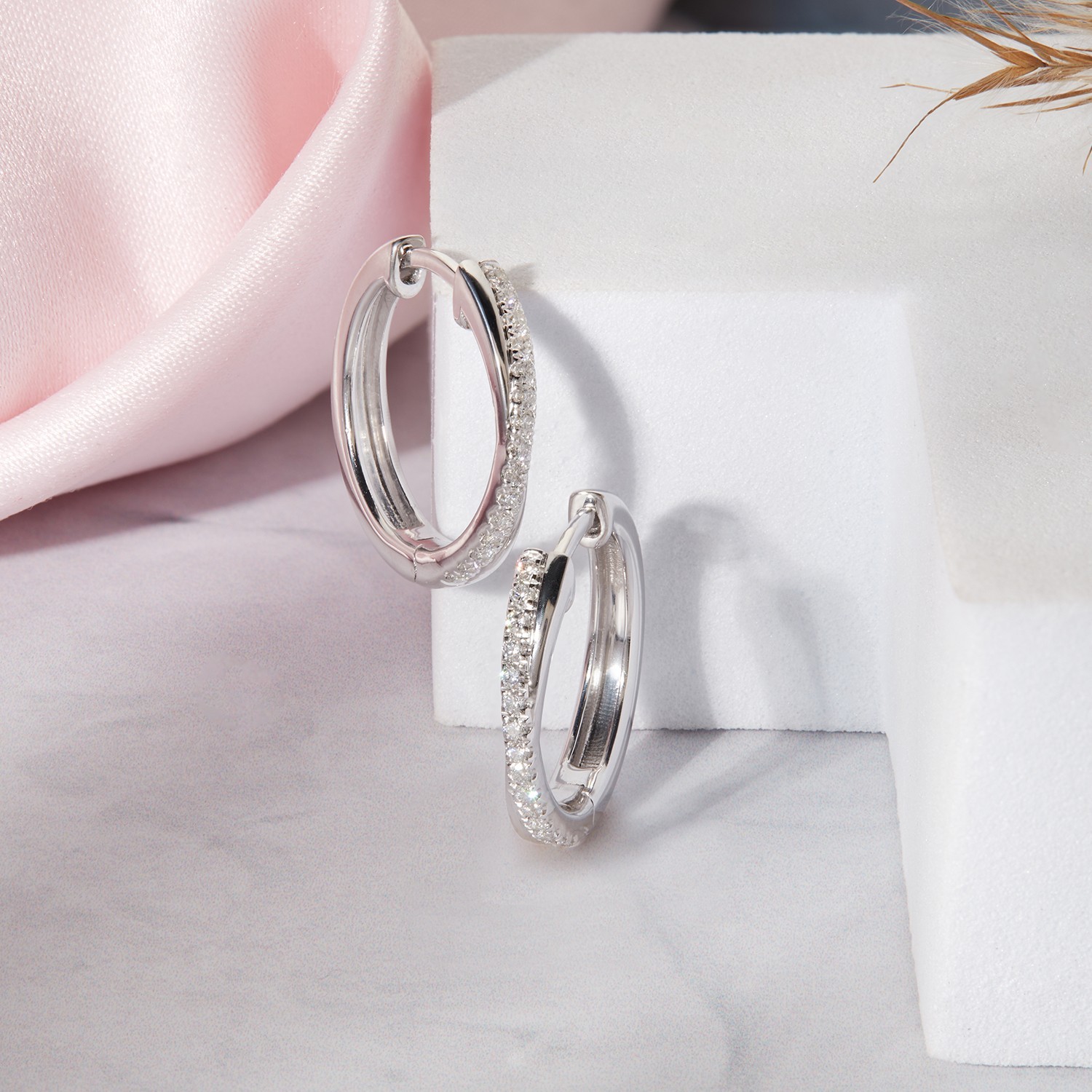 Lab Grown Diamond Women's Hoop Earring 14K White Gold Over 0.25 Ct Round Cut$312.48Last checked Nov 14, 2026View on eBay
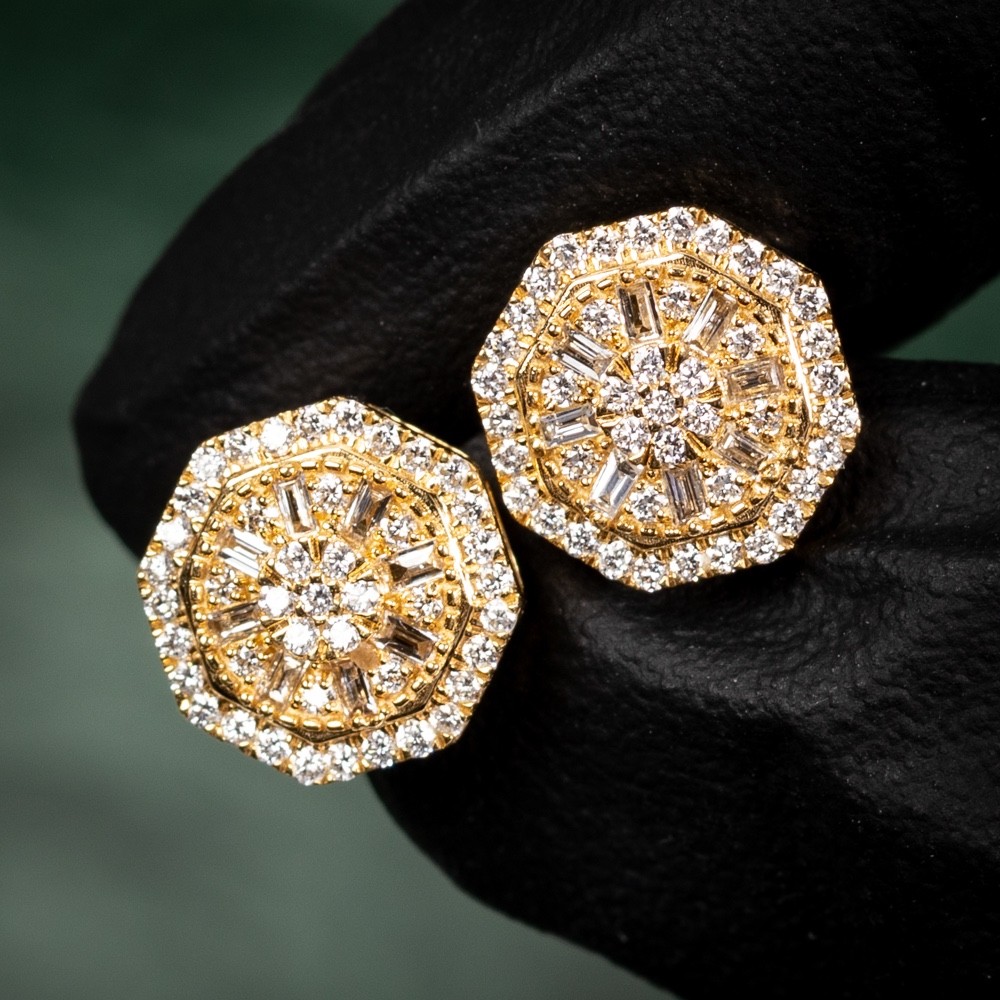 Octagon VVS Lab Grown Diamond 10K Yellow Gold 0.60Ct Baguette Stud Earrings$2,501.99Last checked Nov 14, 2026View on eBay
Highlights
- Solid 14K gold (58.5% purity) resists tarnish and daily wear; 10K (41.7%) is harder and more scratch-resistant but less yellow, while '14K gold plated' is a microns-thin layer over brass that wears through.
- IGI and GIA are the dominant lab-grown grading labs; a certificate states carat, color (D–Z), clarity (FL–I3), and cut grade, while ungraded 'VVS' claims on budget listings are marketing, not verified grading.
- Screw-back and friction-post studs are the two standard earring backs; screw-backs resist loss during sleep and sport, while push-backs are faster but loosen over time.
- Hoop earrings in 0.25–1.0 ct total weight use shared-prong or channel settings; larger hoops need hinged snap-bars or click closures to prevent the post from bending under weight.
Best use cases
- Daily-wear studs for work or sensitive ears: choose solid 14K or 18K gold with screw-back posts and IGI-certified stones; skip plated brass and 'gold over silver' if you shower or exercise in them.
- Formal or evening hoops: pick a hinged click-closure hoop in solid 14K white or yellow gold with 0.25–0.50 ct total weight; skip friction-post hoops above 0.50 ct because they droop and bend.
- Gift or milestone purchase: buy a certified pair with a printed IGI/GIA report and a stated color-clarity grade; skip listings that show only 'VVS' in the title with no certificate number.
- Sensitive-skin or nickel-allergy buyers: choose solid 14K/18K gold or platinum; skip 10K if you react to the alloyed metals and never buy 'gold plated' or 'gold over' jewelry.
Buying tips
- Match metal purity to wear frequency: 14K–18K solid gold for everyday, 10K for harder-wearing budget studs, and avoid anything labeled 'plated' or 'over' for daily use.
- Check the certificate: a legitimate lab-grown diamond earring pairs should list an IGI or GIA report number matching the stone's carat, color, clarity, and cut.
- For studs, 0.50–1.0 ct total weight (0.25–0.50 ct per ear) is the visual sweet spot; above 1.0 ct per ear, switch to screw-backs and consider a three-prong or four-prong setting for security.
- For hoops, measure the inner diameter: 10–12 mm sits close to the lobe, 15–20 mm is a small hoop, and 25 mm+ needs a hinged closure; total carat weight should scale with diameter to avoid a thin, bent hoop.
Specs
| Metal Purity | 10K / 14K / 18K solid; plated = avoid |
|---|---|
| Stone Certification | IGI or GIA report number required |
| Earring Back Type | Screw-back, friction, or hinged click |
| Total Carat Weight | 0.25–2.0 ct typical range |
Related searches
What to check before buying
- Confirm the metal stamp: look for '14K', '585', '18K', '750', or '10K'/'417' inside the earring or on the post; '14K GP' or '14K over' means plated.
- Verify earring back type and post thickness: standard posts are 0.8–1.0 mm; thin 0.6 mm posts bend, and screw-backs need matching threaded posts.
- Check lobe piercing size and sensitivity: fresh or sensitive piercings need solid 14K+ gold or titanium; avoid nickel-releasing plated alloys.
- Measure your existing earrings for fit: stud diameter 3–6 mm for subtle, 6–8 mm for statement; hoop inner diameter 10–25 mm covers most lobe fits.
FAQ
Data sources: eBay / Amazon listings and product attribute feeds. Updated Nov 27, 2026.
Some links on this page are affiliate links. If you buy after clicking one, we may earn a commission at no extra cost to you. This does not change which products appear here or their order. Affiliate disclosure.