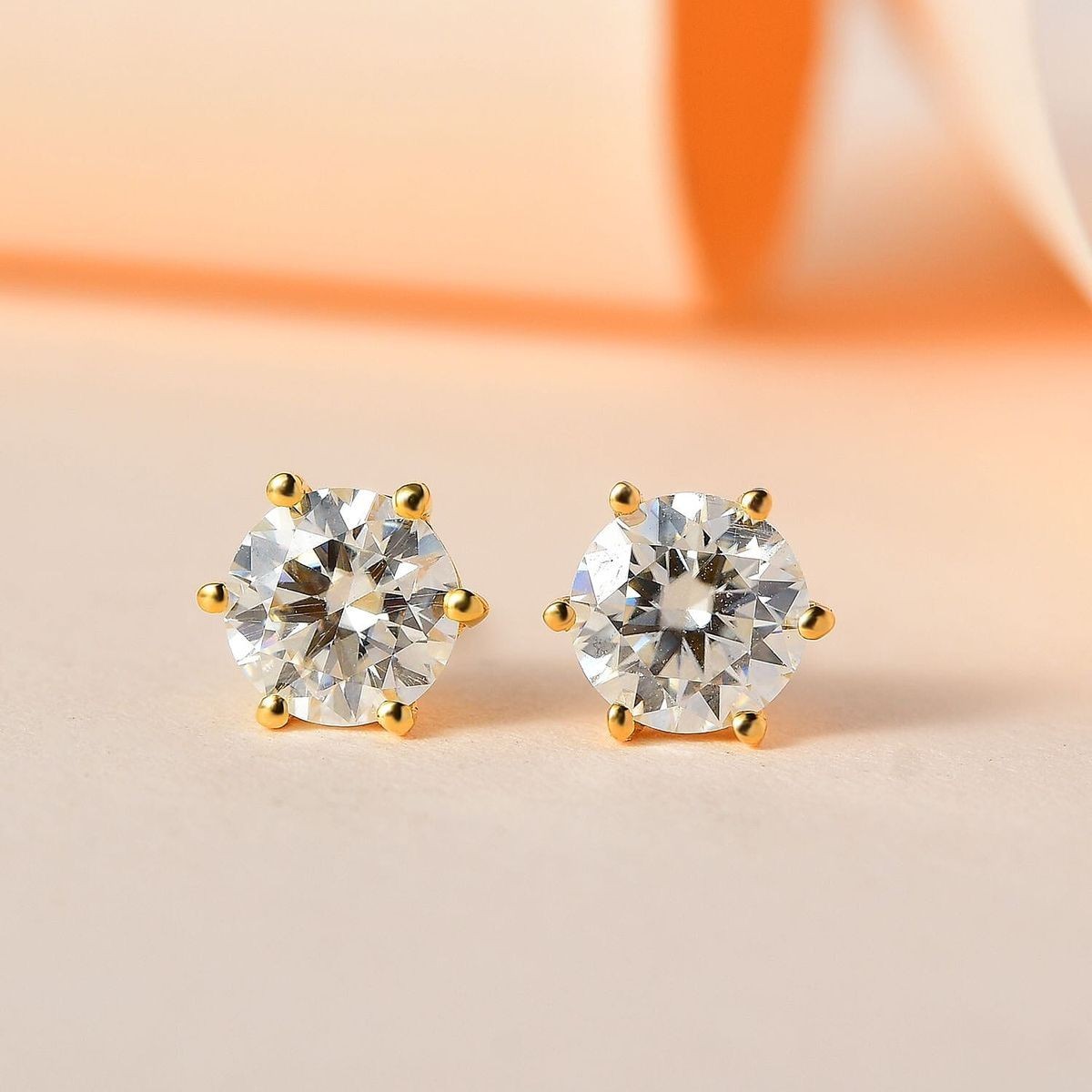

Photos from current listings. Actual item, color, and included accessories may vary.
Lab Grown Diamond Stud Earring Buying Guide
Lab grown diamond stud earrings are chemically and optically identical to mined diamonds, so the real buying decision is not 'real vs fake' but the metal karat, setting security, and certification transparency that determine daily durability. Prioritize solid 14K or 18K gold, screw-back or guardian-back posts, and IGI/GIA reports; gold-plated brass and ungraded stones are the compromise tier that fails within months of regular wear.
Median $1,268.49
Key takeaways
- Diamond grading: IGI or GIA report with color D–J and clarity VS2+ is the durability and value floor; 'VVS' claims without a report on 10K gold are unverifiable.
- Metal karat: 14K (58.3% gold) and 18K (75%) are solid and re-polishable; 10K is harder but duller, while '14K gold plated' over brass is a wear-through coating, not a precious-metal body.
- Setting security: 4-prong basket and 6-prong crown settings protect round stones; bezel and channel settings are safest for baguette/emerald cuts with fragile corners.
At a glance
- Category
- Rings & Earrings
- Last updated
- Nov 28, 2026
Current offers
Highlights
- Diamond grading: IGI or GIA report with color D–J and clarity VS2+ is the durability and value floor; 'VVS' claims without a report on 10K gold are unverifiable.
- Metal karat: 14K (58.3% gold) and 18K (75%) are solid and re-polishable; 10K is harder but duller, while '14K gold plated' over brass is a wear-through coating, not a precious-metal body.
- Setting security: 4-prong basket and 6-prong crown settings protect round stones; bezel and channel settings are safest for baguette/emerald cuts with fragile corners.
- Back type: screw-backs and locking guardian backs prevent loss; friction (butterfly) backs loosen over time and are the leading cause of single-earring loss.
Best use cases
- Daily-wear round studs: choose 0.50–1.00 ct total weight (0.25–0.50 ct each) in solid 14K white or yellow gold with 4-prong screw-back settings — skip plated brass entirely.
- Occasion or second-hole earrings: 0.20–0.40 ct total in 18K gold bezel settings give low-profile security without snagging on hair or masks.
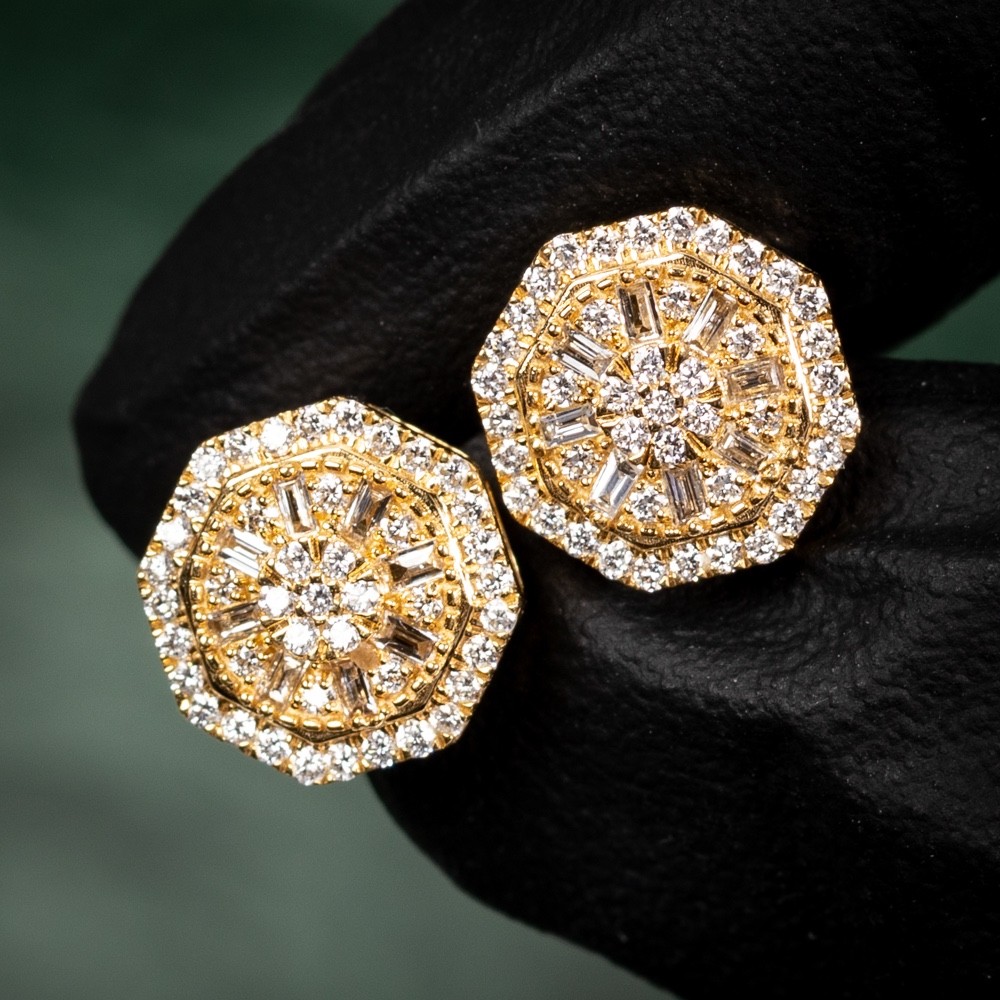
- Baguette or octagon cuts: only buy with a bezel or channel setting in 14K+ gold — prong-set baguettes chip at the corners and are the wrong fit for active wear.
- Sensitive ears or metal allergy: solid 14K/18K nickel-free white gold or platinum is the correct tier; gold-plated or 10K alloy posts are the wrong fit for reactive skin.
Buying tips
- Compare stones by total carat weight (TCW) per pair, not per stone — a '1 ct stud' listing usually means 0.50 ct each, and prices scale non-linearly above 1 ct each.
- Match diamond color to metal: D–F in white gold or platinum, G–J in yellow or rose gold — warmer stones set in white metal visibly yellow.
- Demand a report number: IGI is standard for lab grown, GIA carries a premium; an uncertified 'VVS' stone cannot be resold or insured reliably.
- Check post gauge and length: 0.8–0.9 mm (20–18 gauge) posts in solid gold resist bending; 1.0 mm+ posts suit stretched or cartilage piercings.
Specs
| Metal Karat | Solid 14K/18K vs 10K vs plated brass |
|---|---|
| Diamond Report | IGI or GIA graded vs ungraded |
| Setting Style | 4/6-prong, bezel, channel vs glue-set |
| Back Type | Screw-back / guardian vs friction butterfly |
Related searches
What to check before buying
- Measure your existing studs: 4 mm ≈ 0.25 ct each, 5.5 mm ≈ 0.50 ct each, 6.5 mm ≈ 1.0 ct each — confirm the diameter matches your earlobe coverage preference.
- Verify metal stamp inside the earring or on the post: '14K', '585', '18K', or '750' means solid gold; '14K GP', '14K plated', or '925' means a base-metal compromise.
- Check back type before buying: screw-back threads and guardian locks need matching post lengths — confirm the pair ships with both backs, not push-backs.
- Confirm allergy profile: nickel-free solid white gold (palladium alloy) or platinum for sensitive ears; avoid sterling silver posts for 24/7 wear due to tarnish and softness.
FAQ
Data sources: eBay / Amazon listings and product attribute feeds. Updated Nov 28, 2026.
Some links on this page are affiliate links. If you buy after clicking one, we may earn a commission at no extra cost to you. This does not change which products appear here or their order. Affiliate disclosure.