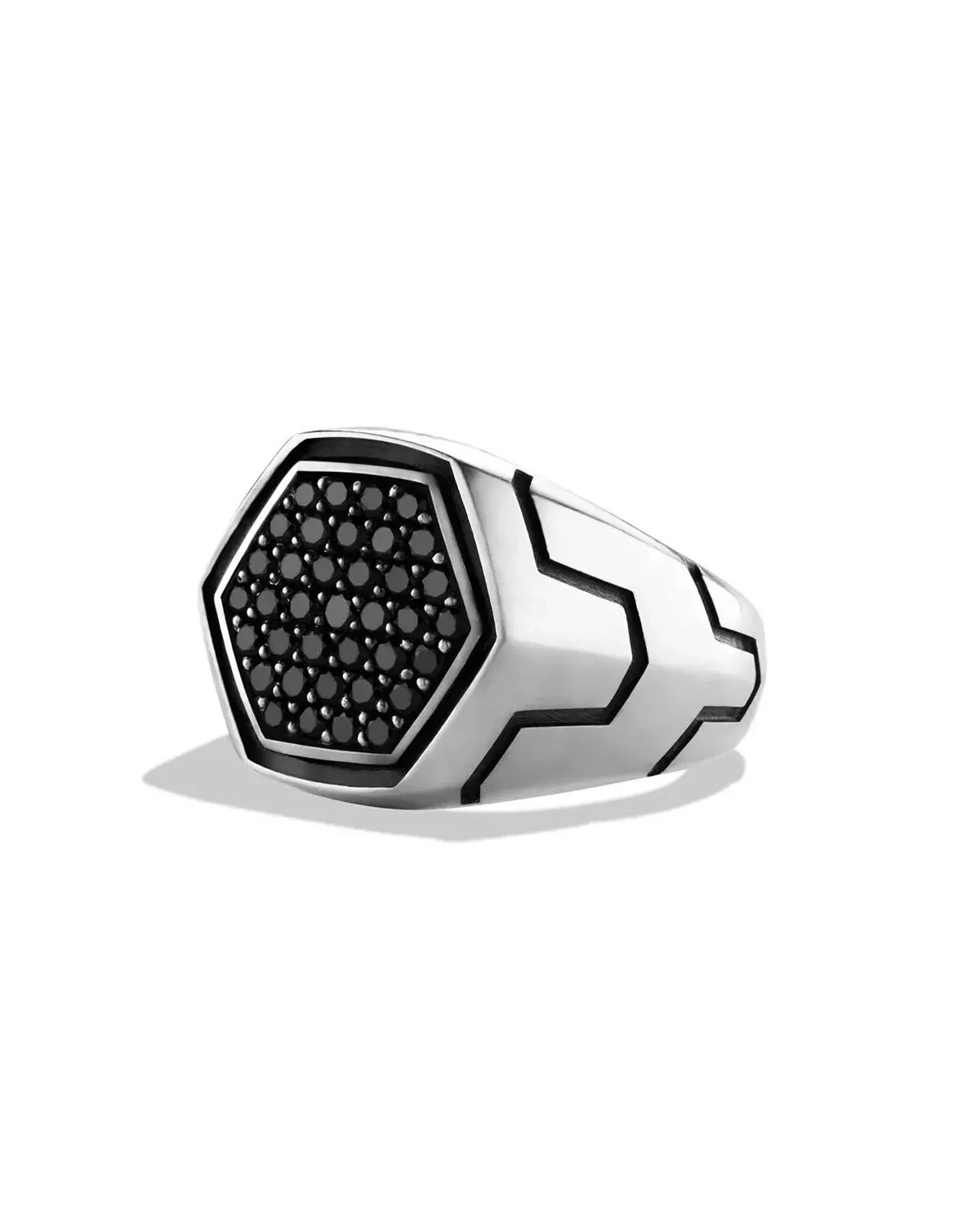

Photos from current listings. Actual item, color, and included accessories may vary.
Men Diamond Ring Buying Guide
A men's diamond ring is a piece of jewelry defined by three core choices: diamond origin (natural, lab-grown, or simulant), metal durability (solid gold, gold-plated, or alternative metals), and setting style (bezel, prong, or channel). The primary trade-off is between genuine diamond value and everyday toughness—plated base metals and prong settings look sharp but fail under daily wear, while solid gold with bezel-set stones survives years of hand work. The clear decision rule: buy solid 10K–18K gold or platinum with a bezel or channel setting for daily wear, and treat plated or simulant rings as occasional-wear only.
Key takeaways
- Natural diamonds are graded by the 4Cs (cut, color, clarity, carat); lab-grown diamonds match natural optical and hardness properties (10 Mohs) at lower cost but require disclosure.
- Simulated diamonds (cubic zirconia, moissanite, black diamond simulants) score 8–9.25 Mohs—moissanite offers the closest hardness and brilliance, while CZ clouds and scratches within months.
- 14K gold (58.5% purity) balances scratch resistance and value; 18K (75%) is softer and pricier, while 10K (41.7%) is the most durable daily-wear gold tier.
At a glance
- Category
- Rings & Earrings
- Last updated
- Nov 29, 2026
Current offers
Highlights
- Natural diamonds are graded by the 4Cs (cut, color, clarity, carat); lab-grown diamonds match natural optical and hardness properties (10 Mohs) at lower cost but require disclosure.
- Simulated diamonds (cubic zirconia, moissanite, black diamond simulants) score 8–9.25 Mohs—moissanite offers the closest hardness and brilliance, while CZ clouds and scratches within months.
- 14K gold (58.5% purity) balances scratch resistance and value; 18K (75%) is softer and pricier, while 10K (41.7%) is the most durable daily-wear gold tier.
- Gold-plated rings use a micro-thin layer (often 0.5–2.5 microns) over brass or steel; plating wears through at high-friction points, exposing base metal within 6–24 months of daily wear.
Best use cases
- Best fit: daily-wear wedding band—choose solid 14K gold or platinum with a bezel-set lab-grown or natural diamond; skip plated rings and high-profile prong settings that snag.
- Best fit: occasional dress or statement ring—a 2 Ct simulant in gold-plated brass is acceptable if worn a few times monthly and kept dry; do not expect multi-year durability.
- Best fit: active/industrial hands—pick a low-profile channel-set diamond in 10K gold or tungsten carbide with a diamond inlay; skip raised prongs and soft 18K gold.
- Wrong fit: expecting a plated simulant ring to survive showering, gym, and dishwashing—plating and CZ degrade fast; upgrade to solid gold and moissanite or lab diamond for that routine.
Buying tips
- Match metal to wear: solid 10K–14K gold or platinum for daily wear; gold-plated brass only for occasional use. Plating thickness under 2.5 microns wears through quickly.
- Choose setting by lifestyle: bezel or channel settings protect the diamond and suit active hands; prong settings show more stone but snag on fabric and chip at edges.
- Verify diamond specs: natural or lab-grown should state carat, color (G–J acceptable for men's rings), clarity (VS2–SI1 eye-clean), and cut grade; simulants must be labeled CZ or moissanite.
- Size for knuckle clearance: men's rings typically run US 8–12; wider bands (8mm+) fit tighter, so go up a half size versus a narrow band, and measure at day's end.
Specs
| Diamond Type | Natural / Lab-grown / Simulant (CZ, Moissanite) |
|---|---|
| Metal Purity | 10K–18K gold / Platinum / Plated brass |
| Setting Style | Bezel / Channel / Prong / Pavé |
| Band Width | 6–10 mm typical men's range |
Related searches
What to check before buying
- Measure finger with a ring sizer at room temperature—fingers swell in heat; a wide band (8mm+) needs a half-size larger than a 4mm band.
- Confirm metal content stamp inside the band: 10K, 14K, 18K, PT950, or a clear plating disclosure; 'gold plated' must state base metal (brass, steel, or silver).
- Check setting height against daily tasks—low-profile bezel under 3mm clearance avoids snagging gloves, pockets, and hair.
- Match finish to climate and skin: polished gold shows scratches; brushed/matte hides wear. Nickel-sensitive buyers should choose 14K+ gold or platinum, not plated brass.
FAQ
Data sources: eBay / Amazon listings and product attribute feeds. Updated Nov 29, 2026.
Some links on this page are affiliate links. If you buy after clicking one, we may earn a commission at no extra cost to you. This does not change which products appear here or their order. Affiliate disclosure.