
Photos from current listings. Actual item, color, and included accessories may vary.
Opal Ring Buying Guide
Opal rings are gemstone-set rings where the stone's play-of-color and the metal's durability define the piece. The core trade-off is between soft, water-sensitive opal types (Ethiopian, fire opal) and harder, more stable options (Australian black/white opal, synthetic or triplet/doublet constructions), plus silver vs. gold settings. The clear rule: choose a doublet/triplet or Australian solid opal in a bezel setting for daily wear, and reserve softer Ethiopian or fire opal in prong settings for occasional use.
Median $44.80
Key takeaways
- Solid Australian opal (black/white) ranks 5.5–6.5 Mohs and is the most stable natural opal for rings; Ethiopian opal is hydrophane and can absorb water, crack, or lose color.
- Doublet opal = thin opal slice glued to a dark backing (usually ironstone or black potch); triplet adds a clear quartz cap for scratch protection—both cost less than solid opal and are more durable in rings.
- 925 sterling silver is the standard setting metal for opal rings; it tarnishes and is softer than 14k/18k gold, so bezel settings protect the stone and the metal edge better than thin prongs.
At a glance
- Category
- Rings & Earrings
- Last updated
- Nov 27, 2026
Current offers
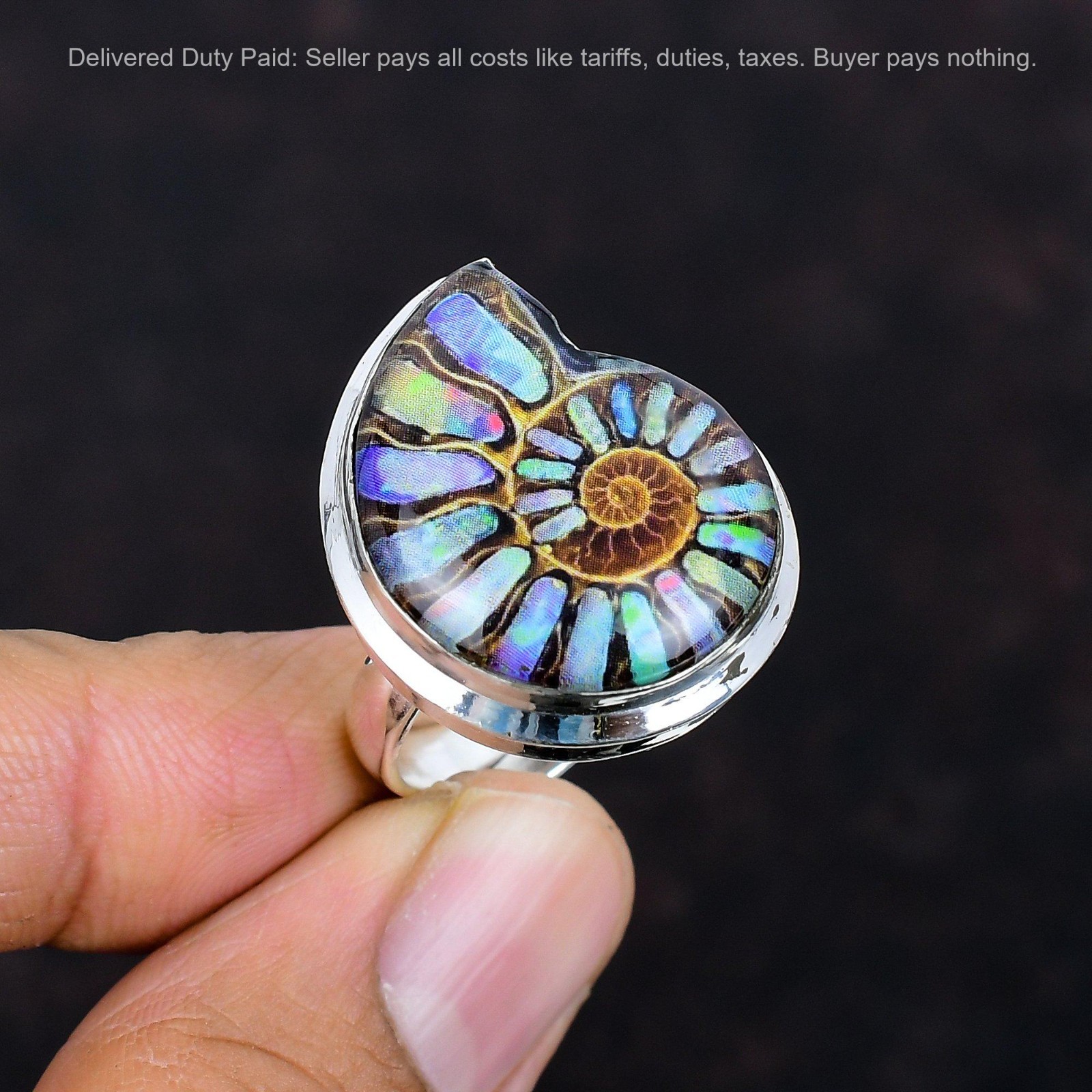 925 Sterling Silver Natural Ammonite Doublet Opal Bezel Statement Ring Jewelry$26.70Last checked Nov 20, 2026View on eBay
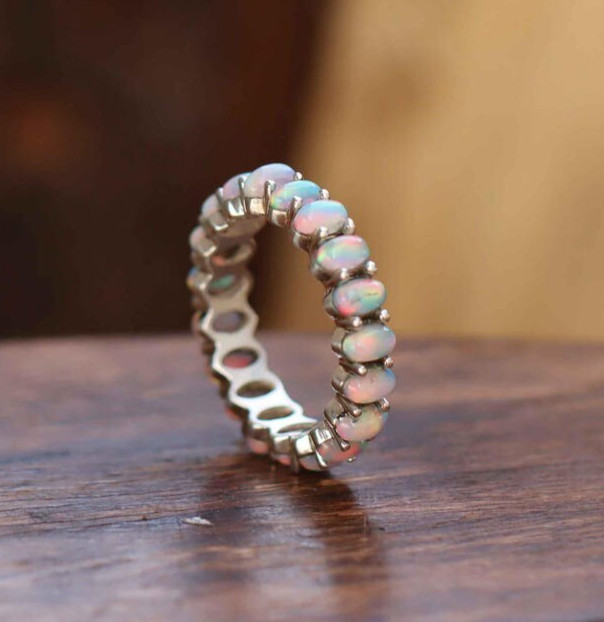 Fire Opal Eternity Ring, 925 Sterling Silver Wedding Ring, Opal Engagement Ring$44.80Last checked Nov 26, 2026View on eBay
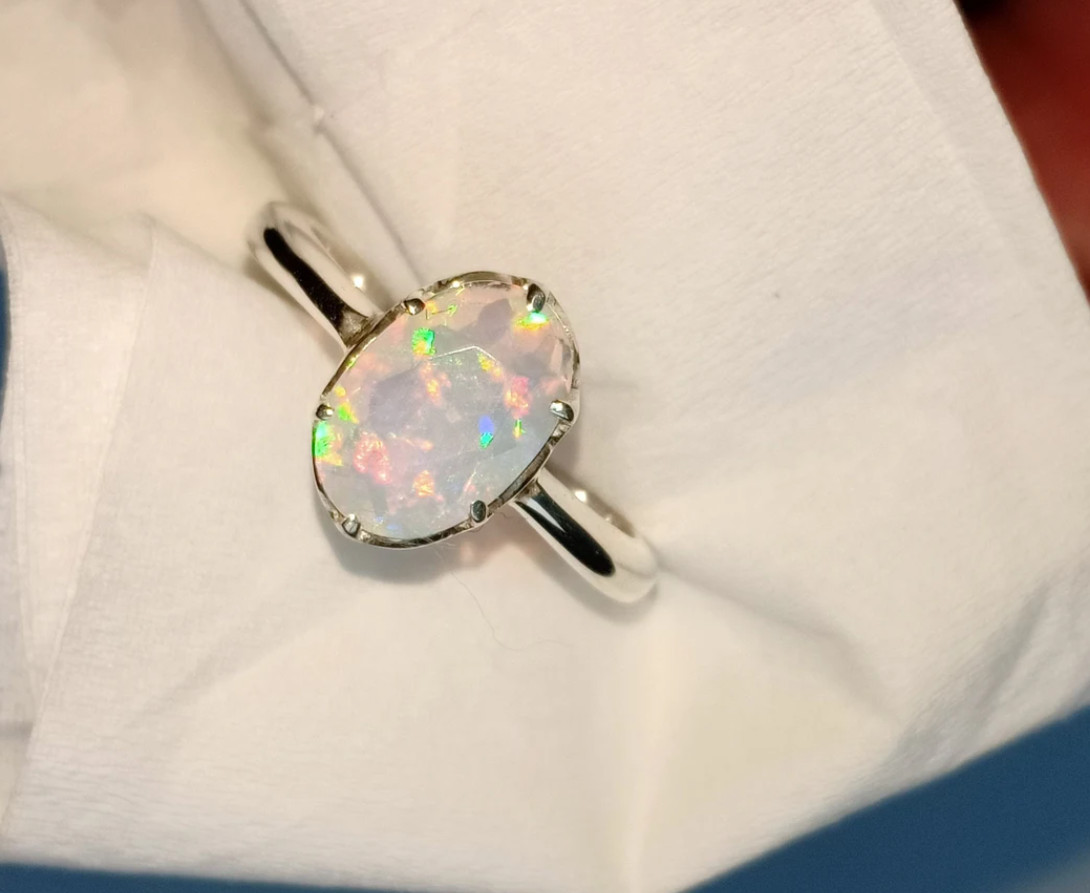 Natural Fire Opal Gemstone Ring 925Solid Silver Australian Opal Gemstone Jewelry$48.00View on eBay
Highlights
- Solid Australian opal (black/white) ranks 5.5–6.5 Mohs and is the most stable natural opal for rings; Ethiopian opal is hydrophane and can absorb water, crack, or lose color.
- Doublet opal = thin opal slice glued to a dark backing (usually ironstone or black potch); triplet adds a clear quartz cap for scratch protection—both cost less than solid opal and are more durable in rings.
- 925 sterling silver is the standard setting metal for opal rings; it tarnishes and is softer than 14k/18k gold, so bezel settings protect the stone and the metal edge better than thin prongs.
- Bezel settings fully encircle the opal edge, distributing impact and preventing prong snags—critical because opal is brittle and sensitive to thermal shock and knocks.
Best use cases
- Best fit: daily-wear engagement or wedding ring—pick a bezel-set Australian solid opal or triplet in 14k gold or rhodium-plated sterling silver; skip prong-set Ethiopian opal for everyday hand wear.
- Best fit: occasional statement or cocktail ring—fire opal (Mexican) in a silver prong setting is acceptable if removed before washing hands, swimming, or cleaning.
- Best fit: budget-conscious gift or first opal—a doublet opal in 925 sterling silver bezel gives real opal play-of-color at lower cost and better durability than a thin solid opal.
- Wrong fit: ring for gardening, gym, or frequent hand-washing—any natural opal (especially hydrophane Ethiopian) will degrade; choose a lab-created opal or non-opal alternative instead.
Buying tips
- Match setting to wear: bezel > prong for opal. A full bezel covers the fragile girdle; open prongs leave the opal edge exposed to chips and snags.
- Choose opal type by stability: Australian solid (5.5–6.5 Mohs, non-hydrophane) > triplet/doublet (protected, lower cost) > Ethiopian hydrophane (avoid for daily rings).
- For sterling silver, require 925 stamp and rhodium plating if available—plating slows tarnish and reduces skin reactivity; unplated silver needs regular polishing.
- Eternity-style opal rings need smooth, low-profile bezels; full-eternity rings with raised prongs catch on clothing and are impractical for daily wear.
Specs
| Opal Type | Solid Australian / Doublet / Triplet / Ethiopian |
|---|---|
| Setting Style | Bezel / Prong / Eternity / Halo |
| Metal Purity | 925 Sterling Silver / 14K–18K Gold |
| Mohs Hardness | 5.5–6.5 (solid opal); quartz cap higher |
Related searches
What to check before buying
- Measure ring size on the intended finger at room temperature; opal rings with wide eternity bands (4mm+) often need a half-size up for comfort.
- Confirm the opal type and origin in the listing: 'solid Australian,' 'doublet,' 'triplet,' or 'Ethiopian'—each has different care and durability; avoid vague 'natural opal' labels.
- Check setting height: low-profile bezel sits under 3mm above the finger; high-dome cabochons over 5mm tall are more prone to knocks and snagging.
- Verify metal purity: '925' stamp for sterling silver, '14K' or '18K' for gold; plated brass or 'silver-tone' alloys will wear through and are not durable for opal rings.
FAQ
Data sources: eBay / Amazon listings and product attribute feeds. Updated Nov 27, 2026.
Some links on this page are affiliate links. If you buy after clicking one, we may earn a commission at no extra cost to you. This does not change which products appear here or their order. Affiliate disclosure.