
Photos from current listings. Actual item, color, and included accessories may vary.
Oval Cut Engagement Ring Buying Guide
Oval cut engagement rings elongate the finger and maximize apparent size, but the primary trade-off is between natural vs. lab-grown diamonds and between certified precision cuts and uncertified commercial grades. The decision rule: prioritize a GIA or IGI certificate with explicit cut/polish/symmetry grades and a defined color/clarity floor over carat weight or setting flash; uncertified stones and plated metals are compromises that fail durability and resale tests.
Median $470.00
Key takeaways
- Lab-grown diamonds match natural diamonds in Mohs 10 hardness and optical properties but cost 60-80% less; they are graded by IGI or GIA and require disclosure on the certificate.
- Oval cut brilliance depends on a 1.35-1.50 length-to-width ratio and a table width of 53-60%; shallow or deep pavilions cause a 'bow-tie' dark zone across the center.
- Solid 14k or 18k gold (58.5% or 75% purity) is the durability baseline; 925 sterling silver and gold-plated brass wear through within months under daily wear and are not suitable for a lifetime ring.
At a glance
- Category
- Rings & Earrings
- Last updated
- Nov 27, 2026
Current offers
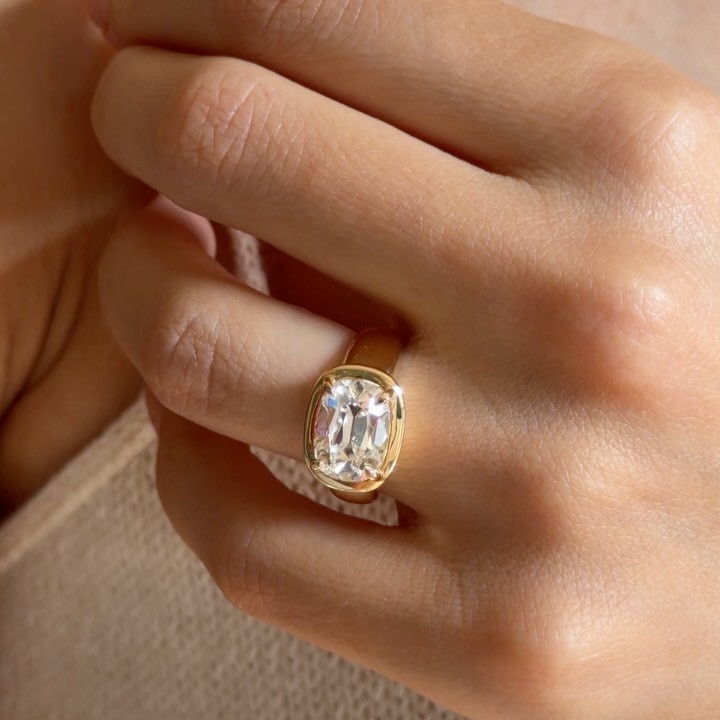 3.59 Ct Oval Cut Diamond Bezel Solitaire Engagement Ring Solid 18K Yellow Gold$330.41Last checked Nov 14, 2026View on eBay
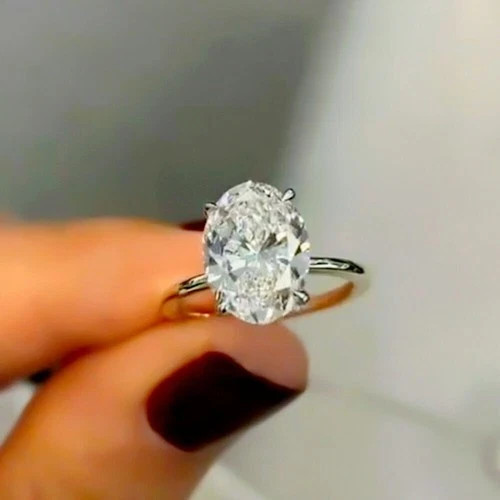 2.00Ct Oval Cut Natural Certified Diamond Engagement Ring 14k White Gold 6 7 8$470.00Last checked Nov 14, 2026View on eBay
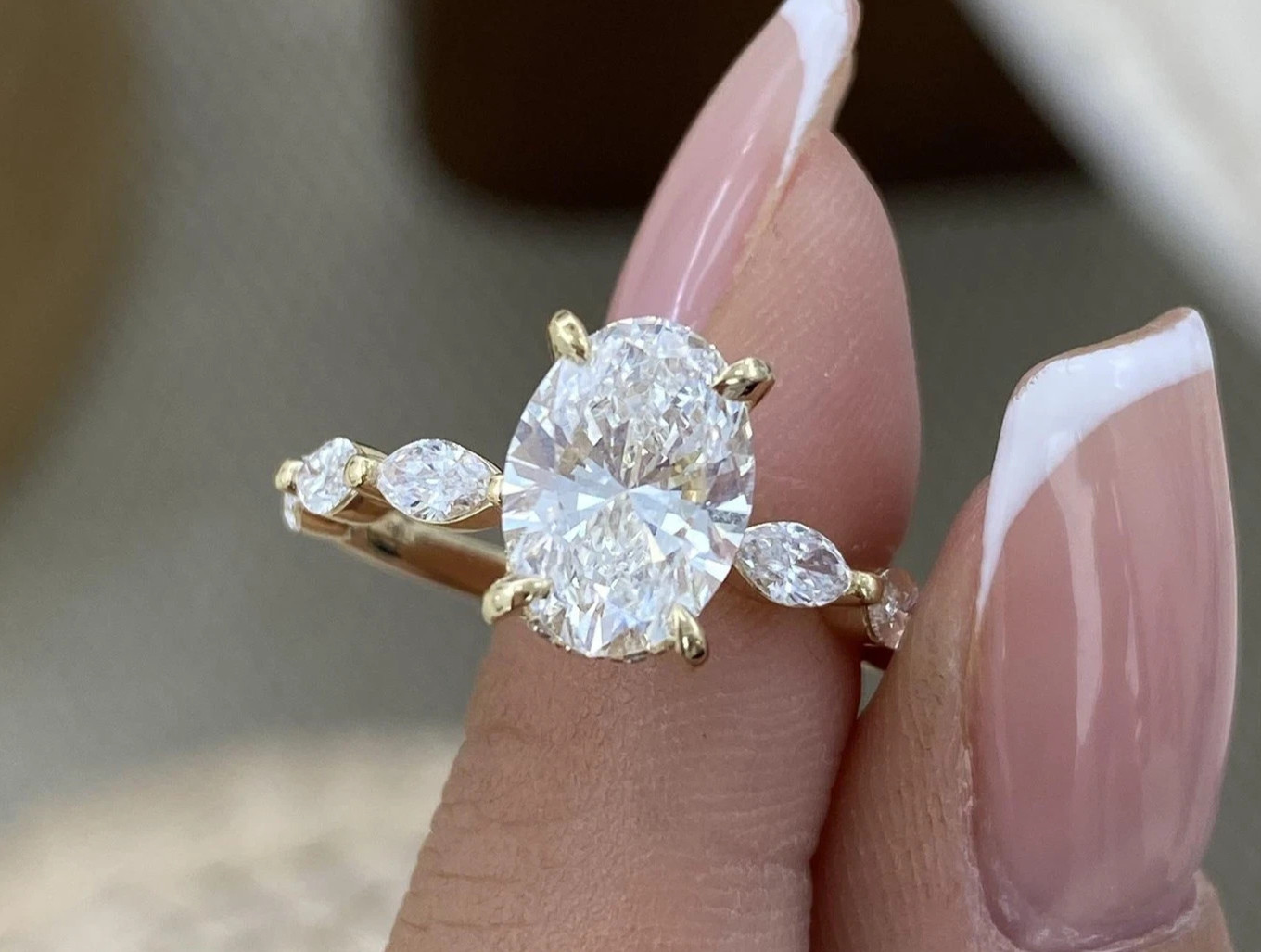 2.80 CT Oval Cut EF/ VS1 Lab Grown Diamond Engagement Ring 14k Yellow Gold$1,608.74Last checked Nov 14, 2026View on eBay
Highlights
- Lab-grown diamonds match natural diamonds in Mohs 10 hardness and optical properties but cost 60-80% less; they are graded by IGI or GIA and require disclosure on the certificate.
- Oval cut brilliance depends on a 1.35-1.50 length-to-width ratio and a table width of 53-60%; shallow or deep pavilions cause a 'bow-tie' dark zone across the center.
- Solid 14k or 18k gold (58.5% or 75% purity) is the durability baseline; 925 sterling silver and gold-plated brass wear through within months under daily wear and are not suitable for a lifetime ring.
- Bezel settings protect the girdle and suit active wearers; prong settings expose more of the stone for light return but require six-prong security and periodic tightening.
Best use cases
- Best fit for daily-wear professionals: choose a 14k or 18k gold bezel-set oval with a GIA/IGI certified lab-grown or natural stone at VS2 clarity or better; skip sterling silver or plated settings that deform and discolor.
- Best fit for maximum visible size on a budget: pick a 2.00-2.80 ct lab-grown oval (EF color, VS1 clarity) in 14k white or yellow gold; skip uncertified 'certified' listings where the certificate number is not verifiable.
- Best fit for heirloom or resale intent: select a natural, GIA-certified oval of 1.00 ct or above in 18k gold; skip lab-grown and fancy-color treated stones (e.g., London Blue Topaz) if long-term value retention matters.
- Wrong fit for anyone expecting a round-brilliant sparkle profile: oval cuts concentrate light differently and show a bow-tie; choose a round brilliant instead if uniform brilliance is the priority.
Buying tips
- Sizing math: oval carat weight is not diameter — a 1.00 ct oval measures roughly 7.7 x 5.7 mm; always compare mm dimensions and length-to-width ratio (ideal 1.35-1.50) rather than carat alone.
- Certification rule: require a GIA or IGI report number you can verify; 'certified' without a lab name and report number is a commercial grade, not a precision grade.
- Metal grade: 14k gold (58.5% pure) balances durability and cost; 18k (75%) is softer and richer in color. Sterling silver (92.5%) and gold plating are fashion-jewelry tiers, not engagement-ring tiers.
- Setting security: choose six-prong or bezel for ovals because the elongated girdle is vulnerable; four-prong settings risk chipping at the pointed ends.
Specs
| Stone Origin | Natural vs Lab-Grown (IGI/GIA) |
|---|---|
| Metal Purity | 14k/18k Solid Gold vs Plated |
| Oval Ratio | 1.35-1.50 L/W (Ideal) |
| Setting Type | Bezel / 6-Prong Solitaire |
Related searches
What to check before buying
- Measure the finger with a jeweler's sizing set at the intended wear time of day; ovals face up larger, so a 1.5-2.0 ct stone already covers most of the finger width on sizes 5-7.
- Confirm the ring's metal stamp (14K/585 or 18K/750) and that the setting is solid gold, not gold-plated brass or silver with rhodium flash.
- Verify the diamond certificate lab (GIA or IGI), report number, and that color/clarity grades are stated; lab-grown stones must be disclosed as such.
- Match the band width to the stone: a 1.5-2.0 mm band suits up to 2.0 ct; choose 2.0-2.5 mm for stones above 2.5 ct to prevent bending and rotation.
FAQ
Data sources: eBay / Amazon listings and product attribute feeds. Updated Nov 27, 2026.
Some links on this page are affiliate links. If you buy after clicking one, we may earn a commission at no extra cost to you. This does not change which products appear here or their order. Affiliate disclosure.