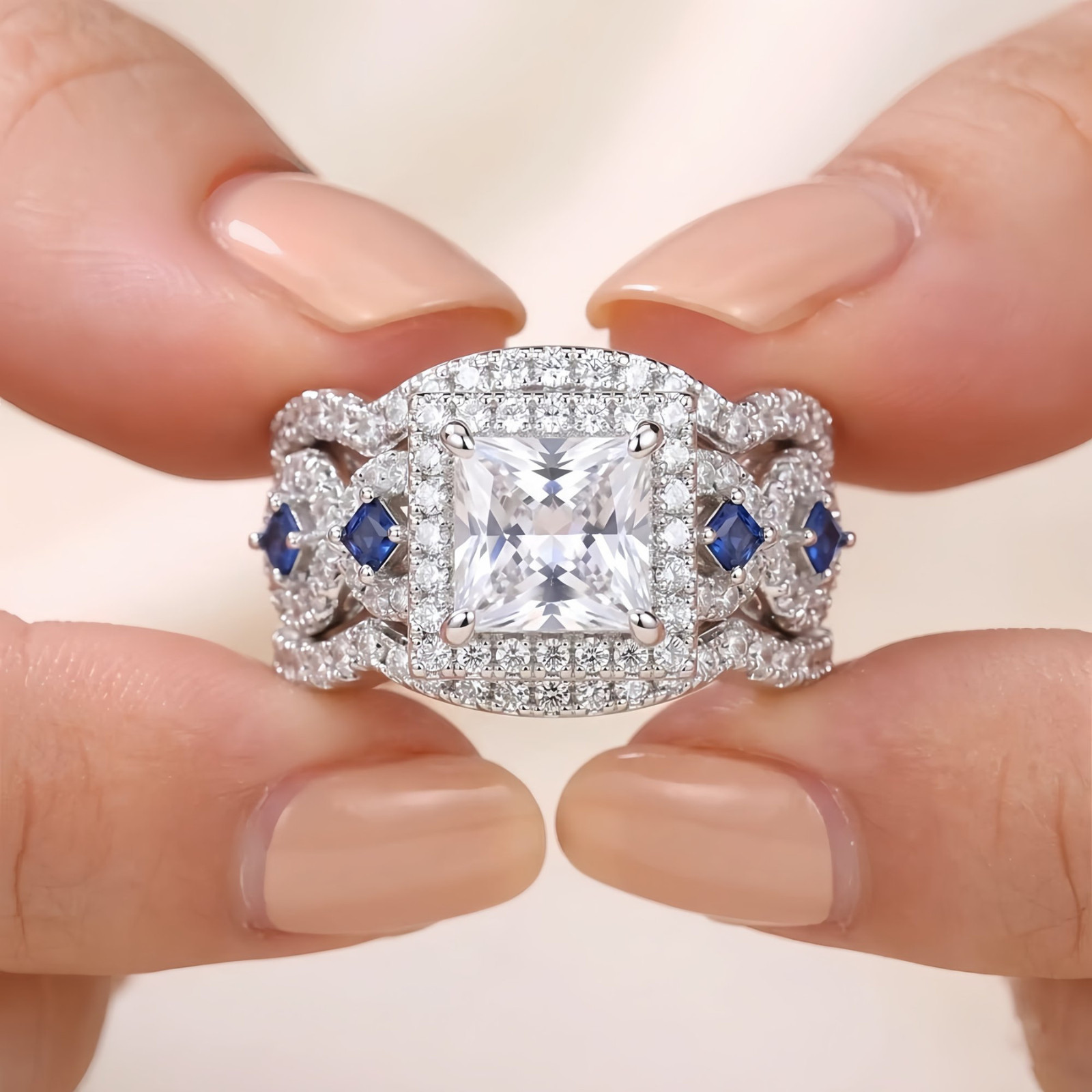

Photos from current listings. Actual item, color, and included accessories may vary.
Sapphire Wedding Ring Buying Guide
A sapphire wedding ring pairs a corundum gemstone (natural or lab-created) with a band metal, and the primary trade-off is gem origin and cut quality versus metal durability and setting security. Natural sapphires vary in treatment and color zoning, while lab-created stones offer identical hardness (Mohs 9) at lower cost. The clear decision rule: prioritize a well-cut stone with a protective setting and a metal that suits daily wear (14k+ gold or platinum), and avoid soft plated finishes and shallow-cut stones that show windows.
Key takeaways
- Sapphire hardness is Mohs 9, second only to diamond, making it suitable for daily wear; avoid softer stones like emerald (7.5-8) or opal (5.5-6.5) for wedding rings.
- Lab-created sapphires have the same corundum composition and hardness as natural stones, but natural sapphires often receive heat treatment to improve color and clarity.
- Metal choice matters: 14k/18k gold or platinum (950) resists wear; white gold requires rhodium plating, while plated base metals (e.g., 'white gold finish') wear through to reveal brass or copper.
At a glance
- Category
- Rings & Earrings
- Last updated
- Nov 28, 2026
Current offers
Highlights
- Sapphire hardness is Mohs 9, second only to diamond, making it suitable for daily wear; avoid softer stones like emerald (7.5-8) or opal (5.5-6.5) for wedding rings.
- Lab-created sapphires have the same corundum composition and hardness as natural stones, but natural sapphires often receive heat treatment to improve color and clarity.
- Metal choice matters: 14k/18k gold or platinum (950) resists wear; white gold requires rhodium plating, while plated base metals (e.g., 'white gold finish') wear through to reveal brass or copper.
- Setting style affects security: bezel and low-profile prong settings protect the girdle; high-profile prongs snag and expose the stone to chipping.
Best use cases
- Best fit: daily-wear wedding band with a bezel-set or low-profile sapphire in 14k gold or platinum—choose this for durability and low maintenance.
- Wrong fit: buying a ring with a 'white gold finish' over base metal for everyday wear—plating wears off within months; instead choose solid 14k white gold or platinum.
- Best fit: budget-conscious buyer wanting a 2ct princess-cut look—select a lab-created sapphire with a well-cut pavilion and a secure four-prong setting in 14k gold.
- Wrong fit: choosing a natural sapphire with heavy inclusions or windowing just for size—prioritize cut and clarity over carat weight for visual performance.
Buying tips
- Check metal purity: solid 14k or 18k gold (stamped 585 or 750) or platinum (950) for durability; avoid 'gold plated' or 'gold finish' for daily wear.
- For sapphire, demand a well-cut stone: look for even color, no visible window (see-through center), and a girdle that isn't knife-edge thin.
- Setting selection: bezel or low-profile prongs for active lifestyles; high-profile prongs only if you accept snag risk and regular inspection.
- Lab-created vs natural: lab-created offers identical hardness and often better clarity at lower cost; natural stones should disclose treatment (heat is standard).
Specs
| Gem Hardness | Mohs 9 (corundum) |
|---|---|
| Metal Purity | 14k/18k gold or platinum 950 |
| Setting Type | Bezel / low-profile prong |
| Stone Origin | Natural (treated) or lab-created |
Related searches
What to check before buying
- Measure ring size accurately (US size or inner diameter in mm) and confirm the band width—wider bands (6mm+) fit tighter, so size up half a size.
- Ensure the metal matches your skin chemistry: white gold may cause nickel sensitivity; platinum or yellow gold are hypoallergenic alternatives.
- For online purchases, confirm the return policy allows resizing or returns within a reasonable window (e.g., 30 days) and that the ring is stamped with metal purity.
- Check the setting height: measure your finger clearance and daily activities—low-profile settings under 5mm height reduce snagging.
FAQ
Data sources: eBay / Amazon listings and product attribute feeds. Updated Nov 28, 2026.
Some links on this page are affiliate links. If you buy after clicking one, we may earn a commission at no extra cost to you. This does not change which products appear here or their order. Affiliate disclosure.