
Photos from current listings. Actual item, color, and included accessories may vary.
Small Stud Earring Buying Guide
Small stud earrings are compact earrings (typically 2–6 mm face) designed for daily wear, and the primary trade-off is between metal purity/hypoallergenic safety and structural durability at tiny gauges. The clear decision rule: choose solid 14k–18k gold, implant-grade titanium, or 316L surgical steel for sensitive ears and long-term wear; avoid plated brass or zinc alloys that tarnish and shed plating within weeks.
Median $7.99
Key takeaways
- Metal grade determines safety: 316L surgical steel and ASTM F136 titanium are nickel-safe for sensitive ears; sterling silver (.925) is softer and bends at thin posts; gold-filled vs gold-plated differs by 100x gold thickness.
- Post gauge and length matter more than face size: 18G (1.0 mm) or 20G (0.8 mm) posts with 6–8 mm length fit standard lobe piercings; 16G (1.2 mm) is for cartilage and helix piercings.
- Backing type controls security: screw-back (threaded) and flat-back (labret) are secure for 24/7 wear; butterfly (friction) backs loosen over time; silicone-covered backs suit active wear.
At a glance
- Category
- Rings & Earrings
- Last updated
- Nov 27, 2026
Current offers
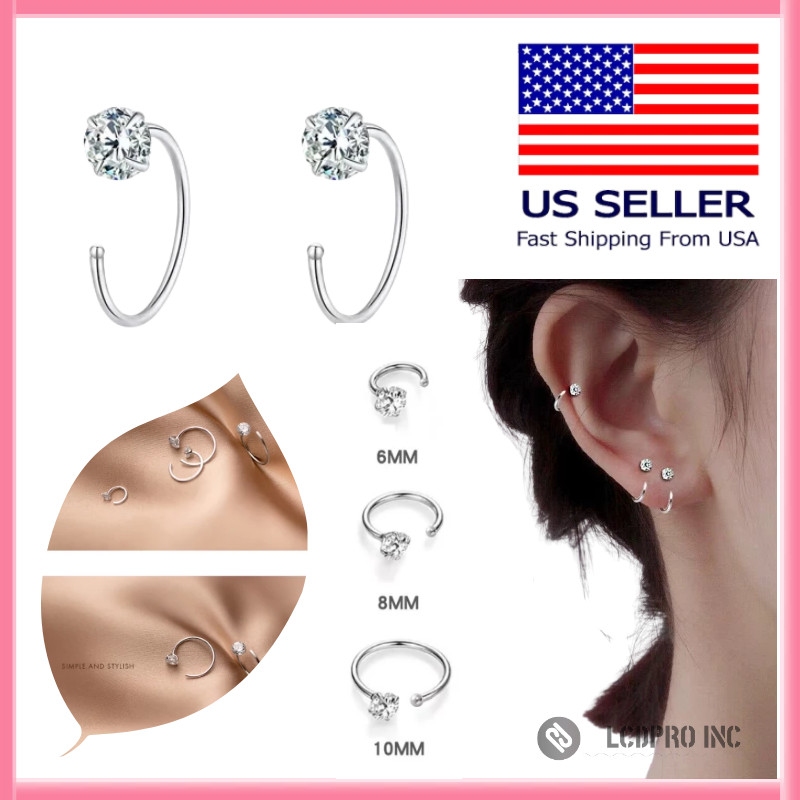 Zirconia Earrings 999 Sterling Silver CZ Hoop Small Huggie Zircon Stud Jewelry$3.30Last checked Nov 26, 2026View on eBay
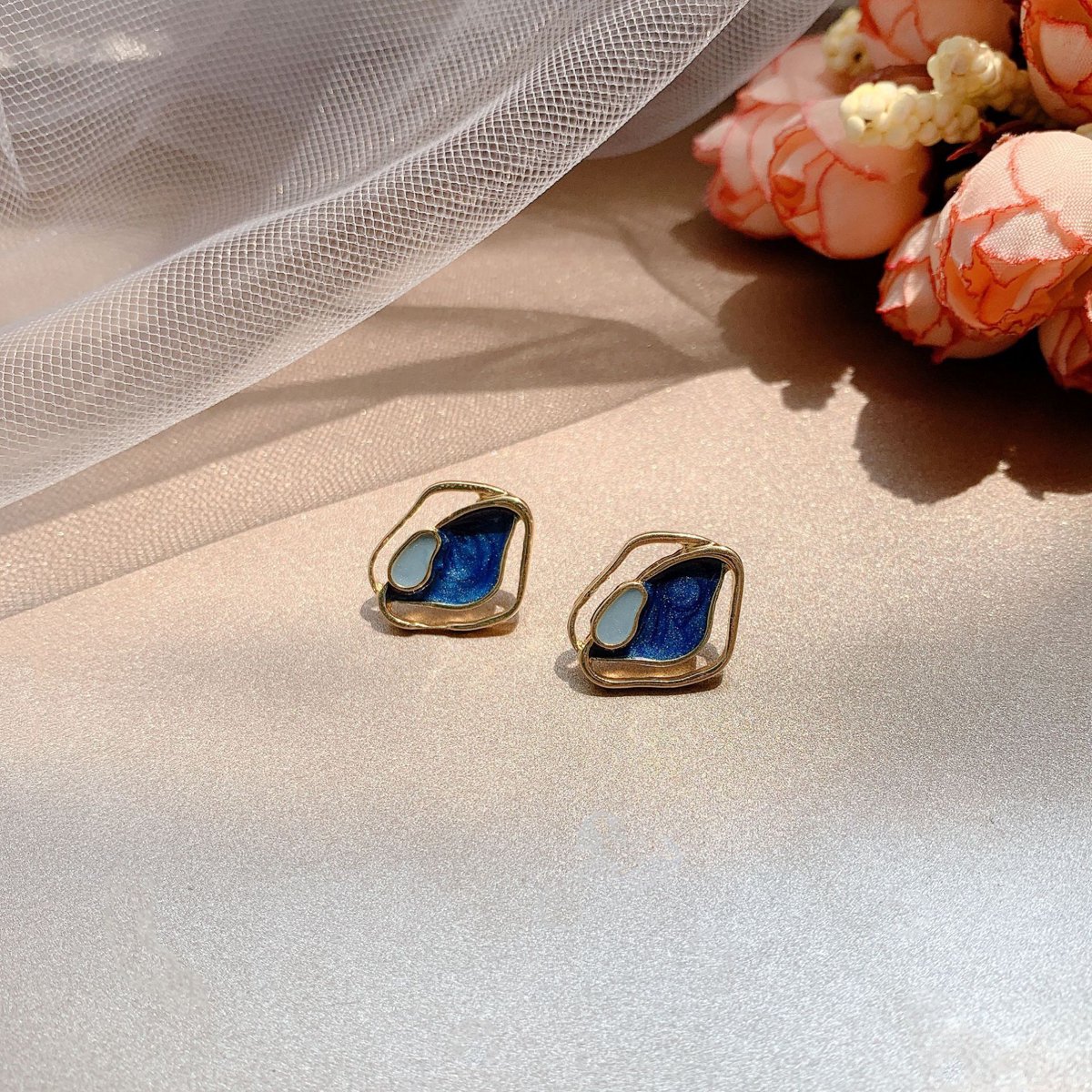 S925 Silver Stud Earrings Simple Women's Small$5.99View on Mallflare
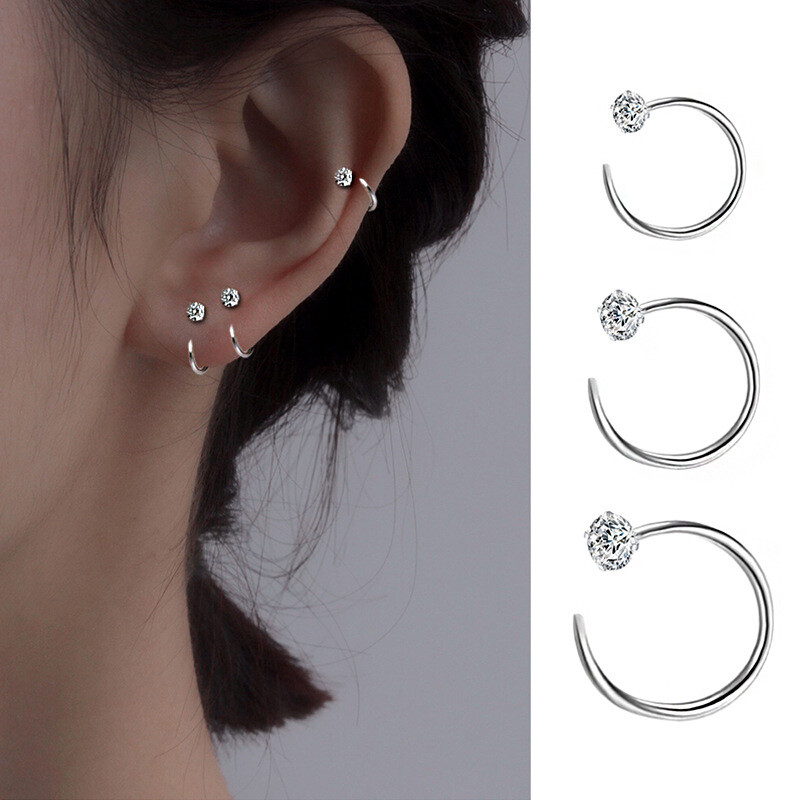 Women Surgical Steel CZ Crystal Small Hoop Earrings Trendy Stud Earrings Gift$9.99Last checked Nov 26, 2026View on eBay
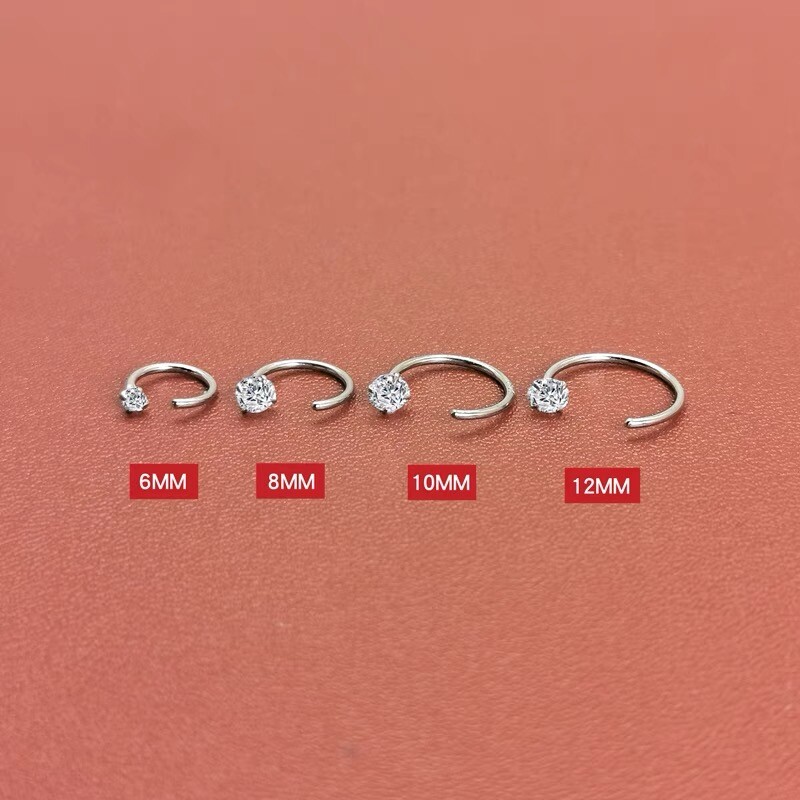 Surgical Steel CZ Small Huggie Hoop Earrings Women Minimalist Stud Earrings Gift$10.12Last checked Nov 19, 2026View on eBay
Highlights
- Metal grade determines safety: 316L surgical steel and ASTM F136 titanium are nickel-safe for sensitive ears; sterling silver (.925) is softer and bends at thin posts; gold-filled vs gold-plated differs by 100x gold thickness.
- Post gauge and length matter more than face size: 18G (1.0 mm) or 20G (0.8 mm) posts with 6–8 mm length fit standard lobe piercings; 16G (1.2 mm) is for cartilage and helix piercings.
- Backing type controls security: screw-back (threaded) and flat-back (labret) are secure for 24/7 wear; butterfly (friction) backs loosen over time; silicone-covered backs suit active wear.
- Stone setting quality: prong-set CZ or diamonds in 2–4 mm sizes need 4-prong minimum; bezel-set stones are more durable for daily wear and won't snag hair or clothing.
Best use cases
- Best fit for sensitive ears or metal allergies: pick implant-grade titanium (ASTM F136) or 316L surgical steel; skip sterling silver if you react to nickel or copper.
- Best fit for daily 24/7 wear including sleep and shower: choose flat-back labret or screw-back in titanium or 14k solid gold; skip butterfly-back plated brass, which bends and tarnishes.
- Best fit for second or third lobe piercings: 2–3 mm bezel-set CZ or tiny gold ball in 20G; skip 4 mm+ prong settings that crowd adjacent piercings.
- Best fit for cartilage/helix: 16G (1.2 mm) titanium flat-back labret with 6 mm post; skip 18G butterfly-back sterling silver, which migrates and causes irritation bumps.
Buying tips
- Match post gauge to piercing: 20G (0.8 mm) for standard lobes, 18G (1.0 mm) for slightly stretched lobes, 16G (1.2 mm) for cartilage; using the wrong gauge causes irritation or hole shrinkage.
- Verify metal stamp: 'S925' or '.925' for sterling silver, '14K' or '585' for 14k gold, '316L' or 'Surgical Steel' for steel, 'Ti' or 'ASTM F136' for titanium; unmarked 'silver-tone' is plated brass.
- For tiny studs under 3 mm, choose bezel settings over prongs: prongs on small stones are fragile and catch on hair; bezel wraps the stone edge for durability.
- Check post length: 6 mm is standard for lobes; 8 mm for thicker lobes or swelling; 4 mm for children or very thin lobes; too-long posts snag and too-short posts embed.
Specs
| Metal Grade | 316L steel / Ti / .925 silver / 14k gold |
|---|---|
| Post Gauge | 20G (0.8mm) / 18G (1.0mm) / 16G (1.2mm) |
| Backing Type | Butterfly / screw-back / flat-back labret |
| Stone Setting | Prong vs bezel; CZ / diamond / plain metal |
Related searches
What to check before buying
- Measure your piercing gauge with a caliper or ask your piercer: standard lobe is 18G–20G (0.8–1.0 mm); buying 16G studs for an 18G hole will stretch or tear.
- Confirm metal allergy: nickel is the most common contact allergen; titanium and 316L steel are nickel-safe, while sterling silver and gold-plated brass can trigger reactions.
- Check backing clearance: flat-back labrets need 1–2 mm of post visible beyond the lobe; if your lobe is thicker than 6 mm, order 8 mm posts.
- For cartilage: choose flat-back or screw-back only; butterfly backs press against the ear and cause irritation bumps on helix and conch piercings.
FAQ
Data sources: eBay / Amazon listings and product attribute feeds. Updated Nov 27, 2026.
Some links on this page are affiliate links. If you buy after clicking one, we may earn a commission at no extra cost to you. This does not change which products appear here or their order. Affiliate disclosure.