
Photos from current listings. Actual item, color, and included accessories may vary.
Trendy Ring Buying Guide
Trendy rings are fashion-forward statement or stacking pieces where the core trade-off is between eye-catching design and long-term wearability—plated base metals with glued-in stones look striking but tarnish and shed, while sterling silver or solid gold with prong or bezel settings hold up. The decision rule: buy plated brass or copper for occasional statement wear, but require 925 sterling silver or 10k+ solid gold with mechanical stone settings for daily wear and skin sensitivity.
Median $25.99
Key takeaways
- Base metal determines lifespan: brass or copper cores with 0.5–1 micron gold plating tarnish within weeks of daily wear; 2.5+ micron vermeil or solid 10k/14k gold resists fading for years.
- Stone security separates keepers from losses: prong or bezel settings mechanically lock CZ and enamel; glued or open-back settings on adjustable rings shed stones within normal hand motion.
- Adjustable open bands trade fit tolerance for fatigue: bending a brass or thin silver open ring repeatedly work-hardens and cracks the metal; choose 1.2mm+ band thickness for repeated resizing.
At a glance
- Category
- Rings & Earrings
- Last updated
- Nov 28, 2026
Current offers
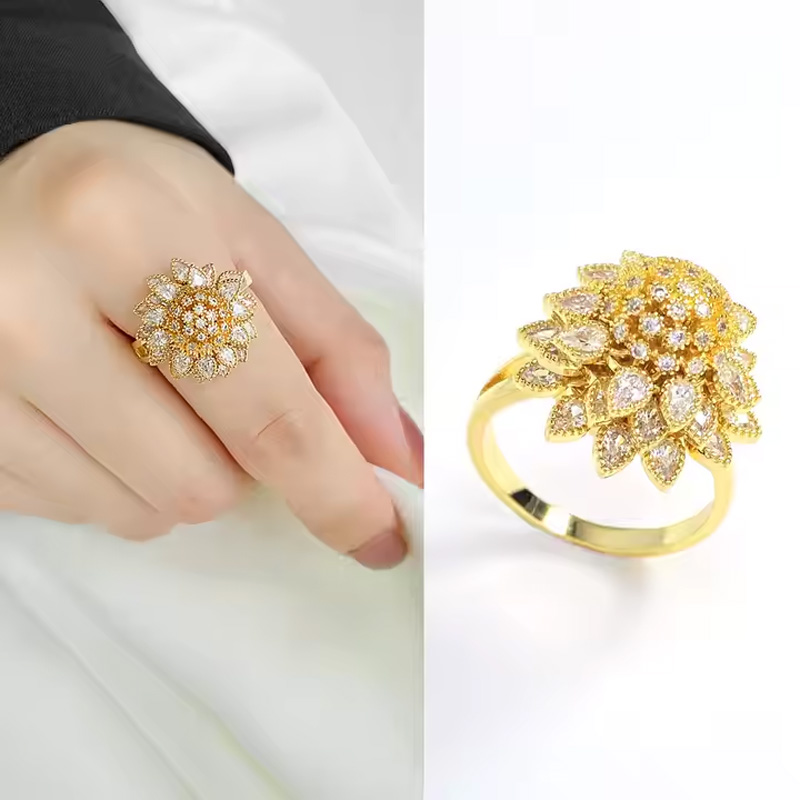 Flower Adjustable Open Gold Ring For Women, Trendy Elegant Unique Cubic Zirconia Enamel Front Floral Leaf Easter Jewelry Gift-flower$25.99View on Mallflare
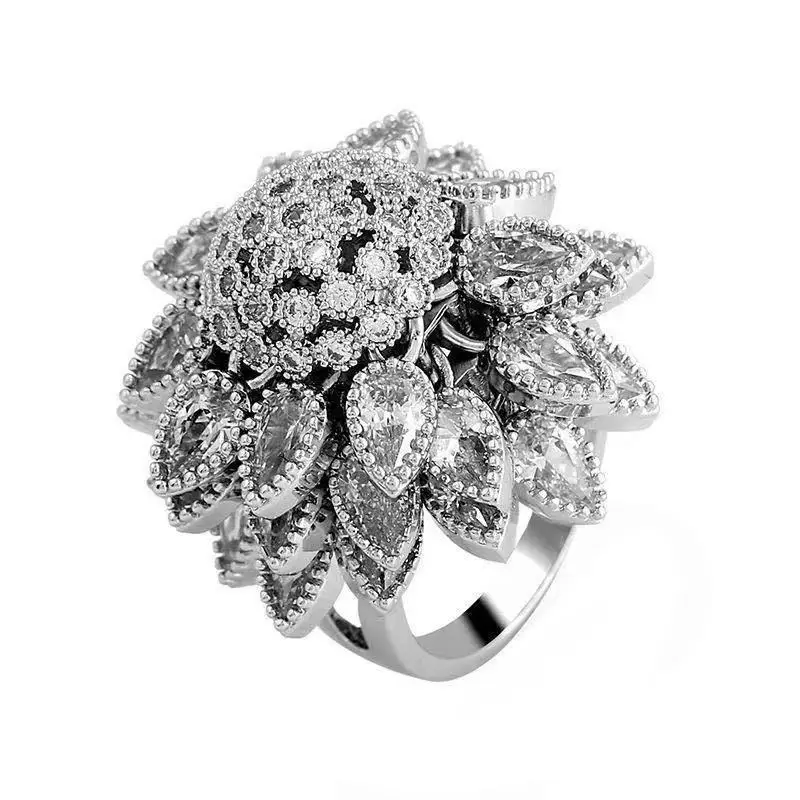 Flower Adjustable Open Silvery Ring For Women, Trendy Elegant Unique Cubic Zirconia Enamel Front Floral Leaf Easter Jewelry Gift-flower$25.99View on Mallflare
Highlights
- Base metal determines lifespan: brass or copper cores with 0.5–1 micron gold plating tarnish within weeks of daily wear; 2.5+ micron vermeil or solid 10k/14k gold resists fading for years.
- Stone security separates keepers from losses: prong or bezel settings mechanically lock CZ and enamel; glued or open-back settings on adjustable rings shed stones within normal hand motion.
- Adjustable open bands trade fit tolerance for fatigue: bending a brass or thin silver open ring repeatedly work-hardens and cracks the metal; choose 1.2mm+ band thickness for repeated resizing.
- Hypoallergenic labeling matters: nickel-free 925 sterling silver or 14k gold avoids contact dermatitis; plated fashion rings over nickel-bearing alloys trigger reactions in sensitive wearers.
Best use cases
- Daily wear and hand-washing: pick solid 10k/14k gold or 925 sterling silver with bezel-set stones; skip plated brass adjustable rings that tarnish and loosen within months.
- Occasional statement or event wear: plated brass or copper open rings with enamel and CZ deliver the trend look at low cost; accept that plating wear is expected after repeated use.
- Stacking and midi-ring sets: choose thin 1.0–1.2mm sterling silver or gold vermeil bands sized to individual fingers; avoid one-size adjustable open rings for stacks because they shift and overlap.
- Sensitive skin or metal allergy: require nickel-free 925 sterling silver, 14k gold, or titanium; skip unknown-base fashion rings even if labeled hypoallergenic.
Buying tips
- Confirm metal content, not just color: 'gold plated' over brass is fashion-tier; '14k gold vermeil' requires 2.5+ micron plating over 925 sterling silver and lasts years longer.
- Size open adjustable rings to your largest knuckle: the gap should close to a 2–4mm overlap when worn; a gap wider than 6mm means the band will snag and bend out of shape.
- Check stone setting type before buying CZ or enamel: bezel or prong settings retain stones; glued or pave-set CZ in open adjustable bands are the most common loss point.
- For daily wear, require band thickness of at least 1.2mm in silver or 1.0mm in solid gold; thinner bands deform and crack at the sizing gap under normal finger pressure.
Specs
| Metal Base | Brass/copper vs 925 silver vs solid gold |
|---|---|
| Plating Thickness | 0.5–1 micron plated vs 2.5+ micron vermeil |
| Stone Setting | Prong/bezel (secure) vs glued (loss risk) |
| Band Adjustability | Open adjustable US 5–9 vs fixed sizes |
Related searches
What to check before buying
- Measure your dominant-hand ring size with a printable sizer or existing ring; adjustable open bands fit roughly US 5–9, so confirm your size falls inside that range.
- Check the band width and profile against adjacent fingers if stacking: total stack width above 8mm restricts finger flexion and feels bulky.
- Verify metal allergy needs before ordering: nickel-free sterling silver or solid gold if you react to costume jewelry; plated brass is not safe for sensitive skin.
- Confirm the ring's finish matches your care routine: enamel and plated finishes need removal before swimming, cleaning, or gym use; solid gold and sterling silver tolerate daily water exposure.
FAQ
Data sources: eBay / Amazon listings and product attribute feeds. Updated Nov 28, 2026.
Some links on this page are affiliate links. If you buy after clicking one, we may earn a commission at no extra cost to you. This does not change which products appear here or their order. Affiliate disclosure.