
Photos from current listings. Actual item, color, and included accessories may vary.
Yellow Diamond Engagement Ring Buying Guide
A yellow diamond engagement ring combines a fancy-color diamond center with a yellow-gold setting, so the core decision is not just shape but whether you buy natural fancy yellow or lab-grown yellow. Natural fancy yellows carry GIA/AGS color grades (Fancy Light through Fancy Vivid) and command a premium; lab-grown yellows match visual size and color at lower cost but require a grading report that states the color origin. The durable rule: prioritize a certified stone with a defined color grade and a well-cut setting in 14k or 18k yellow gold; skip uncertified 'canary' listings and hollow or plated shanks.
Median $1,608.74
Key takeaways
- Natural fancy yellow diamonds are graded by GIA on a scale from Fancy Light Yellow to Fancy Vivid Yellow, with saturation driving value more than carat weight.
- Lab-grown yellow diamonds are grown with boron doping or post-growth treatment and must be disclosed as lab-grown on the grading report; they are visually identical to natural stones.
- 14k yellow gold (58.5% gold) is harder and more scratch-resistant for daily wear; 18k (75% gold) gives a richer yellow hue but dents and scratches more easily.
At a glance
- Category
- Rings & Earrings
- Last updated
- Nov 27, 2026
Current offers
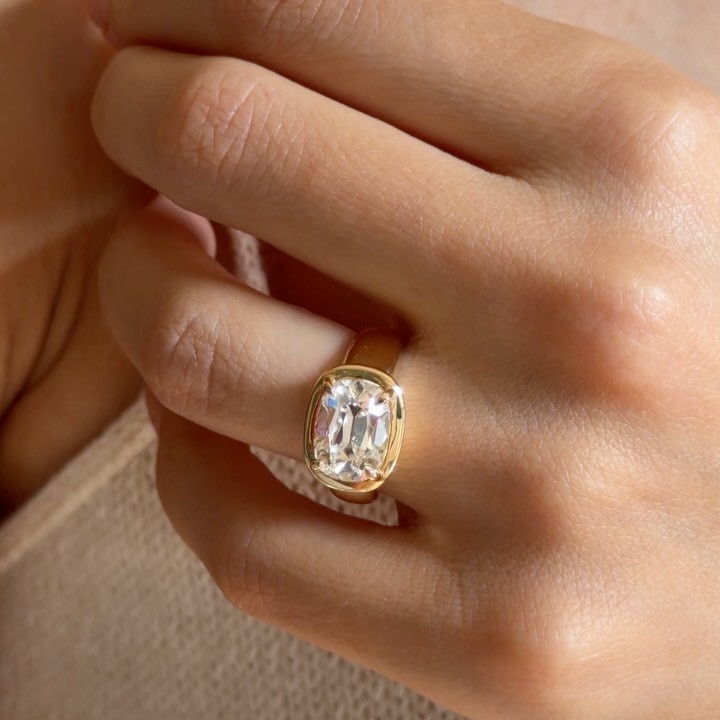 3.59 Ct Oval Cut Diamond Bezel Solitaire Engagement Ring Solid 18K Yellow Gold$330.41Last checked Nov 14, 2026View on eBay
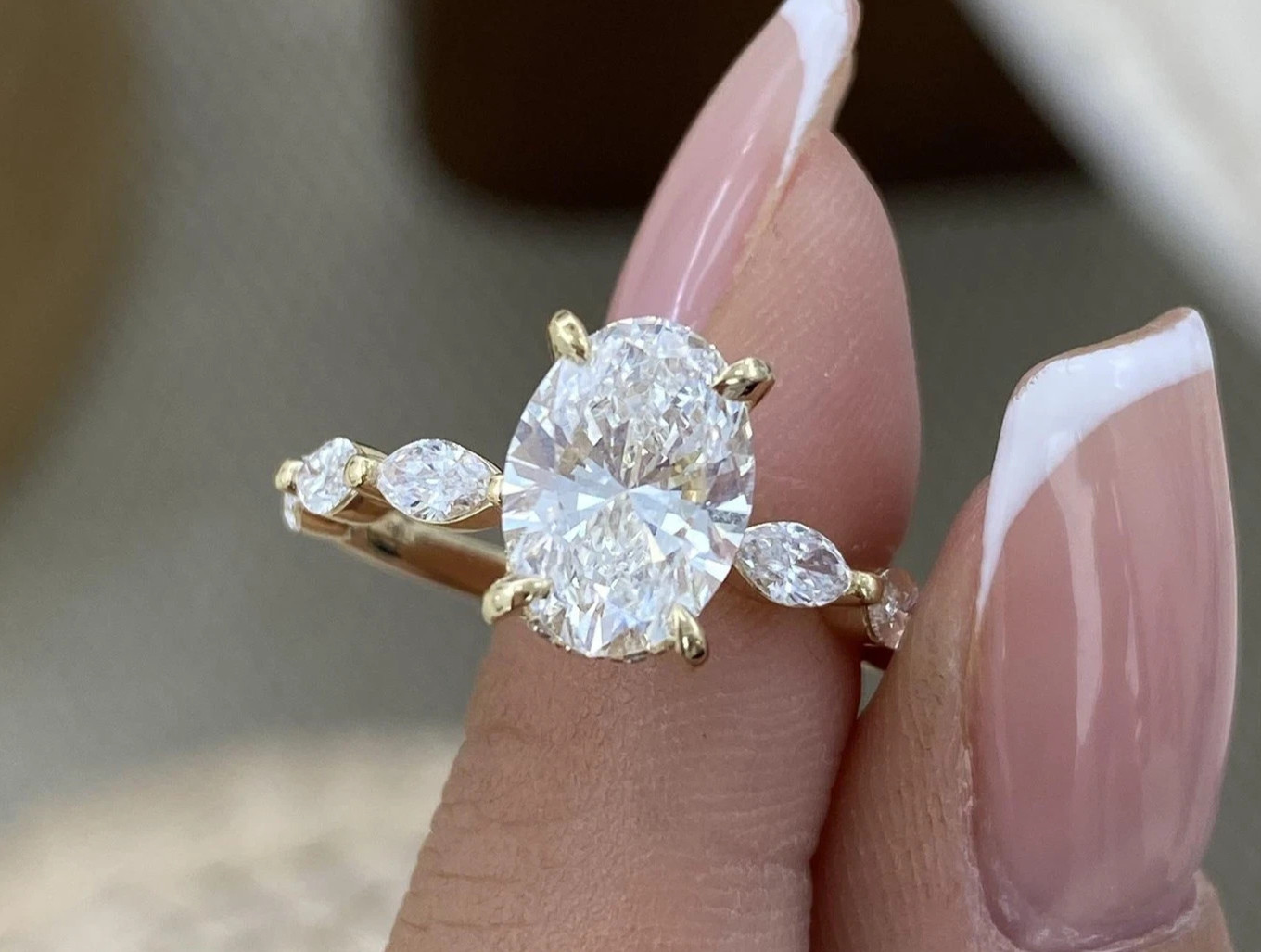 2.80 CT Oval Cut EF/ VS1 Lab Grown Diamond Engagement Ring 14k Yellow Gold$1,608.74Last checked Nov 14, 2026View on eBay
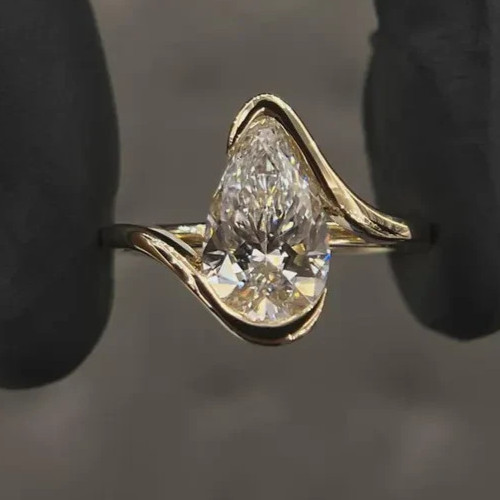 4.00 Ct Pear-Cut Lab Grown Diamond Solitaire Engagement Ring 14k Yellow Gold$1,759.99Last checked Nov 14, 2026View on eBay
Highlights
- Natural fancy yellow diamonds are graded by GIA on a scale from Fancy Light Yellow to Fancy Vivid Yellow, with saturation driving value more than carat weight.
- Lab-grown yellow diamonds are grown with boron doping or post-growth treatment and must be disclosed as lab-grown on the grading report; they are visually identical to natural stones.
- 14k yellow gold (58.5% gold) is harder and more scratch-resistant for daily wear; 18k (75% gold) gives a richer yellow hue but dents and scratches more easily.
- Bezel settings protect the girdle of oval and pear cuts, while four- or six-prong solitaires expose more diamond but require insurance and careful wear.
Best use cases
- Best fit: Buy a GIA- or AGS-certified natural fancy yellow diamond in 18k yellow gold if you want a heirloom-grade stone with documented color grade and resale recognition.
- Best fit: Choose a lab-grown yellow diamond with an IGI or GCAL report in 14k yellow gold for maximum visual size and color at a lower cost, with the same daily-wear durability.
- Wrong fit: Skip uncertified 'canary diamond' listings with no grading report or vague 'fancy yellow' claims — color origin and treatment cannot be verified, and value is speculative.
- Wrong fit: Avoid thin hollow shanks and plated brass settings for daily wear; they deform, wear through, and cannot safely hold a 2-carat-plus center stone.
Buying tips
- Match metal to stone: 18k yellow gold best complements Fancy Intense to Fancy Vivid yellow stones; 14k yellow gold is the practical choice for Fancy Light to Fancy yellow and for daily-wear durability.
- For oval and pear cuts, insist on a bezel or a six-prong setting with a gallery rail — pointed and elongated girdles chip more easily than round brilliants.
- Natural fancy yellow stones should carry a GIA or AGS report stating the color grade and that the color is natural (not treated); lab-grown stones should carry IGI or GCAL stating lab-grown origin.
- Size the center stone to the finger: a 2.5–4.0 ct oval on a size 6–7 finger reads large; below 1.5 ct, Fancy Light yellows can look washed out, so favor Fancy Intense or Vivid at smaller carats.
Specs
| Diamond Origin | Natural vs Lab-Grown (certified) |
|---|---|
| Color Grade Scale | Fancy Light to Fancy Vivid (GIA) |
| Metal Purity | 14k (58.5%) vs 18k (75%) yellow gold |
| Setting Type | Bezel / Prong solitaire with gallery rail |
Related searches
What to check before buying
- Measure the finger at the correct ring size (US 4–13) — oval and pear settings cannot be resized more than about two sizes without affecting the setting.
- Confirm the shank is solid 14k or 18k gold (not hollow or plated) and at least 1.8–2.0 mm thick at the base for daily wear.
- For pear and oval cuts, verify the setting covers the girdle with a bezel or prongs and has a gallery rail to prevent snagging and chipping.
- Check that the grading report matches the stone's carat weight, measurements, and color grade exactly — and that the report number is laser-inscribed on the girdle.
FAQ
Data sources: eBay / Amazon listings and product attribute feeds. Updated Nov 27, 2026.
Some links on this page are affiliate links. If you buy after clicking one, we may earn a commission at no extra cost to you. This does not change which products appear here or their order. Affiliate disclosure.